
Introduction
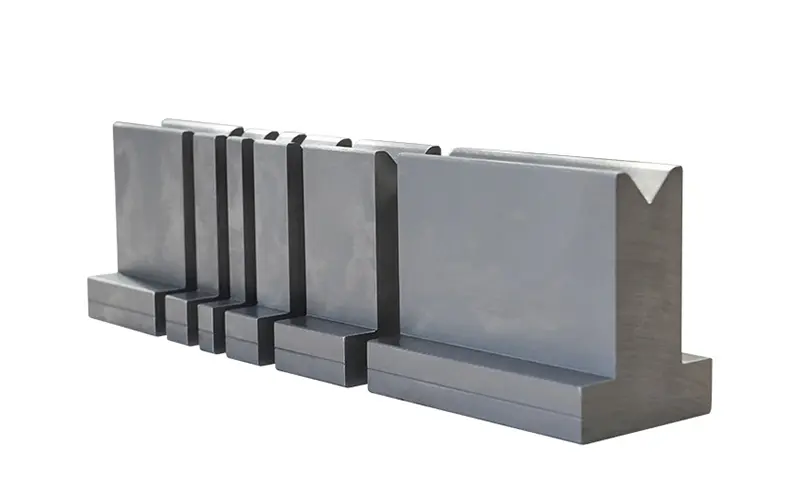
The press brake tools are used to form metal in factories. Caring for them means they will be made to last longer and to labor safely. Otherwise, they may lead to bad parts and waste. Maintenance is easy and timely, and safeguards the accuracy and life of tools. Employees have routines every day, weekly, and monthly. Planned service is verified by engineers. Information about tool usage can determine when to repair or replace them. Clean tools produce superior and uniform bending. Contemporary tools may have to cope with intense forces, particularly on hard steel, such as HSLA, which adds stress.
Daily Tool Care Routine
Operators start maintenance before machine operation begins. A brief check of the machine activates the beginning of every shift. Their responsibility is to find chips, scratches, or cracks on their punch tips and die shoulders. The reason is that even minimal damage can cause problems. Scratches and less precise bending can result from dirty surfaces. The operators wipe the tools with a clean cloth and a safe solvent after each run to remove oil and metal chips. Clamps should be firmly fastened to ensure proper positioning, and other safety measures, such as light curtains and stop mechanisms, should be inspected on a day-to-day basis. Operators note down problems in a checklist to identify them at the earliest and ensure that all tools are in good condition.

Weekly Inspection Process
The technicians test the equipment after a week. They ensure the parts are not worn out and remain in place. Correct alignment maintains a constant angle of bends. The misalignment is fixed by technicians, and then they resume the work. They also apply a thin film of oil on moving parts to enable them to slide and prevent damage. Excessive grease will be rough and lead to dirt accumulation. The backgauge assists in the placement of the materials. It is tested once a week to ensure it is correct, as mispositioning may alter the results of the bends. Technicians compare settings with reference sheets. They also inspect the tool holders to prevent them from breaking down due to stress or cracks. Weekly inspections can help prevent unexpected machine failures and avoid unnecessary delays in production.
Monthly Engineering Review
Machines are examined by engineers monthly so that they can direct how they wear and how well they perform. They give attention to those parts that become stressed frequently. As time goes on, the tips of punches become flat, and the shoulders of the die are magnified by numerous bending cycles. This wear may render the bends less precise. The engineers compare the design against the original design. They have a size rule of V die opening. It is generally 8 times the thickness of the steel, 6 times that of aluminum, and 10-12 times that of strong steel. The thickness of the material determines the force required to bend and the amount that springs back. Depending on the material information, engineers adjust the machine settings. Hardness aids in extending tool life; in the range of 58-60 HRC is desirable. When hardness is low, tools may wear out more easily. During their monthly checks, they also check the results of heat treatment.
Storage And Handling Practices
Tools should be stored properly to avoid damage during storage. The tools should always be returned to their respective places and kept in their designated spots to avoid collisions. Chips and dents can be produced by stacking tools. The application of a rust-proof coating ensures the safety of surfaces when tools are not in use. The oil coating is very thin to prevent rust caused by moisture. Store spaces are to be kept clean and dry. Tools may wear out more easily due to dirt and dust. Storage checks are conducted by workers at the end of the shift. Lift heavy tools with lifting equipment, as they could be injurious or damaging to lift manually. When changing tools, proper lifting tools help prevent accidents.
Wear Analysis And Monitoring
Wear occurs in areas that are predictable on the tools. At an early stage, the punches flatten at their tips. Die shoulders grow with age, gradually widening. Wear that occurs between metal surfaces is called abrasive wear. A chipping arises when too much force or impact is generated. Plastic deformation permanently deforms the shape of a tool when it is overstressed. The wear limits are normally 0.1-0.2 millimeters. Outside that, there is a rapid decrease in the bend accuracy. The frequency of use of each tool is counted by the operators. The more cycles, the greater the chance of an unforeseen break. Mean time between failures estimates the time between failures. All tools are tracked in maintenance logs whenever they are used. Engineers examine logs to plan regrinding.
Regrinding And Repair Process
Regrinding replenishes used tools by cutting away part of the material. Special machines are needed to sharpen tools correctly, as experts do. This maintains the shape and proper angles. The grinding is followed by polishing and checking. Difficulty should not exceed reasonable levels. Little surface scratches are easy to repair. Small chip flatteners can be made. Big cracks indicate the tool must be changed. Structural problems may cause tools to be damaged during use.
Tools Cleaning And Lubrication Rules
Cleaning removes dirt after use. Oil, dust, and small metal particles are safely removed with solvents. Excess lubricant makes the tool dirty. A fine coating helps the tool move more easily. The tools used are cleaner and more precise when bending. Scratches and uneven bends can result from dirt. Tools are cleaned by workers at the end of each shift. Tools can be durable with regular cleaning.
Safety Rules For Tool Handling
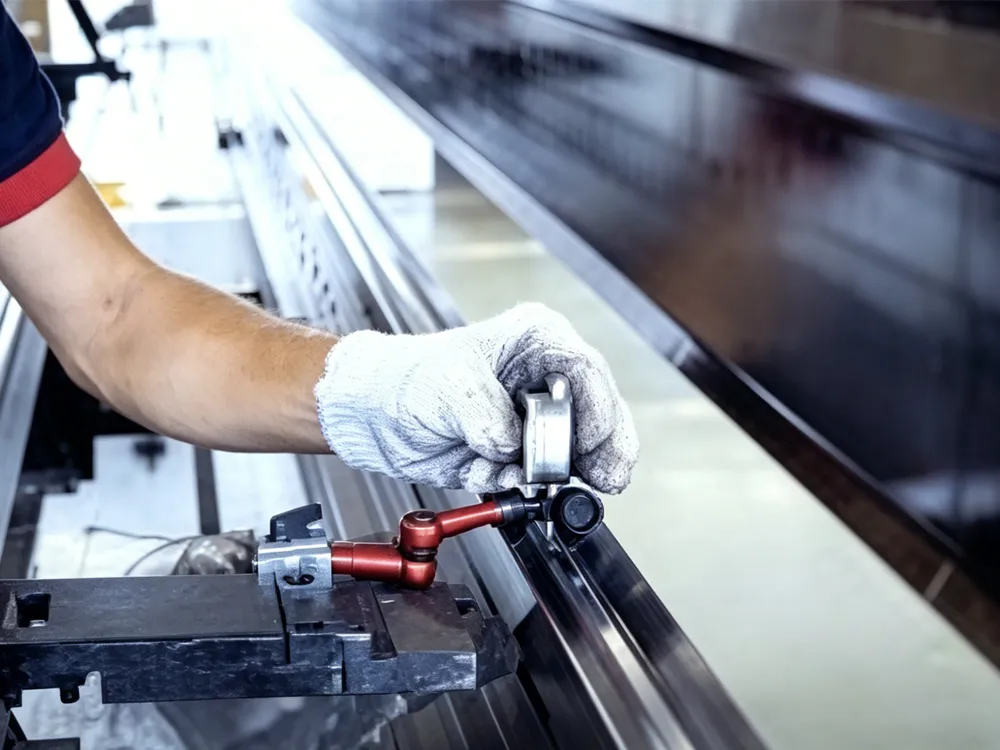
Safety regulations contribute to worker safety. Lockout tags should be used to switch off the power before machines are repaired. Do not touch the bending side of a machine. Light curtains prevent workers from being exposed to accidental startups. A crane is required to transport heavy tools. Proper handling of things to prevent injuries and breakages. Safety training is on the use of the emergency stop. Clear talk is used to prevent accidents when changing tools.
Documentation And Data Tracking
A digital record of its history of use is present in each of the tools. These include how many times it’s been used and any maintenance done. It also contains design information and what it is crafted out of, such as D2 or hardened alloys. Their hardness is between 58 and 60 HRC, and the surface finish is 0.8 micrometers. The frequency of failure of a tool indicates its reliability. How efficient the tool is throughout its lifetime is measured by cost per bend. The presence of digital records can aid in the planning of improved tools in the future. Details allow for lessening the waste of time and enhancing quality.
Operator Responsibility Rules
The importance of operators is to protect the tools on a daily basis. They handle tools when installing and taking them out. It’s worthwhile to align objects in place when being installed to ensure that the tool does not become stressed in an uneven manner. Unless installed correctly, the life of one-half of the tool can be cut short. Before the operators start their tasks, they should carefully follow the instructions when setting up and verifying the tools. It is better to look at tools prior to using them to avoid trouble. Cleaning tools improve products and minimize errors. Early reporting of damage helps engineers resolve issues in a timely manner. Unless damage is reported, the tool might break altogether. Maintenance and blurring of good communication between shifts ensure the smooth running of maintenance. Discipline among operators is needed; this contributes to longer tool life and superior tool performance.
Quality Control Connection
The quality of the product will be dependent on the condition of the tools. Bends and crude finishes can result from worn tools. Bend angle checks are performed by inspectors after production. In the event of an angle failure, tools are likely to become tired. The fact that parts are scratched means that tools are dirty or broken. Size errors are normally due to alignment. Rejection rates are minimized by well-maintained systems. Stable tools are used to replicate consistent good results over the long run. Teams of maintenance and quality need to cooperate. Information disclosure will help regulate the process and prevent errors.
Conclusion
Press brake tools ought to be well-maintained. Wash them every day, inspect them once a week, and reinspect them once a month to ensure they are at work. Store the tools carefully to avoid breaking them. Monitor wear to determine the time to repair or replace. Regrinding extends tool life and reduces wear. During maintenance, workers are protected by following safety precautions. Keep good records of each tool. It is also possible to extend the life of tools that are easy to work with and enhance the efficiency of the work.