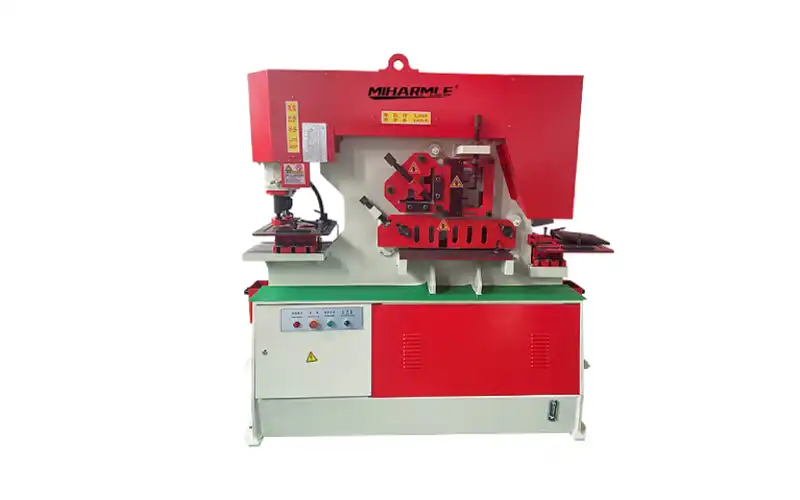
Rolling machines play a crucial role in industrial production, bending metal plates into the required shape. They are widely used in industries to form structural components. They bend the multiple pieces uniformly and smoothly without any cutting or welding.
The decision to use a specific rolling machine is a strategic move in any fabrication or manufacturing process. Rolling machines significantly affect “product quality”. Production speed and operational costs are also concerning factors. Choosing an inappropriate machine can lead to frequent failures or material waste.
Production engineers or manufacturers should choose these machines that match their project requirements.
The content below gives an understanding of the functions of rolling machines. That will help manufacturers select the right equipment to meet production requirements.
What is a Rolling Machine?

A rolling machine is industrial equipment used to bend metal sheets. These machines use rotating rollers to give different shapes without welding or cutting.
A rolling machine can produce different shapes. These shapes may include curved or arc sections. Their main output shapes involve cylindrical and conical. Manufacturing sectors also use a rolling machine to give shape to semi-circular structures.
These shapes depend on the roller position. Machine type and material properties are also the main factors of concern. The final shape also depends on the CNC system or operator control.
Basic Function of a Rolling Machine:
The basic operation of a rolling machine ensures a smooth deformation of material. Its performance avoids material from cracking and fracturing.
Its working process involves several steps:
- Firstly, metal sheets are placed between the rollers.
- After that, rotating rollers apply pressure to metal plates, enabling them to be curved.
- These rollers bend the plates into the required curvature after multiple passes.
Types of Rolling Machines:
There is a variety of Rolling machines with different working capacities. Rolling machines are designed based on the production requirements. There may be a risk of inconsistent output in the final rolled parts due to a poor selection.
The following are different types of Rolling machines with their functions:
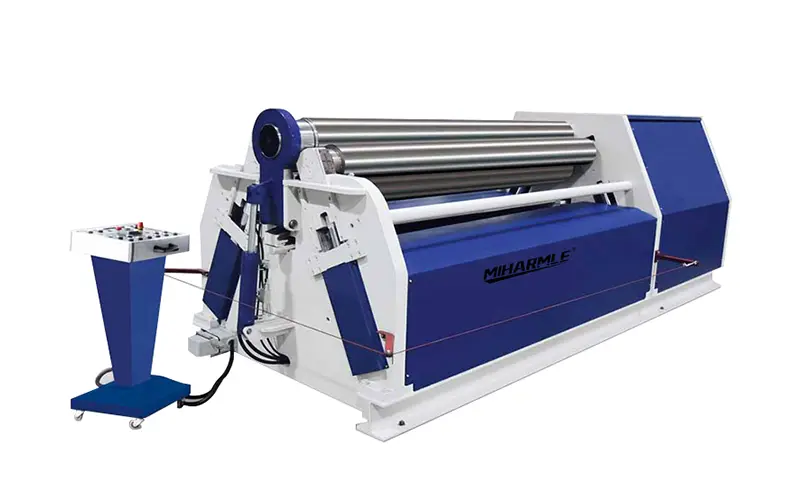
4-Roll Rolling Machine:
- This machine is more sophisticated and has a specific system.
- Its structure involves one top roller, one bottom roller, and two side rollers.
- The basic function of this machine is to perform bending and pre-bending in a single arrangement. It works consistently without removing plates.
- The machine’s shape capability includes cylinders, cones, and high-precision curves.
- One of the major applications of this machine includes oil and gas equipment. 4-Roll machines are used to shape large-diameter tanks and pressure vessels. These machines are widely used in heavy fabrication industries. Applications:
- The main feature of this machine is its high bending accuracy. His machine doesn’t depend largely on the operator. Their flat ends require less processing, resulting in faster production.
3-Roll Rolling Machine:
- The structure of this machine includes one top roller and two bottom rollers.
- The basic function of this machine is to bend the metal sheets into a cylindrical form.
- This machine is suitable for forming cylinders or shells with a large diameter.
- One of its applications involves light fabrication work. 3-Roll rolling machine is also used in ventilation ducts and small tanks.
- This machine can bend metal sheets into a large-radius curve. It is not suitable for tight bending.
- Using this 3-Roll machine requires manual skills. There is no need for automatic pre-bending with simple models.
- This machine offers less precision than advanced machines.
Cone Rolling Machine:
- This machine is specifically designed for conical shapes. The tapered bending feature makes it a popular choice across industries.
- Cone-rolling machines can produce shapes such as cones and tapered cylinders.
- These machines are widely used in chimneys, hoppers, and industrial funnels. Special duct systems also use these machines.
Pyramid Type Rolling Machine:
- Its structure includes one top roller and two side rollers, all fixed in position.
- The basic function of this machine is traditional plate bending.
- These machines can produce shapes such as cylinders and partial curves.
- The primary applications of this machine are in structural steel workshops. These machines are widely used in medium fabrication work.
- Due to this machine’s limited flexibility, working requires more adjustments. This led to slower production.
CNC Rolling Machine:
- CNC (Computer Numerical Control) is the most advanced type of rolling machine.
The operation of this machine relies on computer programming. - The operator doesn’t manually set the roller. The speed is controlled automatically by a computer program. It also set the pressure.
- The main advantage of using this machine is that it gives precise shapes. Because manual procedures can give some errors. But an automated positioning can make an identical shape repetitive.
- This machine can produce complex curves.
- The wide use of CNC machines in mass production industries. Aerospace components and automated fabrication plants use these machines for high-precision manufacturing.
- CNC machines are best suited for high-volume production.
Application Requirements for Rolling Machines:
Rolling machines are used for different industrial applications. Production engineers should focus on the purpose for which they chose the machine. They are designed for specific tasks.
The challenging question is, how and where manufacturers use this machinery in production.
- There is a need to understand the required work type. These rolling machines give different outputs for different tasks. Whether these machines are used to bend the plates or shells. Cone forming and curved panel production are also included in their typical tasks.
- For example, if manufacturers are concerned about a small workshop. Then a 3-roll machine will work better there. And if they are concerned for an industrial plant, then a 4-roll or CNC machine works there.
- One of the main concerning factors is identifying the required shape. There are no accurate results for all machines for all shapes. These rolling machines are used to produce shapes such as cylinders and cones. They are also used for custom industrial shapes. Partial curves or arcs are also included in the shapes of the services of these machines.
How to Select the Appropriate Rolling Machine?
The following points should be noted before selecting the right rolling machine.
Product Requirement:
Firstly, the product requirements need to be defined. Manufacturers should start with their end product. They should focus on the required diameter range and production volume before selecting a rolling machine.
These products may involve a cylindrical tank or a pressure vessel. Rolling machines are also used to produce shapes such as conical structures and curved structural sections. Their common output includes pipes and shells. Each of these products requires a different type of machine and a different rolling method.
Material Type and Strength:
Before selecting a rolling machine, it is necessary to determine what material is to be rolled. Different materials require different rolling methods. Just the type of material is not enough; material softness, thickness, and required finish are major factors.
- A 3-roll plate machine is best suited for medium-thickness carbon steel.
- Medium to thick stainless steel requires a 4-roll plate rolling machine. A 3-roll plate is suitable for light to medium thickness.
- Thin to medium aluminum sheets require a 3-roll plate rolling machine. And for high-quality aluminum and alloy work, a 4-roll rolling machine is best suited.
- CNC machines are best for complex shapes and mass production.
Production Volume:
The scale of production influences the choice of machines.
- CNC rolling machines are an ideal choice for high-volume production.
- 3-roll rolling machines are suitable for low-volume production.
- Hydraulic 4-roll machines are best suited for medium-volume production.
Maintenance and Support:
Before selecting an appropriate rolling machine, manufacturers should think about long-term support.
They should first check the availability of spare parts for the machine. Also, technical services and installation support should be easily approachable. Response time is also a major consideration.
Precision Requirements:
There is a need for different accuracy levels in different industries.
- Pressure vessels require high precision. Chemical storage tanks and aerospace parts also require highly accurate shapes.
- Structural steel work can be done with lower precision. General fabrication also does not require high precision.
- For higher accuracy, CNC or 4-roll rolling machines are a good choice.
Pre-Bending Requirement:
Pre-bending is required to eliminate flat plate ends. Before selecting a machine, focus on which type is suitable for pre-bending pressure vessels.
- 3-roll machines meet the limited pre-bending requirement.
- 4-roll machines meet the efficient pre-bending requirement.
Machine Build Quality:
To select an appropriate rolling machine, check frame thickness and roller hardness. Structural rigidity is also a major focus.
Automation Level:
Also, check the automation level before selecting a rolling machine. Modern machines include CNC control and digital display. Automatic positioning is also an advantage of using modern rolling machines. So, select the machine with a high level of automation. Because automation increases consistency. It minimized the errors.
Common Mistakes in Selection:
- Ignoring material strength when choosing a rolling machine.
- Do not underestimate the material thickness requirements.
- No knowledge about types of rolling machines.
- Another mistake a manufacturer could make is overlooking service support.