
Introduction
Hydraulic press machines are large machines used in factories and workshops. They compress down to form objects such as metal, plastic, and rubber. By pressing, bending, and assembling, people make various parts of cars and other products.
The hydraulic press cost varies depending on its size, strength, and additional features.
Hydraulic Press Machine Overview

A hydraulic press uses oil to apply force from one location to another. As you push one part, the oil transfers the push to another part. This enables it to be pressed really hard with less effort. The oil dispersion relieves pressure throughout the machine.
The primary components are the hydraulic cylinder, pump, fluid, frame, press bed, and control system. The parts are all in support of pressing work and safe operation.
Hydraulic presses are used in many different jobs. They form metal, press powders, form plastic, and test materials. The machines can stamp with the same level of force repeatedly.
Factors Influencing Hydraulic Press Machine Cost
● Machine type
The prices of hydraulic presses vary depending on the type and shape.
- H-frame presses are shaped like an H and are used for the simplest tasks in workshops.
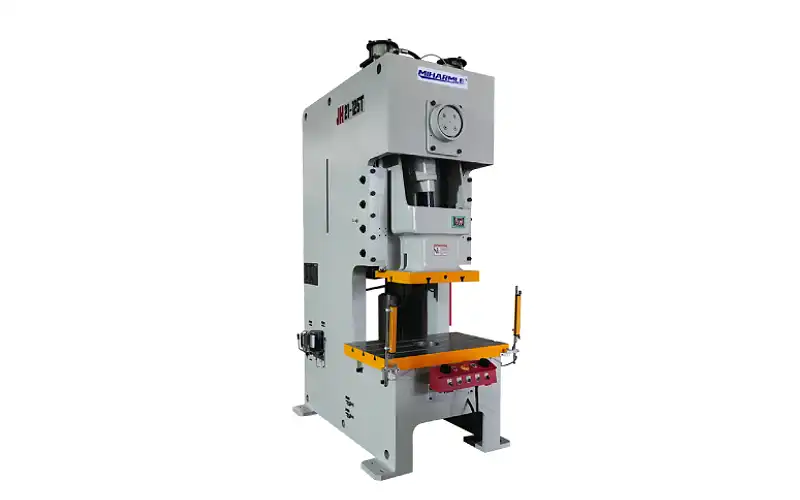
- C-frame presses have a C shape, so you can access the interior from three sides, making them easy to load and unload.
- Four-column presses are tall, powerful, and highly efficient. They work in heavy jobs in large factories.
- Bench-top presses are compact and can fit into a table. They are employed in small jobs or science laboratories.
- Straight-side presses are straight-sided and useful for producing precision parts, such as those used on assembly lines.
Different quantities of strong metal are required in each type. A press that is constructed more strongly is typically more expensive.
● Force capacity
The amount of press can push the force, thereby influencing the price. The more powerful presses are more expensive.
- Low force presses can apply 1-30 tons of force.
- Medium force presses are capable of pushing 30-200 tons.
- High-force presses can exert more than 200 tons.
The more powerful the press is, the thicker its parts must be, making it more expensive to construct.
● Machine features
The press is more costly with additional features.
- Automation implies that the press will have its own computer panel for control.
- Safety systems provide guard-based protection for workers, sensors, and emergency stop buttons.
- The press can form special shapes using tooling systems and different molds.
Each new feature makes the press more complex and expensive.
● Manufacturer quality
Famous brands are generally more expensive because they use high-quality components, test their machines more frequently, and provide user support in case of a failure.
The new companies can be less expensive, yet they might not be so useful in case of a problem.
● Location factors
Prices may change due to shipping, local regulations, and taxes. Transportation of the giant machines is expensive.
Typical Hydraulic Press Machine Price Ranges
H-frame hydraulic press
- 1 to 30 tons: 1,000 to 5,000 dollars
- 30 to 200 tons: 5,000 to 20,000 dollars
- 200 tons and above: 20,000 to 50,000 dollars or more
H-frame presses are applicable in repair shops and small workshops.
C-frame hydraulic press
- 1 to 30 tons: 2,000 to 7,000 dollars
- 30 to 200 tons: 7,000 to 25,000 dollars
- 200 tons and above: 25,000 to 60,000 dollars or more
C-frame presses support flexible loading and small-batch production.
Four-column hydraulic press
- 1 to 30 tons: 3,000 to 10,000 dollars
- 30 to 200 tons: 10,000 to 40,000 dollars
- 200 tons and above: 40,000 to 100,000 dollars or more
Heavy, continuous production is carried out on four-column presses.
Bench-top hydraulic press
- 1 to 30 tons: 500 to 3,000 dollars
- 30 to 200 tons: 3,000 to 10,000 dollars
In small workshops and in laboratories, bench-top presses are used.
Straight-side hydraulic press
- 1 to 30 tons: 10,000 to 30,000 dollars
- 30 to 200 tons: 30,000 to 70,000 dollars
- 200 tons and above: 70,000 to 150,000 dollars or more
Straight-side presses back high-accuracy manufacturing lines.
Additional Cost Factors
● Installation work
Big machines require cranes for transport and setting teams. Floors in the factory are usually required to be reinforced before installation.
● Maintenance work
Annual expenditure includes hydraulic oil changes, seal replacements and inspection of parts. Regular maintenance ensures the machine remains stable.
● Energy use
Big presses also consume a lot of electricity during operation. Energy-efficient systems save on costs in the long run.
● Operator training
Employees require training on operating safely and controlling the system. The training application imposes additional costs in the setup phase.
Hidden Cost Breakdown
The purchase price of the hydraulic press covers only the base machine. Post-purchase costs are some of the hidden costs.
● Spare parts supply
Valves, hoses, and seals should be replaced after wear. The rate of wear on internal parts is accelerated by production use. Certain components should be replaced periodically to prevent unexpected failures. Keeping spares minimizes downtime during breakdowns.
● Hydraulic oil supply
The hydraulic oil must be clean and kept at a constant level at all times. Contaminated oil reduces system pressure and harms internal components. Frequent oil changes ensure there is always pressure during prolonged production. The filters reduce pollution but require maintenance.
● Downtime loss
Repairing machines disrupts the output and delivery timetables. Even short periods of closure reduce the day’s production volume. The use of late maintenance contributes to queueing in factory operations. Long-term shutdowns result in financial losses to certain industries.
● Energy consumption cost
When large hydraulic presses are in use, they consume high electrical power. High production periods in factories lead to higher energy bills. With efficient systems, power consumption is lower when the press is idle. Servo control systems minimize loading when the pressure is low.
● Labor cost increase
Trained operators adjust pressure settings and check on machine operations. Maintenance teams check hydraulic systems and worn-out parts. The additional personnel costs are added to the factories’ operating costs. Training programs are added to the initial setup cost before production.
● Storage and handling cost
Big machines require regulated storage before installation at the factory location. Delivery and positioning of heavy frames are carried out by transport equipment. Lifting systems and cranes increase installation costs during setup.
Buying Guide for Hydraulic Press Machines
● Load need
The material’s strength and thickness should correspond to its force capacity. Low-force settings are required for thin aluminum sheets. More force capacity is required in thick steel plates. Small machines lead to poor forming and rapid wear. Big machines add to the expense and energy consumption with no value.
● Work size
The press bed should be large enough to accommodate the largest workpiece in the production process. Small beds do not allow flexibility in handling materials or in production. Big beds accommodate larger parts at a higher cost for the machine. Operators should take tool space and fixture space into account.
● Operation speed
Cycle speed affects daily production output. High-volume production is facilitated by fast machines operating within a limited time. Delicate forming and shaping are done with low-speed systems. Fast systems increase productivity and the service requirement.
● Frame strength
The frame sustains the operating pressure loads. Powerful frames reduce deflection under high forces. Light frames cause vibrations and inaccuracies. Heavy loads can be supported using four-column and H-frames.
● Energy efficiency
Energy usage affects operating costs. The older machine consumes more electricity per cycle. In modern systems, idle and low-load energy consumption is minimized. Big plants have efficient machinery that reduces monthly operating expenses.
Maintenance Schedule
● Daily checks
The operators check the oil level before the machine starts. The presence or absence of leakage or signs of damage can be detected through surface inspection. Abnormal noise or vibration indicates early problems with the system. Quick checks ensure that there will be no sudden breakdown during operation.
● Weekly checks
Hydraulic hoses should be checked for cracks or leaks. Seals should not be loose to allow pressure levels. Fittings are loose, resulting in pressure loss and potential danger. Inspections are conducted weekly, reducing the system’s susceptibility to failure.
● Monthly checks
Filters collect dirt and particles inside the hydraulic system. Cleaning filters maintains stable pressure flow. Pressure system testing checks machine performance. Monthly checks improve system reliability during heavy use periods.
● Yearly checks
Hydraulic oil replacement maintains system cleanliness and pressure quality. Old oil reduces system performance and increases wear rate. Full system pressure test checks structural and hydraulic stability. Yearly service improves machine lifespan and reduces repair costs.
Conclusion
The cost of a hydraulic press machine can vary widely. The smallest presses start at about $500. The biggest ones for factories can cost more than $150,000.
The price depends on how strong the press is, what kind it is, what features it has, and who made it. You also have to pay for things like setting it up, fixing it, power, and teaching people to use it.