
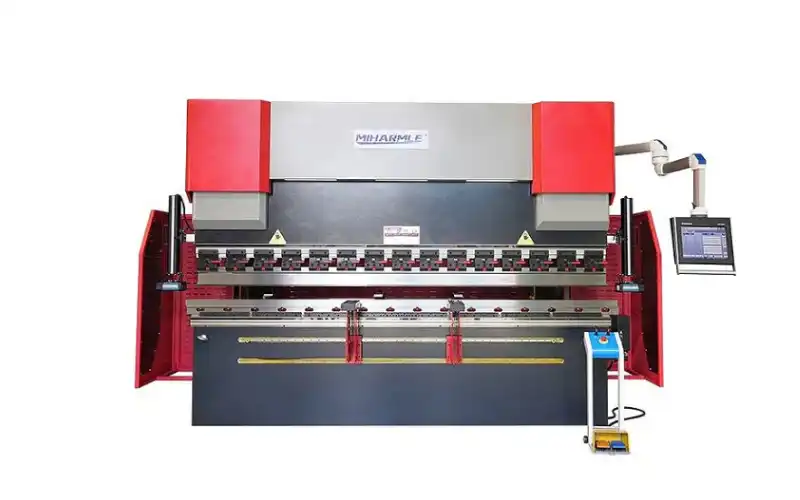
A servo-hybrid press brake combines servo-driven pumps with hydraulic bending force, reducing unnecessary energy consumption while retaining strong tonnage capability.
A fully electric press brake uses servo-electric drive technology without a conventional hydraulic main drive. It is particularly attractive for high-frequency, precision sheet metal production where energy efficiency, low noise and reduced maintenance are priorities.
For European workshops, however, the right choice should not be based on electricity consumption alone. Tonnage, material thickness, production hours, bending accuracy and total operating cost all need to be considered.
Why Energy Consumption Matters for European Workshops
Electricity consumption is becoming an increasingly important factor in the operating cost of sheet metal workshops.
When a press brake operates for one or two shifts per day, differences in average power consumption can accumulate into meaningful annual costs.
This is why manufacturers are increasingly comparing servo-hybrid and fully electric press brakes instead of selecting machines based only on tonnage, bending length and initial purchase price.
The better purchasing question is not simply:
“Which press brake consumes less electricity?”
It is:
“Which technology gives my factory the lowest cost per finished part?”
How Does a Servo-Hybrid Press Brake Save Energy?
A servo-hybrid press brake still uses hydraulic cylinders to generate bending force, but the hydraulic pumps are controlled by servo motors.
Unlike conventional hydraulic systems where the motor may continue operating during idle periods, servo-driven pumps can adjust their output according to actual machine demand.
This reduces unnecessary energy consumption during waiting and low-load periods.
Main Benefits
- Lower energy consumption than conventional hydraulic systems
- Reduced hydraulic heat generation
- Lower operating noise
- Strong bending-force capability
- Suitable for different material thicknesses
For workshops that require relatively high tonnage but still want to reduce operating costs, servo-hybrid technology provides a practical balance between bending force and energy efficiency.
How Does a Fully Electric Press Brake Save Energy?
A fully electric press brake uses servo motors and a mechanical transmission system to control the bending movement without relying on a conventional hydraulic main drive.
Electrical energy is primarily required when the machine is moving and bending.
During workpiece loading, positioning and other waiting periods, power demand can be significantly reduced depending on the machine design and production cycle.
Eliminating the main hydraulic bending system also reduces energy losses associated with oil circulation, throttling and heat generation.
Another important advantage is maintenance.
Without the conventional main hydraulic drive, manufacturers can reduce hydraulic-oil-related maintenance and the risk of oil leakage, helping create a cleaner and quieter sheet metal workshop.
Servo-Hybrid vs Fully Electric Press Brake: Key Differences
| Factor | Servo-Hybrid | Fully Electric |
|---|---|---|
| Drive System | Servo + Hydraulic | Servo-Electric |
| Energy Consumption | Low | Typically very low |
| Hydraulic Oil | Required | No main hydraulic bending drive |
| Bending Force | Excellent for medium/high force | Depends on electric machine capacity |
| Precision | High | Excellent |
| Noise | Low | Very low during idle periods |
| Maintenance | Reduced hydraulic maintenance | Less hydraulic-system maintenance |
| Best Application | Mixed production | Precision repetitive production |
The key difference is therefore not simply whether one machine “saves more electricity.”
The two technologies are designed around different combinations of force, efficiency, flexibility and production requirements.
Which Press Brake Saves More Energy?
For suitable applications, a fully electric press brake can achieve very low energy consumption because power is transferred through the electric drive without a conventional main hydraulic circuit.
Servo-hybrid machines can also significantly reduce energy consumption compared with traditional hydraulic press brakes because the hydraulic pump operates according to actual demand.
However, European buyers should be careful with fixed marketing claims such as:
“60% energy saving” or “80% energy saving.”
Actual electricity consumption depends on:
- Machine tonnage
- Bending length
- Ram stroke
- Material thickness
- Bending force
- Number of cycles
- Idle time
- Production hours
A better comparison is to ask the supplier for the estimated kWh per shift or kWh per defined number of bending cycles under your actual production conditions.
When Should You Choose a Servo-Hybrid Press Brake?
A servo-hybrid machine may be the better choice when:
- You require medium or higher bending force
- You process different material thicknesses
- Your factory handles a wide variety of parts
- You want lower energy consumption than a traditional hydraulic press brake
- You still prefer hydraulic bending-force characteristics
- The machine operates for long production shifts
It is especially attractive for manufacturers upgrading older hydraulic equipment while maintaining a broad production range.
When Should You Choose a Fully Electric Press Brake?
A fully electric press brake is particularly suitable when:
- You mainly process precision sheet metal
- Production involves frequent repetitive bending
- Energy efficiency is a priority
- Low operating noise is important
- You want to reduce hydraulic maintenance
- Your required tonnage falls within the available electric machine range
- You are moving toward automated sheet metal production
Applications can include electrical cabinets, electronics, appliances, HVAC components, stainless steel products and precision sheet metal parts.
Compare Total Cost of Ownership, Not Just Machine Price
The lowest purchase price does not always mean the lowest long-term production cost.
European workshops should consider the Total Cost of Ownership (TCO).
A simple starting point is:
Annual Electricity Cost = Average Power Consumption × Operating Hours × Electricity Price
But electricity is only one part of TCO.
Also consider:
Energy + Maintenance + Hydraulic Oil + Filters + Spare Parts + Downtime + Productivity
For a factory operating two shifts, differences in energy consumption and maintenance requirements can become significant over five or ten years.
This is where the higher initial investment in a more efficient press brake may potentially be recovered through lower operating costs and higher productivity.
Do Not Choose a Press Brake Based on Energy Consumption Alone
Energy efficiency is important, but the machine must first be capable of producing your parts.
Before choosing between servo-hybrid and fully electric technology, confirm:
- Material and tensile strength
- Maximum thickness
- Maximum bending length
- Required tonnage
- Part geometry
- Minimum flange
- Required angle accuracy
- Parts produced per shift
- Automation requirements
A highly efficient fully electric machine is not the right investment if it cannot provide the bending force or working range your products require.
FAQ
Is a Fully Electric Press Brake More Energy-Efficient?
Generally, fully electric machines can provide very low energy consumption in suitable applications because they eliminate the conventional main hydraulic bending drive.
However, actual energy consumption depends on machine capacity and production conditions.
Does a Servo-Hybrid Press Brake Still Use Hydraulic Oil?
Yes. Servo-hybrid technology still uses hydraulics to generate bending force, but servo-controlled pumps reduce unnecessary motor and pump operation.
Which Is Better for High-Volume Precision Parts?
A fully electric press brake can be particularly attractive for repetitive precision sheet metal production when the required tonnage and working length are within the machine’s capacity.
Which Is Better for Thicker Materials?
Servo-hybrid technology can be advantageous when higher bending forces and a wider range of material thicknesses are required.
Final selection should always be based on calculated tonnage and actual workpieces.
The Bottom Line
There is no universal winner between servo-hybrid and fully electric press brakes.
A fully electric press brake is an excellent choice for European workshops prioritising energy efficiency, precision, low noise, clean operation and reduced hydraulic maintenance.
A servo-hybrid press brake offers a strong balance between hydraulic bending force and modern energy-saving technology, especially for manufacturers processing a wider variety of materials and thicknesses.
The best decision should be based on your actual production data—not one headline energy-saving percentage.
Before selecting your next press brake, prepare your:
Material + Thickness + Bending Length + Part Drawing + Required Tonnage + Parts per Shift + Operating Hours
MIHARMLE engineers can use these details to compare servo-hybrid and fully electric configurations according to your actual production requirements.
Explore MIHARMLE Electric Press Brake Solutions → Request a Technical Recommendation