
In the modern sheet metal processing industry, you need to continuously improve bending accuracy, reduce operating costs, and shorten delivery time. For companies that require high precision, low energy consumption, and clean operation, pure electric bending machines have greater advantages.
Compared to hydraulic press brakes, pure electric press brakes are driven by servo motors, providing you with a more efficient and cleaner bending solution. Below are seven advantages of pure electric bending machines in modern sheet metal processing.

1. 70%-90% Energy Saving
One of the biggest advantages of an electric press brake is energy efficiency. A traditional hydraulic press brake usually keeps the hydraulic pump running during operation, even when the machine is not actively bending. This continuous power consumption increases electricity costs over time.
An electric press brake uses servo motors that consume power mainly when the machine is moving or bending. When the machine is idle, energy consumption is greatly reduced. Depending on machine size, working conditions, and production rhythm, electric press brakes can help achieve approximately 70%-90% energy savings compared with conventional hydraulic systems.
For factories with multiple bending machines or long daily production hours, this saving can become a major long-term cost advantage.
2. No Hydraulic Oil
Electric press brakes do not require hydraulic oil. This brings several practical benefits to daily production.
There is no need to purchase, store, replace, or dispose of hydraulic oil. Operators do not have to deal with oil leakage, oil contamination, filter replacement, or temperature-related hydraulic performance changes. The workshop becomes cleaner, safer, and easier to manage.
For manufacturers producing stainless steel panels, precision enclosures, elevator parts, electrical cabinets, medical equipment components, or appearance-sensitive parts, a clean bending environment is extremely valuable. No hydraulic oil means lower contamination risk and better consistency in production quality.
3. Higher Repeatability and Bending Accuracy
Precision is one of the most important factors in sheet metal bending. Electric press brakes are driven by servo-electric systems, which provide highly accurate ram movement control. This makes the bending process more repeatable, especially for small batches, frequent part changes, and high-precision components.
Higher repeatability means that once the correct bending parameters are set, the machine can reproduce the same result again and again with minimal deviation. This helps reduce scrap, rework, inspection time, and operator dependency.
For industries such as electronics, HVAC, automotive parts, switchgear cabinets, kitchen equipment, and custom metal fabrication, consistent bending accuracy directly improves product quality and customer satisfaction.
4. Faster Cycle Time
Another important advantage of electric press brake systems is faster cycle time. Servo-electric drive systems can deliver quick acceleration, fast return speed, and responsive control. This allows the machine to complete bending cycles more efficiently.
In many production scenarios, especially when bending small and medium-sized parts, an electric press brake can complete jobs faster than a traditional hydraulic machine. Faster cycle time means higher output per shift, shorter lead time, and better production flexibility.
For job shops and contract manufacturers, this can be a real competitive advantage. The ability to complete more parts in less time helps improve machine utilization and overall profitability.
5. Less Maintenance
Hydraulic press brakes include pumps, valves, seals, hoses, filters, oil tanks, and other hydraulic components. These parts require regular inspection and maintenance. Oil leaks, pressure instability, seal aging, and oil temperature issues can increase downtime and maintenance costs.
Electric press brakes have a simpler drive structure because they do not rely on a hydraulic power unit. With fewer oil-related components, maintenance becomes easier and cleaner. Daily operation is more stable, and long-term service costs can be reduced.
Less maintenance also means less unplanned downtime. For factories working under tight delivery schedules, machine availability is just as important as machine speed.
6. More Environment Friendly
Sustainability is becoming an important factor in manufacturing investment decisions. Electric press brakes support greener production in several ways.
First, they consume much less energy. Second, they eliminate hydraulic oil use, reducing the risk of leakage and waste oil disposal. Third, they often generate less heat and noise than hydraulic systems, helping create a better working environment.
For companies aiming to improve ESG performance, reduce carbon emissions, or build a cleaner workshop, electric press brakes are a practical step toward more environmentally friendly sheet metal fabrication.
7. Smart Factory Integration
Modern manufacturing is moving toward digital production, automated workflows, and data-driven decision-making. Electric press brakes are well suited for smart factory integration because they are typically equipped with advanced CNC controls, servo systems, software connectivity, and automation options.
They can be integrated with offline programming software, robotic bending systems, automatic tool changing, production management systems, and Industry 4.0 workflows. Operators can manage bending programs more efficiently, reduce setup time, and improve production traceability.
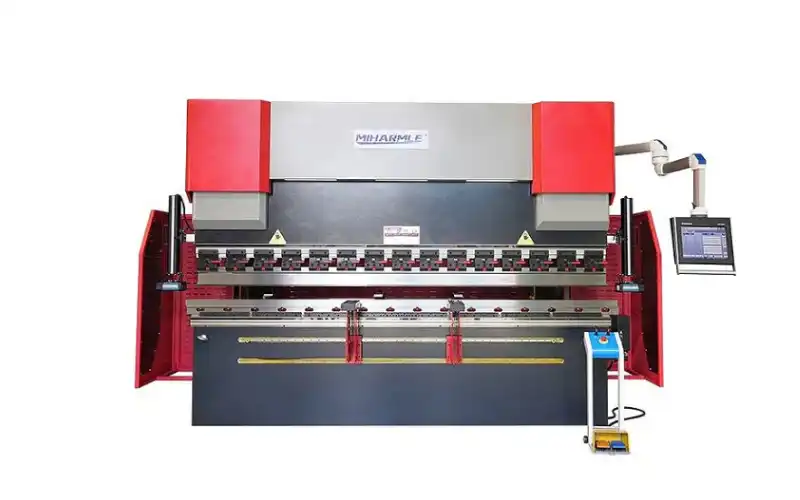
For factories upgrading from traditional manual or hydraulic bending to intelligent manufacturing, advanced equipment such as the DE-15 Control System Servo Electric Press Brake Machine provides a strong foundation for future automation.
Electric Press Brake vs. Hydraulic Press Brake
Hydraulic press brakes remain useful for many heavy-duty bending applications, especially when very large tonnage is required. However, for many modern sheet metal fabrication tasks, electric press brakes offer clear advantages in efficiency, precision, cleanliness, and automation.
If your production focuses on high precision parts, frequent job changes, lower energy cost, clean operation, and smart factory development, an electric press brake can be a highly valuable investment.
Conclusion
In summary, pure electric bending machines can achieve energy savings of 70%-90%, require no hydraulic oil, offer higher repeatability, shorter cycle times, require virtually no maintenance, and are environmentally friendly.