
Why Are Electric Press Brakes More Expensive?
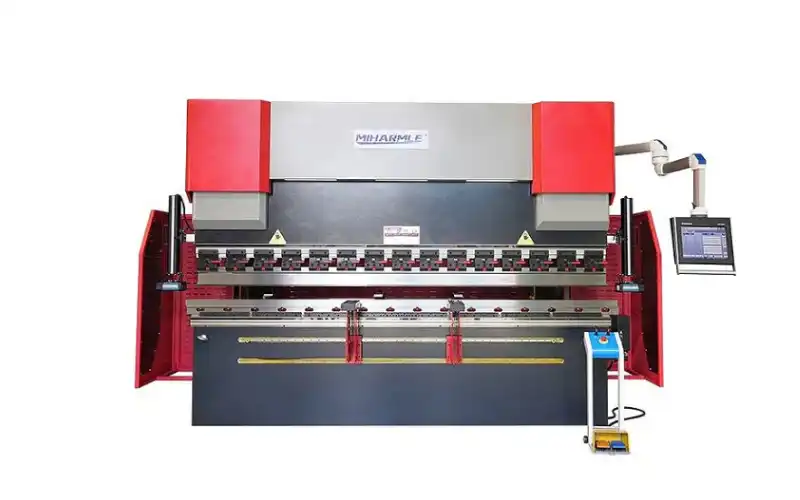
The pure electric press brake adopts a more advanced drive structure such as servo motors and ball screws, and is equipped with a high-resolution feedback and precision CNC system.
An electric press brake price includes steel, tonnage, and a basic control panel. What you pay for is precision, speed, repeatability, lower operating costs, and cleaner long-term production. The initial costs of the machine are as follows:
- High-performance servo motors
- Precision transmission systems
- More advanced CNC controllers
- Closed-loop positioning control
- Higher-grade electrical components
- More accurate ram synchronization
- Reduced-maintenance oil-free design
- Optional automation-ready architecture
This is why two machines with the same bending force and bending length can have very different prices.
A 100-ton, 3200 mm hydraulic press brake and a 100-ton, 3200 mm servo electric press brake may look similar in capacity, but their production performance, energy use, maintenance cost, and bending consistency can be very different.

2026 Electric Press Brake Price Range
In 2026, the general market price for electric press brakes can be estimated as follows:
| Machine Type | Typical Price Range |
|---|---|
| Small electric press brake, 35T-65T | $25,000-$70,000 |
| Medium electric press brake, 80T-125T | $50,000-$120,000 |
| Large electric press brake, 150T-200T | $100,000-$180,000+ |
| Electric press brake with advanced CNC and multi-axis backgauge | $80,000-$200,000+ |
| Robotic electric bending cell | $150,000-$500,000+ |
These figures are only budget references. The final price depends heavily on configuration, brand, country of origin, controller, tooling, safety system, delivery terms, and local installation costs.
For example, some China-made electric press brakes are priced much lower than European or Japanese premium brands, while high-end systems from established global manufacturers may cost several times more for the same nominal tonnage.
That is why buyers should compare machines by complete specification, not just by tonnage or headline price.
Main Price Factors of an Electric Press Brake
1. Bending Force
Bending force, usually measured in tons or kilonewtons, is one of the biggest price drivers.
The higher the tonnage, the stronger the frame, ram, drive system, and tooling structure must be. A machine designed for thin stainless steel panels does not need the same power or rigidity as a machine bending thick carbon steel plates.
Common bending force options include:
- 35T or 40T for small parts and thin sheet metal
- 63T or 80T for general light fabrication
- 100T or 125T for common cabinet, enclosure, HVAC, and machinery parts
- 160T or 200T for heavier industrial applications
Overbuying tonnage increases machine cost unnecessarily. Underbuying tonnage limits production capability and may shorten machine life.
Before requesting a quotation, buyers should confirm:
- Material type
- Material thickness
- Maximum bending length
- Required V-die opening
- Bending angle
- Daily production volume
Correct tonnage selection is the first step toward controlling cost.
2. Bending Length
Bending length is another major factor. A longer machine requires a longer bed, stronger frame, better deflection control, and more precise synchronization across the full working length.
A 100T/2500 mm electric press brake will normally cost less than a 100T/3200 mm model. A 4000 mm or 4200 mm machine will cost more again, even if the tonnage is similar.
Longer bending length affects cost because it increases:
- Frame size
- Machine weight
- Machining difficulty
- Ram deflection control requirements
- Crowning or compensation needs
- Shipping and installation cost
If your longest part is 2500 mm, buying a 3200 mm machine may be reasonable for flexibility. But buying 4000 mm “just in case” can increase both purchase price and floor space cost without improving daily production.
3. Servo System
The servo system is the heart of an electric press brake.
Unlike traditional hydraulic machines, which rely on oil pressure, servo electric press brakes use motors to drive the ram directly or through a precision transmission system. This creates several advantages:
- Lower energy consumption
- Faster response
- Higher positioning accuracy
- Better repeatability
- Less heat generation
- No hydraulic oil leakage
- Lower maintenance requirements
However, servo systems also add cost.
A high-quality servo system includes servo motors, drives, feedback components, transmission parts, and control integration. Better servo systems usually provide smoother motion, stronger synchronization, longer service life, and more reliable bending accuracy.
For manufacturers producing high-value parts, this cost is often justified because the machine can reduce scrap, rework, and operator dependency.
4. CNC Controller
The CNC controller has a major impact on both machine price and daily usability.
A basic controller may be enough for simple bends, but complex parts, frequent job changes, multi-step programs, and 3D bending simulations require a more advanced CNC system.
Common controller-related price differences include:
- 2D vs 3D programming
- Touchscreen size and interface
- Offline programming support
- Automatic bend sequence calculation
- Angle correction compatibility
- Multi-axis backgauge control
- Network or Industry 4.0 connectivity
- Brand and software support
A cheaper controller can reduce the initial quotation, but it may increase setup time, training difficulty, and programming errors.
For job shops and high-mix production, the controller is not just an accessory. It directly affects productivity.
5. Automation
Automation can dramatically increase the price of an electric press brake, but it can also dramatically improve output.
Automation options may include:
- Multi-axis backgauge
- CNC crowning system
- Automatic tool clamping
- Automatic tool changer
- Sheet followers
- Robot loading and unloading
- Offline programming
- Angle measurement and correction
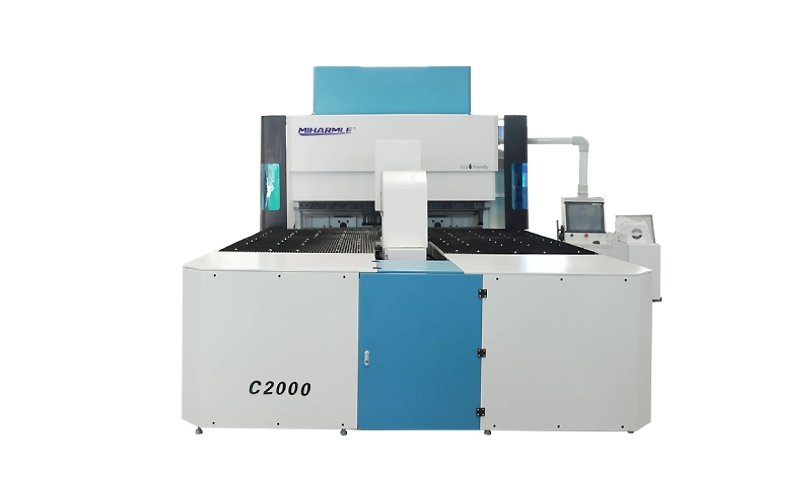
- Fully automated bending cell
A standard electric press brake may be suitable for flexible manual operation. But for large-volume production, automation can reduce labor cost, improve repeatability, and support unmanned or semi-unmanned operation.
The important point is this:
Automation should be matched to production reality.
If your factory changes jobs many times per day, automatic tool clamping and offline programming may deliver faster ROI than a robot. If you produce the same parts in high volume, robotic bending may be worth the investment.
Is an Electric Press Brake Worth Buying?
An electric press brake is worth buying when the machine helps reduce your total production cost, not just when it looks modern.
It is especially suitable for companies that need:
- High bending accuracy
- Repeatable production quality
- Lower scrap rate
- Shorter setup time
- High-mix, low-volume production
- Cleaner workshop environment
- Lower electricity consumption
- Less hydraulic maintenance
- Better operator experience
- Long-term production stability
Electric press brakes are often a strong choice for:
- Electrical cabinets
- Elevator parts
- HVAC components
- Stainless steel products
- Kitchen equipment
- Enclosures
- Server racks
- Precision sheet metal parts
- Automotive and electronics components
However, hydraulic press brakes may still be more economical for very high-tonnage bending, thick plate applications, or buyers with very limited budgets and simple production requirements.
The best machine is not always the most expensive one. It is the one that gives you the lowest reliable cost per finished part.
Electric Press Brake ROI: How to Calculate Payback
To understand ROI, buyers should compare the total cost of ownership, not only the purchase price.
A simple ROI formula is:
ROI Payback Period = Extra Investment / Annual Savings
Annual savings may come from:
- Lower electricity cost
- Reduced hydraulic oil and filter maintenance
- Less downtime
- Lower scrap rate
- Faster setup
- Higher output per shift
- Reduced dependence on highly skilled operators
- Better first-piece accuracy
Example:
If an electric press brake costs $30,000 more than a comparable hydraulic machine, but saves:
- $4,000 per year in electricity
- $3,000 per year in maintenance
- $8,000 per year by reducing scrap and rework
- $10,000 per year through faster setup and more production output
Total annual savings = $25,000
Estimated payback period:
$30,000 / $25,000 = 1.2 years
In this case, the higher upfront cost can be recovered quickly.
But if the machine runs only a few hours per week, the payback period will be much longer. That is why ROI depends strongly on production volume, part complexity, labor cost, and utilization rate.
How to Avoid Overpaying
Before buying an electric press brake, ask suppliers for a complete quotation, including:
- Bending force
- Bending length
- Servo motor brand and specification
- CNC controller brand and model
- Number of controlled axes
- Backgauge configuration
- Crowning or compensation system
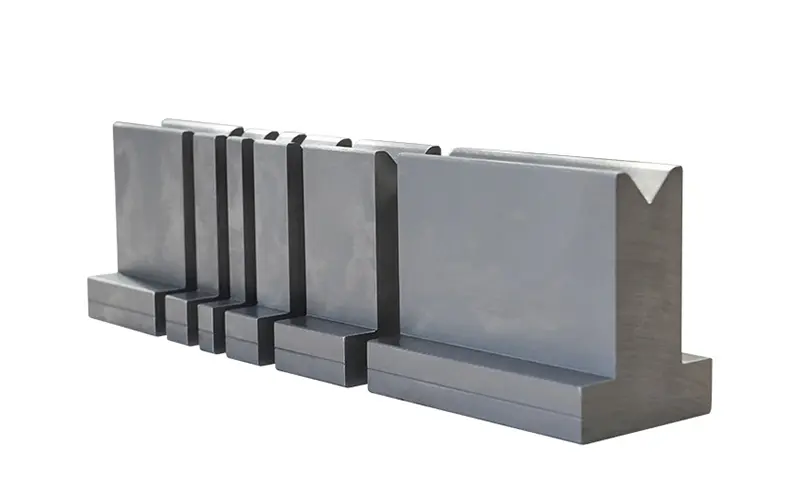
- Tooling package
- Safety system
- Voltage and electrical requirements
- Warranty
- Spare parts list
- Installation and training cost
- Delivery term: EXW, FOB, CIF, or DDP
A low machine price may not include essential items. Tooling, freight, import duties, installation, training, and software can significantly affect the real landed cost.
The safest way to compare quotations is to request the same technical configuration from each supplier.
Final Answer: How Much Should You Budget?
In 2026, most buyers should budget:
- $50,000-$150,000+ for a professional electric press brake
- 15%-25% extra for tooling, shipping, installation, training, and import-related costs
- More than $150,000 if advanced automation or robotic bending is required
If you prioritize precision, speed, energy efficiency, and long-term productivity, a pure electric bending machine is the preferred choice. Our equipment is equipped with advanced servo technology, a precision control system, and high-value components. Therefore, to determine if it’s cost-effective, you should also consider the following factors:
cost per bend, payback period, production stability, and the value of every accurate part you deliver.