
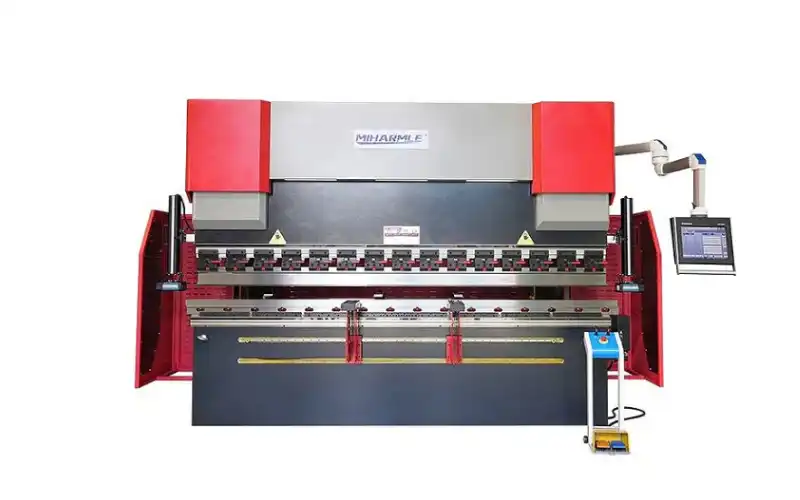
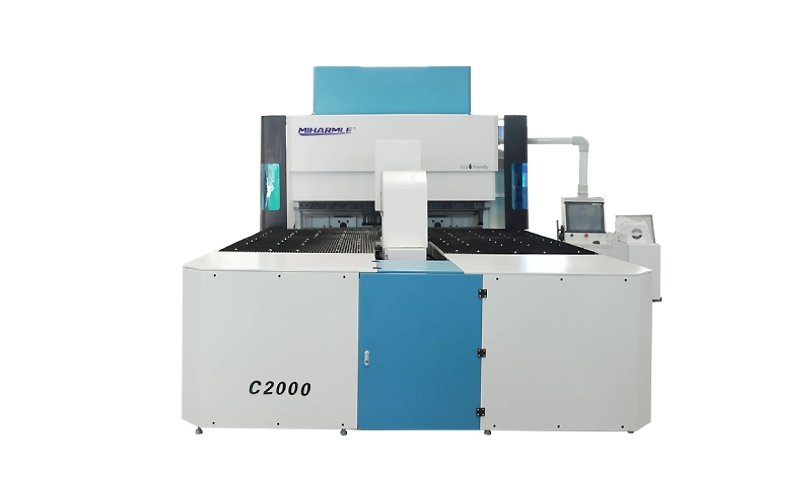

The evolution of press brakes represents a remarkable transformation. What started with labor‑intensive manual bending has now evolved into advanced, high‑precision automated metal forming. These metal sheet-bending machines are available in various types. The Press brake is one of the most important machines in sheet metal fabrication. They bend, shape, and form different metals into intricate parts and components.
As with all other machines, each one is designed for a different type of work. So, understanding various press brake types available in the market is essential. It will help the operators and workshop owners expand their knowledge. Furthermore, this article will help you choose the perfect press brake for your business. So, let’s begin with a brief introduction to these incredible workhorses.
Overview of Press Brakes
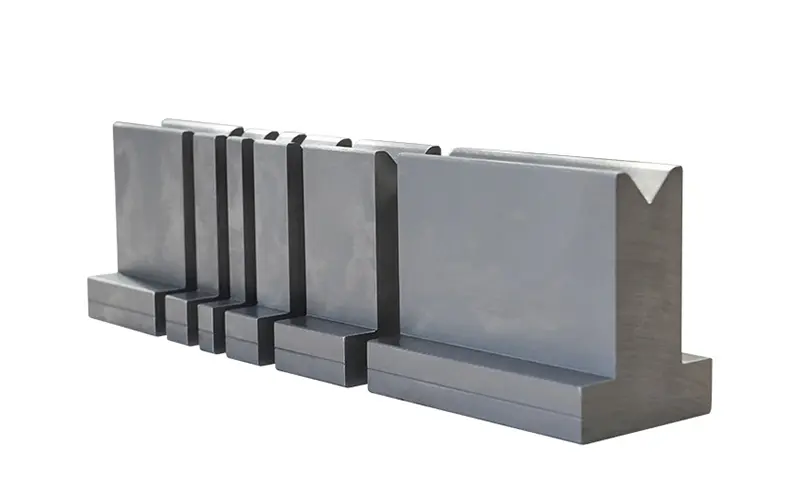
A press brake is a metalworking machine that bends and folds sheet metal. They operate on a simple work principle. The metal sheet is clamped between the punch and a die. Exerting heavy force results in metal-bending operations. By creating precise parts and repeatable bends and angles, they help produce complex machine parts and other components efficiently. These parts are then used in various manufacturing facilities. Their application spans industries from construction, automotive, to aerospace, and many others.
Types of Press Brakes
Below, we discuss the major types of press brakes, their strengths, limitations, and uses.
Mechanical Press Brakes
Mechanical press brakes have been present since the inception of press brakes. They operate with a motor-driven flywheel. The flywheel stores rotational energy and transfers it through the clutch and crank mechanism. When the operator operates the clutch, it moves the ram up and down. At the same time, the crank moves other parts of the press brake. The ram’s movement bends the sheet placed between the punch and die. They can handle large tonnage.
Suitable Materials
Well-suited for mild steel, aluminum sheets, stainless steel, copper, and brass. They can handle thicknesses ranging from light-gauge sheet to moderately thick plates.
Advantages
- High production speed; cycles are quick.
- Accurate and consistent when set up for repetitive bending.
- Simple mechanical construction for easy servicing.
- Robust design for long-term operation for mass production
Disadvantages
- Force and speed are fixed—less flexibility for varying materials.
- Not ideal for complex bends or very thick materials.
- Requires operator skill to prevent mistakes.
- Mechanical wear can affect accuracy over time.
Applications
Mass production of brackets, panels, and small structural parts is done using mechanical press brakes. They play a role in auto stamping and body panel forming. In the construction industry, roofing sheets, door frames, and other metal components are manufactured. They are fast and suited to repetitive tasks with minimal setup changes.
Hydraulic Press Brakes
The hydraulic press brake uses hydraulic pressure to bend and shape metal sheets accurately. These press brakes work when hydraulic fluid under pressure is pumped into the two synchronized cylinders coupled to the ram, connected by the piston rod (the moving upper beam). This force causes the ram to move downwards, pressing the punch tool on the metal sheet that is resting on the fixed die at the bottom. The metal is bent to an angle as the punch forces the sheet into the die. The control system of the machine allows adjusting the speed, position, and pressure of the ram, ensuring accurate and repeatable bends. There are two types of hydraulic press brakes:
- Nut-stop hydraulic press brakes
- Synchro hydraulic press brakes
Suitable Material: They can handle light, medium, and heavy-gauge sheets. Materials like mild steel, stainless steel, aluminum, and high-strength alloys are well-suited for these machines.
Advantages
- Variable bending speed and pressure.
- Capable of complex, deep, or multi-stage bends.
- Handles thicker and harder materials easily.
- It can be built in very large sizes for heavy industries.
Disadvantages
- Slower than mechanical types.
- Use more floor space, so not suitable for compact workshops
- Limited tonnage of bending
- Hydraulic fluid needs monitoring and replacement.
Applications
Their applications range from lighter tasks to heavy bending applications. Pipe and tube bending, aluminum extrusion bending, and forming ventilation ducts are some major applications.
Electric (Servo-Driven) Press Brakes
These servo motors drive the ram movement via mechanical transmission components like screws and ball nuts. This electric servo press brake converts electrical energy into precise mechanical motion via servo motors. The movements of the ram and backgauge are controlled via a CNC control system. This ensures smooth, accurate bending with adjustable force and fast cycle times.
Suitable Materials
Thin to medium sheets of mild steel, stainless steel, copper, and aluminum.
Advantages
- No hydraulic oil—clean operation.
- It has very low energy consumption, only using power when bending.
- Extremely precise
- Quieter operation, making it ideal for indoor factories.
- Faster movement between bends boosts productivity.
Disadvantages
- Less suitable for extremely thick materials.
- Higher purchase price than traditional models.
- Requires a stable electrical power supply.
Applications
Electric press brakes are commonly used in electronics manufacturing and appliance manufacturing, medical equipment fabrication, and other applications that need high precision, cleanliness, and energy efficiency. They are best suited for shops that specialize in the manufacturing of small and complex parts of uniform quality.
Pneumatic Press Brakes
A pneumatic press brake uses compressed air to power its ram and bend metal sheets. The system pressurizes air, which moves cylinders that push the punch against the metal placed on the die. This process deforms the sheet to the desired angle.
Suitable Materials
They accept thin metal sheets of materials like aluminum, copper, and mild steel. Also, they can accommodate plastics and non-ferrous metals. Thickness must be less than 3 mm.
Advantages
- Lightweight, compact, and easy to move in small workshops.
- They have low power usage, as they run using air compressors.
- Quick to set up for simple bends.
Disadvantages
- Very limited bending force.
- Not suited for thick or high-strength sheets.
- Noisier than their hydraulic counterparts
Applications
Common applications involve light signage production, HAVC works, and prototype manufacturing for small parts. Also, they can be used in educational and training workshops for students.
CNC Press Brakes
CNC press brakes are relatively new and are among the most advanced machines in the market. These press brakes integrate computer numerical control for automated ram and back-gauge positioning. The operator enters the bending details into the programmed software, including bend angles, depth, and order, via a user interface. To power these machines, servo drives or electric motors are used. All these machines need is a technically experienced operator who can manage all functions with a single control panel.
Suitable Materials
Varies from thin sheet metals to thick plates, depending on machine capacity.
Advantages
- Automated precision—reduces human error.
- Stores programs for repeated jobs.
- Faster changeover between different product setups.
- Can execute complex multi-bend parts with ease.
Disadvantages
- Higher cost than manual machines.
- Requires technically skilled operators.
- Downtime can be costly if electronics fail.
Applications
Their application spans aerospace, automotive, and other fabrication industries. They are used to create multiple bend lines and manufacture high-precision industrial components and parts for machinery.
Hybrid Press Brakes
Hybrid press brakes combine hydraulic power with servo-electric control. These machines take advantage of the robust bending force from the hydraulic system while servo motors control ram movement and positioning. This makes them much more powerful while also being precise.
Suitable Materials
They can handle thin to thick metal sheets, including stainless steel, mild steel, and high-strength alloys.
Advantages
- Lower energy use than full hydraulic machines.
- Offers both high force and precise control.
- Less oil required—cleaner and eco-friendly.
- Fast cycle times with high accuracy.
Disadvantages
- A more complex design means higher repair costs.
- Requires specialized servicing knowledge.
Applications
They are used in high-end automotive manufacturing and aerospace fabrication that require exact results. Also, they are highly applicable in electronic manufacturing, where they are used in the surface treatment of plates.
All-electric Press Brakes
These fully electric press brakes are entirely powered by electricity. So, there is no involvement of hydraulics or pneumatics. This makes them very precise and accurate, producing a high bending force. With no hassle of leakage or air pressure, they are very eco-friendly and provide high safety standards.
Suitable Materials
Thin to mid-thickness sheets—mild steel, aluminum, copper, stainless steel.
Advantages
- Maximum energy efficiency.
- Low maintenance—no oil or fluid systems.
- Clean, safe, and environmentally friendly.
- Very quiet operation.
Disadvantages
- High upfront costs.
- Lower force capacity than large hydraulics.
Applications
Common applications span cleanroom manufacturing and small electronics casings. Food processing equipment production also involves such equipment, where no oil contamination is allowed.
Tandem Press Brakes
Two or more press brakes are mechanically or electronically linked to bend extra-long workpieces in one pass. They use a centralized control system to synchronize the machines, ensuring precise and consistent bends across the entire length of the workpiece.
Suitable Materials
Large and long sheets often include materials like copper, brass, Titanium, and non-ferrous metals.
Advantages
- Can handle lengths up to and over 18 meters.
- Equal bending force over the entire length.
- Can operate individually when long bending is not needed.
Disadvantages
- Large footprint in a workshop.
- High capital cost.
- Requires experienced operators.
Applications
Tandem press brakes are ideal for industries requiring precise bending of long components, such as bridge-building components and heavy machinery fabrication. The shipbuilding industry uses them for long beams for construction and ship hulls.
Comparison table
| Type of Press Brake | Definition | Suitable Materials | Advantages | Disadvantages | Typical Applications |
| Mechanical Press Brake | Uses a flywheel-driven motor with a clutch to move the ram. | Mild steel, aluminium, stainless steel; thin to medium thickness. | Fast cycle times, high repeatability, simple design, and durability. | Fixed speed and force, less flexible, mechanical wear, less suitable for complex bends. | Mass production of automotive parts and construction panels. |
| Hydraulic Press Brake | Uses hydraulic cylinders powered by fluid pressure. | Wide range: thin aluminum to thick steel plates. | Variable speed and pressure, strong force, flexible, and safe. | Slower cycles, high energy use, and hydraulic fluid maintenance. | Aerospace, shipbuilding, heavy machinery, complex bends. |
| Electric (Servo-Driven) | Ram movement is controlled by electric servo motors. | Thin to medium metals, including aluminum and steel. | Energy-efficient, precise, quiet, fast cycles, low maintenance. | Higher initial cost, limited force for very thick metals. | Electronics, appliances, and medical equipment require precision. |
| Pneumatic Press Brake | Uses compressed air to drive the ram. | Light gauge metals, thin aluminum and steel. | Lightweight, easy operation, low power use, quick setup. | Limited bending force, less precise, requires air system maintenance. | Small workshops, prototypes, and light manufacturing tasks. |
| CNC Press Brake | Computer-controlled automation of bending sequences. | Wide range depending on machine capacity. | High precision, automated, fast setup changes, repeatability. | Expensive, requires trained operators, potential electronic downtime. | Aerospace, automotive, complex multi-bend parts. |
| Hybrid Press Brake | Combines hydraulic force with electric servo control. | Broad range, including high-strength alloys. | Energy efficient, precise control with strong force, and eco-friendly. | More complex maintenance, higher repair costs. | High-end automotive, aerospace, and medium-to-large production. |
| All-Electric Press Brake | Fully electric, no hydraulics, driven by motors. | Thin to medium sheets, mild steel, aluminum. | Maximum energy efficiency, low maintenance, clean, quiet. | High upfront cost, limited bending force. | Cleanroom, electronics, food processing equipment. |
| Tandem Press Brake | Two or more linked brakes to bend long/large sheet metal. | Large and long, thick steel/aluminum sheets. | Handles very long parts, distributes bending load, and has high precision. | Large footprint, high cost, skilled operators needed. | Bridge components, ship hulls, and heavy machinery fabrication. |
Factors to Consider When Selecting a Press Brake
So, the question comes down to which type is the right one. How to choose the best for your business. The answer is straightforward: choose according to your business and your project needs. Further, here are some points to address your needs:
– Tonnage: For this first access, the material thickness and length you will be working on. They decide on how much tonnage the press brake can handle. Choosing a press brake with higher tonnage will definitely benefit in the future.
– Tooling compatibility: Ensure tooling compatibility with the type of press brake you select.
– Integration and automation: Think about future growth and opportunities, and then select a press brake that allows integration and automation features.
Conclusion
Now, to conclude, press brakes serve as the backbone of the manufacturing industry, and there are a variety of types available in the market. They all serve different needs and demands of the industrial sector. Each one accommodates different material thickness, length, and bending options. Understanding these press brakes will not only make you knowledgeable but also enable you to make an informed decision for your business. A high-quality press brake manufacturer will always help you provide the best advice and accurate equipment for your growing needs. So, partner with a reliable manufacturer and elevate your business now! Contact us now!