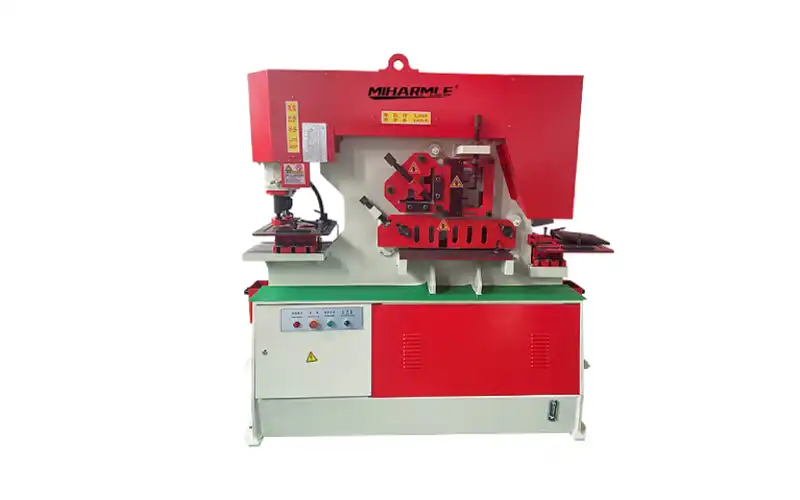
Introduction
In the metal fabrication industry, sheet metal shearing operations are a crucial part of the manufacturing process. They use metal shearing machines for such operations. Mainly, a metal shearing machine precisely cuts, trims, and shapes the metal sheets or plates. Well, its developmental history dates back to the 18th century. But it remains unknown to many. Earlier, scissor machines were used, but with the advancement of technology, high-end shearing machines are available in the market.
In industries like aerospace, automotive, medical, and electronics appliances, where accuracy is needed, these machines serve as the core equipment. They enhance productivity, maintaining safety standards and regulations.
Understanding these sheet metal shearing machines will be best for manufacturing professionals, metal fabricators, production managers, etc. This guide will help them explore and invest in shearing technology to meet their growing business needs. This article discusses a detailed analysis of metal shearing machines, starting from the basics. Read till the end!
What is a metal shearing machine?
A shearing machine is a specialized mechanical machine that is used for cutting and trimming metal sheets, plates, pipes, and bars of various thicknesses into different shapes and sizes. They apply great shear stress with the punch and mold.
The metal shearing machine works similarly to how scissors work. They may have straight cutting blades or rotating blades. This determines the shearing process of the machine.
With the evolution of technology, advanced CNC shearing machines are rising in demand. They do not need much human input, so one machine operator can handle multiple operations simultaneously.
Shearing, as compared to other cutting methods such as plasma cutting, sawing, turning, plasma and laser cutting, dominates. Here are some comparative advantages.
Comparative Advantages of Shearing Over Other Cutting Methods
- Lower Operating Costs – Shearing uses less energy than thermal cutting methods. It requires no consumable gases or special materials. Maintenance costs remain minimal compared to plasma and laser cutting systems.
- Faster Production Speed – Shearing cuts materials quickly without a warm-up time. This makes it perfect for high-volume production. It works faster than sawing, plasma cutting, and grinding for straight cuts.
- Clear cuts – Shearing creates the smoothest and straightest cuts. The edges are clean, so no extra finishing work is required. This beats sawing and thermal methods that often require edge treatment.
- No Heat Problems – The cold cutting process prevents heat distortion. This gives shearing a major advantage over plasma, laser, and flame cutting methods.
- Very low Material Waste – Shearing produces almost no waste material during cutting. Unlike sawing, which creates metal chips or plasma cutting, which removes material, shearing preserves nearly all the original metal.
These benefits make shearing the standout choice for manufacturers who need fast, cost-effective and exact cuts in large-scale production. That’s why their application spans aerospace, medical, and automotive manufacturing. Furthermore, they are used in construction, machinery and household appliance production.
Types of metal shearing machines
With tons of advantages, these machines excel in many industries. So, with different needs and demands of the industry, a wide range of metal shearing machines is available in the market. Each has its own advantages and serves various purposes. Here are four types of shearing machines discussed below:
Manual Shearing Machine
Typically, a manual shearing machine needs a skilled operator who operates the machine by hand. The user pulls a lever or handle to move the blade and cut the metal. These machines are simple and reliable.
There are no complicated parts, and they do not need electricity. Thus, they are fully powered by hand. Ideal for small jobs, repair shops, and places with limited power supply. They handle thin sheets easily, while cutting thick plates requires more effort and takes longer. Manual shears are low in cost and easy to maintain, but not suitable for heavy or high-volume work.
Mechanical Shearing Machine
An electric motor powers mechanical shearing machines and use a flywheel to store energy. When the machine starts, the stored energy from the flywheel passes through gears to the blade for powerful and exact cuts. They are faster and more efficient as they offer a high number of strokes per minute. This makes them better than hydraulic versions. Mechanical shearing machines are divided into two further types depending upon the operation mode, which are: up-moving and down-moving.
Moreover, they handle thicker sheets well and are best suited for efficiently handling repeated tasks. Businesses with medium-sized production needs and metal shops can use these. But moving parts may wear down over time. So, it needs regular maintenance and sometimes part replacement.
Hydraulic Shearing Machine
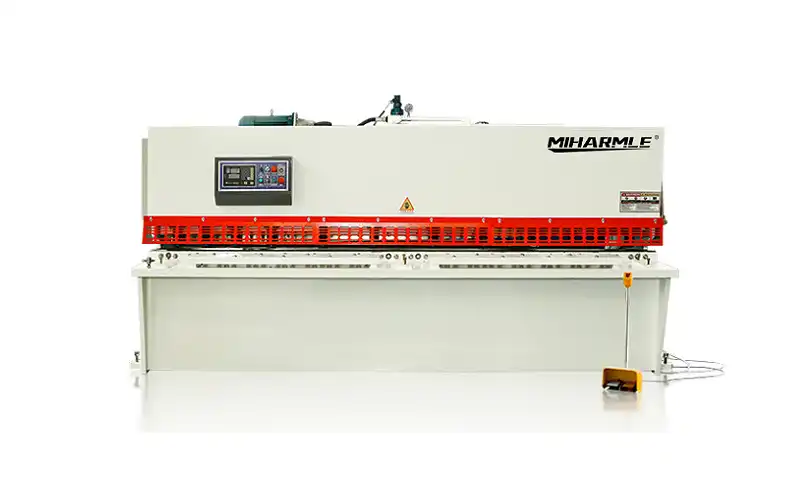
These machines employ hydraulic cylinders and a motor to power the machine. When the machine is activated, the motor powers the cylinders, which are filled with hydraulic oil. They apply force on the upper blade piston. The upper blade then applies shear stress on the material to be cut. This system gives a smooth, steady force for each cut. Because of their strength, hydraulic shears can easily handle thick and hard metal plates. They produce straight, clean edges and are widely used in large workshops and manufacturing plants.
Although these systems include Safety features, such as emergency stops and guards, these machines are still complex. Maintenance includes regular checks of hydraulic fluid and seals to prevent leaks.
Hydraulic shearing machines can be divided into two main types:
-
- Swing beam shearing machines: A swing beam shearing machine uses a blade mounted on a pivoting arm. During cutting, the upper blade swings in an arc to shear the metal. They are speedy, precise and smooth.
- Gullinotine shearing machine: It uses a straight, vertical movement for the upper blade. When activated, the blade drops directly down to shear the metal, similar to how a paper cutter works. This up-and-down action ensures precise, straight cuts. Mechanical or hydraulic systems may power them. However, sometimes they integrate CNC controls for higher efficiency and thicker metal for large production needs.
CNC Shearing Machine
As discussed earlier, CNC (Computer Numerical Control) shearing machines are the most advanced version of these machines. They integrate fully automated systems. The programmed software is added to the machine, which automatically helps the cutting process according to the instructions. So, once the machine is activated, no human input is needed. The machine performs the work with accuracy and repeatability.
For large-scale production facilities and custom jobs that need detailed cuts, they do the perfect job. These machines reduce worker expenses and minimize human errors. However, CNC shears need a high initial investment, while they require skilled technical operators for setup and maintenance.
Core components and working principle of a metal shearing machine
The metal shearing machine consists of components, including a basic frame that includes a workbench, upper and lower blades, a clamping tool, baffles, a back gauge mechanism, and a control system. Here is the detail of these components:
- Frame and Structure
The frame forms the foundation of the shearing machine. It is built from high-strength steel or cast iron to handle heavy loads and cutting forces. The frame supports all other components and keeps the machine stable during operation.
- Work Bench (Table)
The workbench or the worktable provides a flat, stable surface for positioning the metal sheets during cutting. It is made from heavy steel and designed to support the weight of large metal plates. The workbench includes measurement scales and guide rails to help operators position materials accurately. Some tables have ball transfers or rollers to make moving heavy sheets easier.
- Shearing Blades
It serves as the primary component of the machine. There are two main blades. The upper blade is movable while the lower blade is stationary. The upper blade moves up and down to cut the metal sheet. These blades are made from high-strength steel or carbon steel for durability and sharpness.
- Back Gauge Mechanism
This component positions the metal sheet at the correct distance from the blade. It moves forward and backward using a motor and a lead screw. The back gauge ensures accurate cut dimensions and consistent results.
- Baffle
Secured near the blade edge, it acts as a protective tool. It prevents the movement of the metal sheet due to external forces. Also, it ensures the safety of the worker. It is made from high-strength steel and is an important part of the machine.
- Clamping Device
Also called a presser foot, this component clamps the metal sheet in place during cutting. It prevents the material from moving or vibrating, which ensures clean and accurate cuts.
- Gap Adjustment Device
This mechanism controls the space between the upper and lower blades. The gap is adjusted depending on the thickness of the metal being cut. Proper gap setting protects the blades and improves cut quality.
- Control System
The electrical control panel allows operators to set cutting parameters. Modern machines use programmable controllers for precise operation. Controls include blade gap, cutting angle, and back gauge position.
Working Principle of the Metal Shearing Machine
The shearing process begins when the metal sheet is placed on the machine table. The operator positions the sheet against the back gauge. It ensures correct alignment. Next, the hold-down device clamps the sheet firmly in place. When the operator starts the cutting cycle, the control system activates. It powers the upper blade to move downward, applying shear stress to cut the sheet. This force, combined with the sharp blade edges, cuts the metal along a clean line. The cutting happens quickly and precisely. The speed of the shearing blade can be adjusted according to your needs. At the same time, the clamping tool and baffle protect the sheet from external forces and ensure workers’ safety.
What are the advantages of a metal shearing machine?
There are several advantages of metal shearing machines, as they excel in various manufacturing processes. Some are below:
- These machines produce exact, clean cuts with tight tolerances. Delivering consistent results, they produce minimal material distortion.
- They possess great cutting efficiency, which boosts productivity. That’s why they are well-suited for large production needs.
- The machines can accommodate very thick material. It is also best for soft metals like aluminum, bronze, and brass.
- Modern machines have safety guards and emergency stops. These features protect operators during use.
Conclusion
Now that you have read the article, you must have gained an in-depth knowledge about metal shearing machines. The shearing method comparatively excels over other cutting processes like plasma cutting, laser cutting, etc. That’s why these machines are well-suited for various large-scale operations. With the market being full of multiple types of metal shearing machines, you can always choose one according to your business needs. Remember, partnering with the best shearing machine manufacturer can make a big difference.
Miharmle Group, being a leading manufacturer, provides you with high-quality equipment coupled with the best after-sales support service. If you are in search of the best at an affordable price, contact us now and see your business flourish!
FAQ
What thickness of metal can a metal shearing machine cut?
Metal shearing machines handle different thicknesses based on their design and power. Manual shears work with thin sheets from 0.5 mm to 3 mm. Hydraulic machines can cut medium-thickness materials between 3 mm to 12 mm. Heavy-duty industrial shears handle thick plates up to 25 mm or more.
What are some important considerations for selecting the right shearing machine type?
- Start by looking at the thickest material you plan to cut regularly.
- Check the volume or estimated capacity you need to process each day.
- Choose between Manual machines and other types, including Hydraulic and mechanical models. CNC integrated shears can also be a perfect choice for high-volume work that needs precise measurements.
- Your budget and available floor space also matter.
What are the advantages of a metal shearing machine over a laser cutter?
Shearing machines are faster, cheaper, use less energy, and have no heat distortion. However, Laser cutters can make curved cuts, but shearing only does straight lines.
What are some of the best ways to maintain my shearing machine to extend its life?
Remove metal chips and oil buildup from the machine every day. Look at the blade edges often and change them when they get dull. Put oil on moving parts as shown in the owner’s manual. For hydraulic systems, check hydraulic fluid levels each week and add more when needed. Tighten any loose bolts you find during monthly checks. Fix small problems before they damage other machine parts.