

Electric press brakes are one of the major types of Press brakes. Used widely in the metal fabrication industry, they are highly valued for their accurate bending and forming operations.
They use an electric motor to drive a ball screw or a belt to move the ram. This functionality makes them different from the other types. Unlike other traditional ones, like hydraulic press brakes, these are quieter, more efficient, and more precise. As they are used in various applications, they serve as an important tool in advanced manufacturing.
This article discusses the electric press brakes in in-depth detail. Beginning with the history, components, working, and their types. Further, we will extend our explanation to their advantages and limitations, pricing, and a brief comparison with the hydraulic version.
What is an Electric Press Brake?
These press brakes use electric power as their power source. Its main functions are bending, forming, and shaping metal sheets or plates.
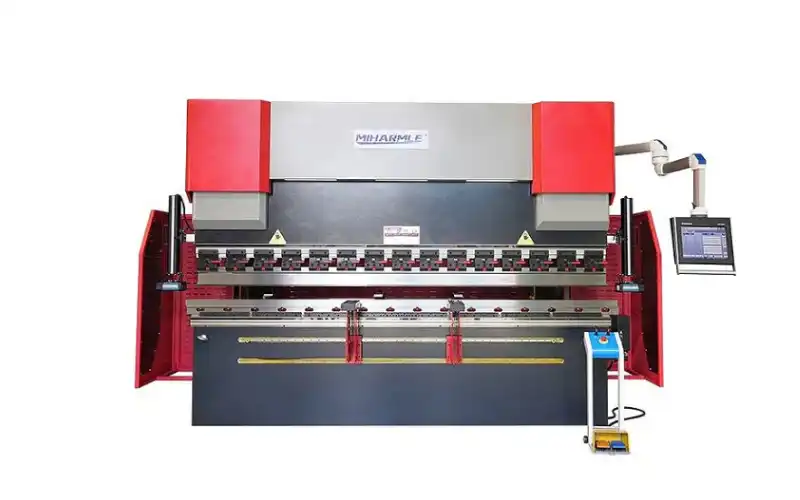
The mechanical transmission system and the electric motor are the significant constituents of these press brakes and form their core components. They regulate the movement of the ram with the ball screw and belt by using the electric power from the motor. This is effective in controlling the movement of the upper beam/ram, leading to accurate bending outcomes.
These machines have become a common choice as the technology evolves. And now, with a number of benefits, they are used in numerous applications in aerospace, shipbuilding, and electronics.
History of Electric Press Brake
Although the concept was much older, these electric press brakes came to life in the 1990s. Their innovations revolutionized the press brake machine market. Before that, hydraulic press brakes were ruling the market, but they could not match the precision of electric brakes.
Previously, when using hydraulic machines, there was some variation in precision. It was due to several reasons. It includes the changing of oil viscosity and mechanical wear in parts. So, with the introduction of electric versions, the manufacturers were able to achieve more precise and accurate bending angles, along with the advantage of fast production. This leads to sustainable businesses. This set an initial stage for this evolving technology.
Main components of electric press brakes
Frame
The frame forms the skeletal structure of the electric press brake. It is made from strong, solid steel. The heavy frame supports all the main parts, keeps the machine stable, and resists strong forces and vibrations during bending operations. This ensures precise results and long-term durability.
Bed (bottom beam)
The bed is the flat, lower beam of the machine. It is where the metal sheet rests during bending. The die is mounted on the bed. Its flat, sturdy design helps support the workpiece and keeps it in the right position.
Ram (upper beam)
The ram is the moving upper beam of the press brake. It holds the punch tool and moves down to press the metal into the die. In electric models, the ram’s movement is powered by motors, giving smooth and accurate action.
Control System
This component manages every operation in the machine. It includes advanced features that make settings easy and provide high accuracy.
- CNC Unit: It is the computer-controlled unit and acts like a brain. With this unit, the technical operator can program. It stores the details, such as bending depths, angles, and speed. It automates adjustments and ensures every bend is accurate and repeatable.
- Servo Motor: The servo motor is a key part of electric press brakes. This takes command of the CNC unit and interprets it into physical motion. It controls the ram and back gauge movements. Servo motors offer precise speed and position control, energy efficiency, and quiet operation.
- Foot Pedal: The foot pedal lets the operator control the machine tool hands-free. Pressing the pedal starts the bending operation, which helps with safety and workflow.
Back Gauge
The back gauge is an adjustable fence located behind the bed. It positions the metal sheet for each bend, ensuring the part is always in the right place. This is important for repeatable, high-quality results.
Electric Motor
The electric motor supplies power to the main systems. In electric press brakes, modern motor technology—often with servo control—means less energy is used, and there is no hydraulic oil involved.
Tooling
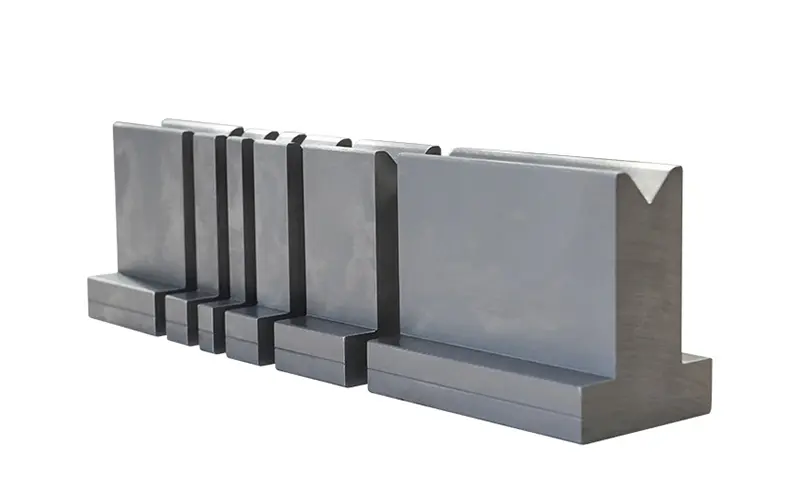
Tooling consists of the punch and die sets that shape the metal. The punch is fixed to the ram, while the die is placed on the bed. Different tool shapes allow for many different bending tasks.
How do electric press brakes work?
An electric press brake works by applying force through its mechanical transmission. It applies a strong force on the metal surface to bend it. However, the electric motor serves as the main component that powers the system. It distinguishes these machines from hydraulic machines.
- The electric motor drives the ram (the upper beam) through mechanical components like ball screws, belts, or direct drives. They exert intense pressure on the metal placed on the die for bending.
- When beginning a bend, the servo motors convert electricity into mechanical motion. The motor’s rotation is precisely transferred via ball screws or belts, pushing the ram down onto the sheet metal. This motion is smooth and controlled, resulting in a highly consistent bend.
- A backgauge system, also electrically powered, positions the metal sheet at specific distances from the die. This ensures each bend happens at the correct spot and is repeatable.
- A computerized numerical control (CNC) unit coordinates all movements. Operators can program exact bend sequences, angles, and positions. The system automatically adjusts the ram and backgauge as needed, controls speed, and stores programs for future jobs.
- As the programmed command is executed, the ram moves down to bend the metal sheet. After the bend, the ram goes back to its initial point, ready for the next operation.
Types of electric press brakes
It has four types. All these use electricity as their core power source. Here is the detail of all the types of electric press brakes.
1. Servo-Electric Press Brakes
Servo-Electric Press Brakes are one of the popular types. They use a servo motor to drive the mechanical components, like the ball screw and belt, and move the ram. Directing the motor’s rotary motion into linear motion, the ram applies a downward pressure force to the material placed on the die. They are fast and efficient. Also, they save a lot of energy as they consume energy only when the ram is moving. This results in energy efficiency and eco-friendly operation.
2. Electro-Hydraulic Press Brakes
They benefit from the two versions- electric and hydraulic press brakes. Electro-hydraulic Brakes have servo-electric motors as a source of power that drive the hydraulic system. Therefore, they are powerful machines. The use of electric systems increases energy efficiency, especially when used to work on thicker materials, like those used in hydraulic systems.
3. Hybrid Press Brakes
It is another type of press brake that involves both electric and hydraulic press brake technologies. Instead of a large amount of oil, they use small amounts pressurized by electric pumps. This design offers energy savings along with the precision of electric press brakes. Hence, they are perfect for tasks that need a balance between energy efficiency and power.
4. Electric Direct Drive press brakes
A relatively newer type has electric motors directly coupled to the ram. This may be even faster and more accurate, as it does not involve additional gears and belts. Direct drive systems are easy and reliable, but they are applicable only to lighter work.
Advantages and limitations of electric press brakes
Advantages
- High Precision: Electric press brakes offer extremely accurate bends. Position and speed can be controlled very finely by the employment of servo motors.
- Energy Efficiency: These machines consume only wind energy as they move. This does not consume any power at idle and saves energy expenses.
- Low Maintenance: As no hydraulic system is involved, there is no hassle of oil change or leakage issues. So, maintenance tasks are simple.
- Quiet Operation: Electric press brakes do not produce the sound that hydraulic models do. As a result, they create a quieter work environment.
- Consistent Results: Each bend is easily repeatable. Due to CNC integration, settings are already saved once the work is done. It ensures every part matches.
- Clean and Environmentally Friendly: There are no worries about oil leakage or spills. So, less waste is produced, and it is better for the shop and the environment.
- Simple Design: Electric-only designs can be simpler and compact. They fit well in shops or areas with limited space.
Disadvantages
- Limited Tonnage: Electric press brakes are generally best for thin to medium-thickness metal sheets. They cannot match the raw bending force of large hydraulic presses.
- Higher Initial Cost: Purchase price is often higher than for traditional hydraulic models. However, savings on energy and maintenance can offset this over time.
- Specialized Components: Repairs may require specific electrical parts, like advanced servo motors or control boards, which can be expensive or have longer lead times.
- Need Trained Operator: These machines have complicated functions. This is the reason why companies have to invest in training operators to handle and execute functions.
Price range of electric press brakes
Although the electric press brakes are available at a wide range of prices, several factors can affect the price. It includes the size, power, and features of the machine. Following the price range of electric press brakes available in the market.
- Entry-level models usually start around $50,000.
- Basic machines cost up to $100,000.
- Mid-range models are priced between $100,000 and $200,000.
- High-end machines with advanced CNC controls or large tonnage may exceed $200,000.
- Some top models can reach $500,000 or more, possessing advanced automation features.
Key factors affecting cost include servo motors, bed length, control systems, and automation. However, the initial price is higher than that of hydraulic types; electric press brakes save money over time through lower energy use and maintenance costs.
Is an electric press brake better than a hydraulic press brake?
Precision and Consistency:
Electric press brakes use servo motors, which give exact control over the movement. This means each bend is highly accurate and repeatable. Hydraulic models can also be precise, but they are more prone to variation due to oil temperature and pressure changes.
Energy Use:
Electric press brakes only consume power when moving. They are much more energy-efficient. Hydraulic press brakes use power even when idle because pumps run continuously. This makes electricity cheaper to run over time.
Maintenance:
Electric models do not need hydraulic oil, pumps, or filters. This makes them cleaner and easier to maintain. Hydraulic systems can leak oil and need regular servicing, which takes time and raises costs.
Bending Force and Capacity:
Hydraulic press brakes are stronger. They can bend thicker and tougher materials because they deliver higher tonnage. Electric press brakes are usually limited to thin or medium-thickness metal.
Noise and Environment:
Electric press brakes are quieter and create a better working environment. There is no oil to spill or fumes to worry about. Hydraulic versions are louder, with more vibration, and there is always a risk of oil leaks. See more differences between electric presses and hydraulic presses.
Conclusion
An electric press brake is a machine that bends sheet metal with great accuracy. It uses electric motors instead of hydraulics to control its movements. This allows for precise and consistent bends every time. Electric press brakes are energy-efficient and need less maintenance than traditional models. With its high use in various industries, it functions to shape different parts and components. With modern control systems, these machines offer fast setup and smooth operation. Overall, electric press brakes bring precision, efficiency, and reliability to metal fabrication.