

A press brake and a punch press both belong to the press machine series. While they both look and perform similar functions, people may confuse them.
In the fabrication industry, these machines shape and bend metal sheet plates to create custom designs. These press machines are the backbone of the manufacturing sector. They are used in various industries – from manufacturing parts and components to metal furniture and much more. They are very accurate and precise, and can be used for a variety of materials.
Understanding the difference between these powerful workhorses is key. It will guide you to know their capabilities and functionalities. Ultimately, this leads to making an informed decision for your business needs. So, let’s start.
What is a Press Brake?
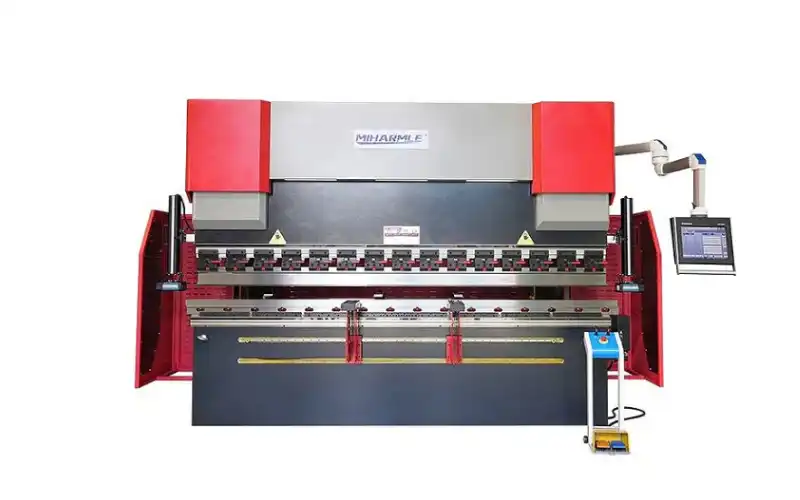
Let’s talk about the press brake machine first. The press brake machine is usually a metal-bending machine. This vital machine tool is used in the manufacturing industry to bend metal sheets and plates into various specialized parts and components. Its primary function is to create various types of high-precision angles and curves.
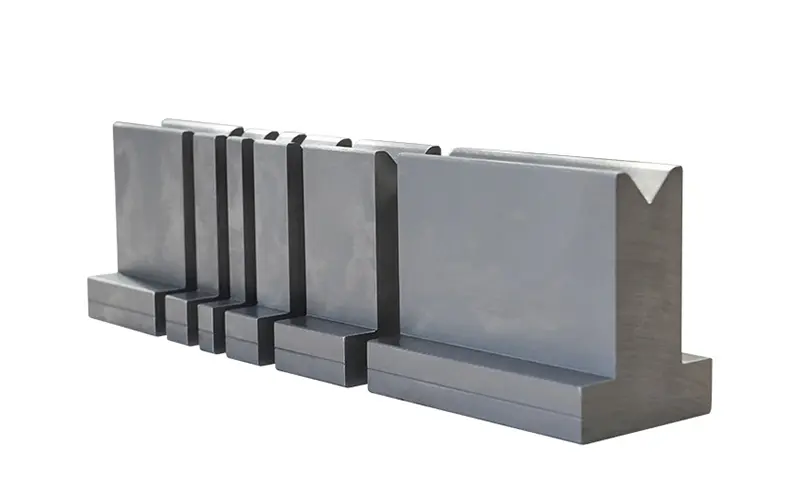
The Press brake machine consists of several major parts. These include a stationary die, an upper tool (punch), a clamping bar (ram), the driving device, and a worktable.
Over time, these machines have evolved with the addition of new technologies, such as CNC, to make them incredibly precise. Their application ranges from small brackets to large electronic components. These machines process a variety of materials, including steel, stainless steel, brass, and copper, among others. They work with variable material sizes and thicknesses. This makes them suitable for use in factories, workshops, and metal fabrication shops of all sizes.
How Does It Work?
A press brake works by clamping the sheet of metal between two main tools: the punch (on top) and the die (below). The punch exerts downward pressure, causing the metal to be pressed against the die. Modern press brakes utilize driving systems such as hydraulic, electric, or pneumatic power to control movement and pressure.
When the driving device activates the machine, the ram uses the force and punches into the metal. It exerts pressure and pushes it into the die, creating an intricate bend. You can choose different shapes of the die, depending on the shape and curve needed.
Operators set up the job with back gauges for accuracy and select the proper tools for each bend. CNC controls are common in today’s machines, making the process fast, repeatable, and precise.
Main Types
- Mechanical Press Brake: Uses a flywheel that is connected to an electric motor. These are fast but need to complete a full cycle for each bend. Good for simple, highly repetitive tasks
- Hydraulic Press Brake: Uses hydraulic cylinders filled with hydraulic fluid for better control and higher pressure. Capable of precise and heavy bending tasks. Most common today.
- Servo Electric Press Brake: Uses an electric motor that is controlled by a servo system. Very accurate and energy-efficient. Best for lighter tasks and high precision.
- Pneumatic Press Brake: Uses compressed air pressure to generate force, driving the ram. Suitable for small-scale jobs or thin materials. Quick and easy to operate, but less powerful.
Applications
Press brakes shape metal for many manufacturing sectors. They are used in high-volume manufacturing for parts, such as car panels, building frames, cabinets, and electrical boxes. Aerospace, construction, medical equipment, and metal furniture all use parts made with press brakes. Their precise control and outstanding operational capabilities make them widely used across various facilities.
Advantages
- Gives very accurate and consistent bends
- Works with different materials and thicknesses
- Fast setup, especially with CNC
- Reduces material waste and labor costs
- Modern models are energy-efficient and safer to use.
Disadvantages
- The initial cost for high-end machines is high
- Can’t bend very thick or very complex shapes
- Needs skilled, trained operators
- Thin metals may deform under high pressure
- Safety risks if not handled correctly.
What is a Punch Press?
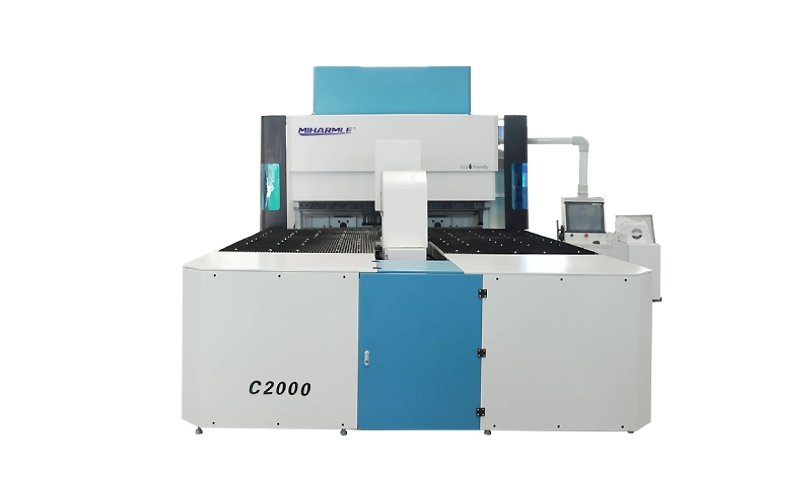
Punch press, as the name suggests, is a metal punching machine. It punches through the metal plate and makes holes and cuts in the desired shapes. The machine operates high-speed punching operations for highly precise and accurate cuts. New machines nowadays use CNC integrated controls for high-volume production. Not only this, but with this advanced setup, minimal manual work is needed.
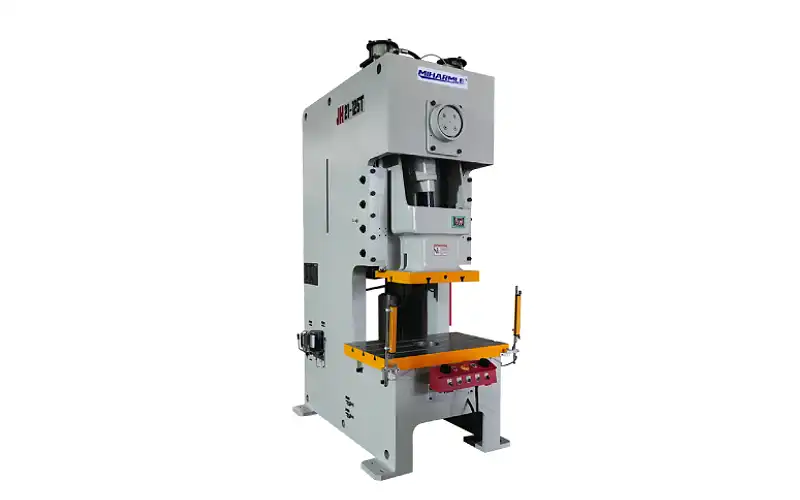
The essential parts of the punch press are the main C-shaped or door-shaped frame, mold, slider, and a hydraulic cylinder.
The alignment of the punch and die is important in these machines. At the same time, the punching plays a vital role. It needs to be strong to punch an accurate hole in the material. Different shapes and sizes of molds or dies can be used according to your requirements.
How does it work?
A punch press also uses a punch and a die operation. The driving system can be a hydraulic or a servo-electric system. The metal sheet onto a flat worktable. Aligning it with guides or stops to ensure precise positioning. Above the metal, the punch—a hard, shaped tool—sits attached to a movable ram. Below the sheet, a die of matching shape is secured to the table.
When the machine is activated, the ram drives the punch downward with high force. This action shears or pushes the metal into the die opening, cutting a clean hole or shape. It is an efficient process and can be repeated multiple times, enabling high-volume production.
Advanced punch presses utilize computer controls to move the sheet and position the punch, allowing for the creation of complex patterns or multiple shapes within a single cycle.
Main Types
- Hydraulic Punch Press: These machines use hydraulic power. It is popular in many industries and offers more precise control and higher force. Suitable for thicker metals.
- Mechanical Punch Press: Uses a flywheel and clutch system. It is powered by an electric motor, which drives the flywheel. Fast and efficient for simple, repeat jobs.
- Servo Electric Punch Press: Uses electric motors for the movement of the ram while controlled by a servo system. Very accurate, quiet, and energy-efficient. Good for complex patterns.
Applications
Punch presses are efficient machines that create holes in metal sheets for parts such as brackets, panels, and covers. The machines produce components for automobiles, appliances, electronics, and building hardware. They are vital where many identical metal parts are required, as they work efficiently and eliminate the need for manual operations.
Advantages
- Very fast and efficient for high-volume work
- Can cut many shapes, sizes, and patterns
- High accuracy and repeatability
- Reduces manual labor and saves costs on large runs
- Works with a range of metals and thicknesses
Disadvantages
- Noisy operation, particularly the older ones
- Unsuitable for complicated, three-dimensional figures
- Expensive to purchase automated models or CNC models
- Switching tools and dies may be time-consuming
- Possible injuries in case of neglecting safety
Comparison between Press Brakes and Punch Presses
-
Functional Comparison
The main difference is the functionality of both machines. Press Brakes are used in the bending and forming of sheet metals into various shapes such as angles, channels, or curves. They bend metal sheets without material removal.
Punch Presses use forming and punching operations to create cut shapes through the sheet metal. They make specific cutouts, holes, or designs in the metal.
-
Material and Thickness
Press Brakes can accommodate a variety of materials like steel, aluminum, and stainless steel. They are generally applied to thin to moderately thick metal sheets; however, they can have trouble with very thick metals.
Punch Presses can work with the same kind of metals. However, it will depend on the tonnage of the machine and the tooling to work on the thicker materials. Hydraulic punch presses handle heavier and more demanding sheets than mechanical presses.
-
Productivity
Press Brakes are effective in tasks that require a lot of bending, but they may be slower than simple and repetitive tasks. Tooling changes and setups sometimes require time, but CNC systems have enhanced faster cycle times and setups.
The Punch Presses are very efficient in extensive, repetitive work, such as making numerous holes or cutouts. They are perfect for mass production because they can produce high quantities of the same parts in a very short time, and when automation is involved.
-
Precision and Flexibility
Press Brakes offer high precision and can create complex and varied bends, allowing for great design flexibility and custom work. Modern CNC brakes give superb repeatability and accuracy for detailed work.
Punch Presses provide precise, clean cuts and are consistent in creating the same shape repeatedly. However, they are generally less flexible when a job requires varying shapes, bends, or customizing parts beyond punching/cutting.
-
Cost
Press Brakes generally require higher initial costs, particularly if they are advanced CNC models. They can reduce labor and waste expenses in the long term, however, with better efficiency and automation. Tooling is cumulative and can be burdensome, though.
The price range of Punch Presses is quite broad, and mechanical ones are generally the most affordable, whereas CNC or hydraulic ones are significantly more expensive. The continuing expenses involve the repair or replacement of tools and dies. They are economical on mass production but can be less cost-effective on small or highly customized production.
How to choose the right equipment?
When deciding between a press brake and a punch press, start by considering your personal business requirements and envision what you will need in the future. Choose a press brake when you have to bend or shape metal. Assuming your business involves punching holes or shapes, a punch press is an option to consider. Moreover, the thickness and volume of material are also significant in the case of these machines.
Although the machines are capable of processing all common metals, consider your options if you have special needs. Press brakes are more appropriate for custom bends and thick metal. The punch presses are most applicable when there is a need to make repeated and rapid cuts in thin to medium-thick sheets.
It is necessary to consider prices and budget. Consider the cost, including both initial and long-term maintenance expenses, as well as the level of expertise within your team. The right machine will make your manufacturing faster, safer, and yield better results.
Conclusion
To conclude, press brakes and punch presses are metalworking machines that serve various manufacturing industries. These work on metal sheets and plates to cut and shape metal. Both machines may appear similar, confusing people. However, the core difference lies in their functionality. A press brake, also commonly referred to as a bending machine, creates bends in sheet metal.
On the other hand, a punch press is also a press machine that punches through the metal sheet and makes holes. When deciding which one is perfect for your needs, simply choose according to your specific requirements and the services you offer. Other factors include material thickness, volume, and budget. CNC machines are advanced-level machines that elevate your manufacturing process. They are This article provides all the details that you need to make a perfect choice. The right machine will not only fulfil your current needs but also help you with further growth.