
Metal fabrication involves using various machines. They help cut, weld, drill, and shape a variety of products. Without them, metalwork would be very difficult and prone to inaccuracies. There are different types of machines used in metalworking.
Each of these machines operates in a specific way. For example, press brakes are used to bend metal sheets to make complex-shaped parts and products. On the other hand, cutting and drilling machines cut and create holes in the metal pieces, respectively. In this article, I will discuss the top 10 machines used across almost every manufacturing industry.
10 Commonly Used Machines In The Metalworking Industry
Interestingly, manufacturers use multiple machines when making a single product. That’s because each product undergoes a different step before its final form. For example, they use cutters to cut and shape the raw materials. After that, they use bending tools to make various shapes. In simple terms, each step requires different machines to make the product quickly and efficiently. Let’s discuss some of the most common machines used in metalworking.
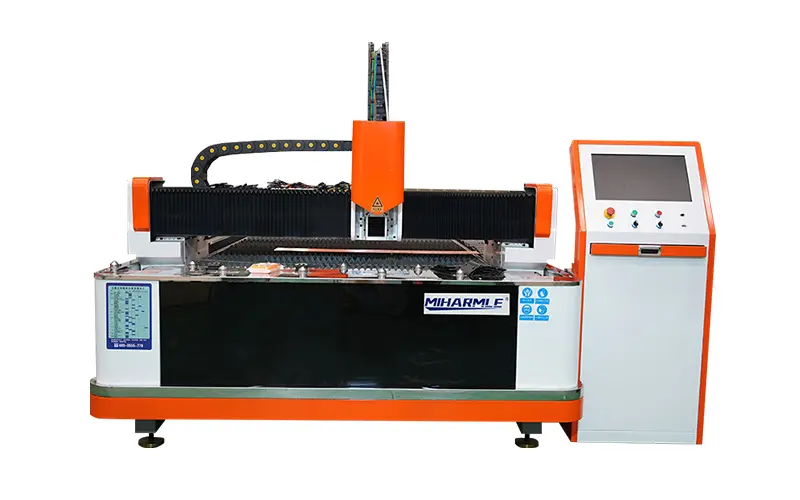
1- Laser Cutting Machines
These machines use high-energy lasers to cut different metals. These machines emit a laser at targeted spots. These lasers melt and vaporize the metal, creating cuts. In the past, laser cutters were manual and less precise. However, modern laser cutters use computerized systems that improve precision. Since laser machines are very powerful, they can cut even the thickest metal piece with ease. Additionally, these machines cut the workpiece with minimal material waste.
2- Press Brakes
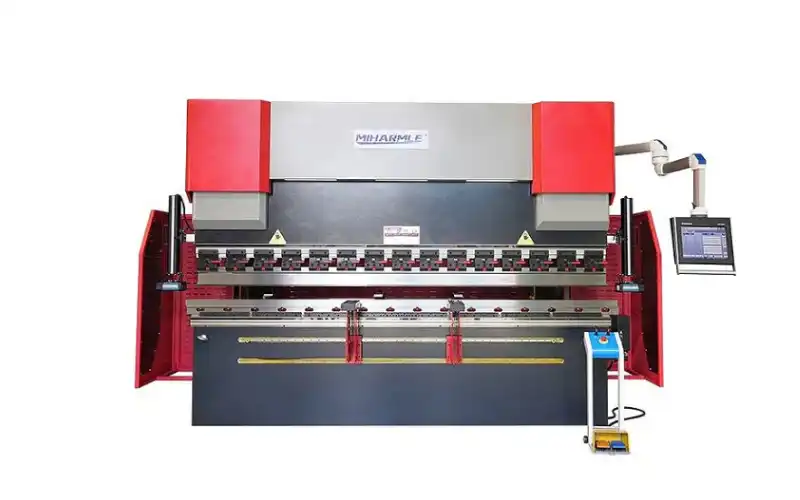
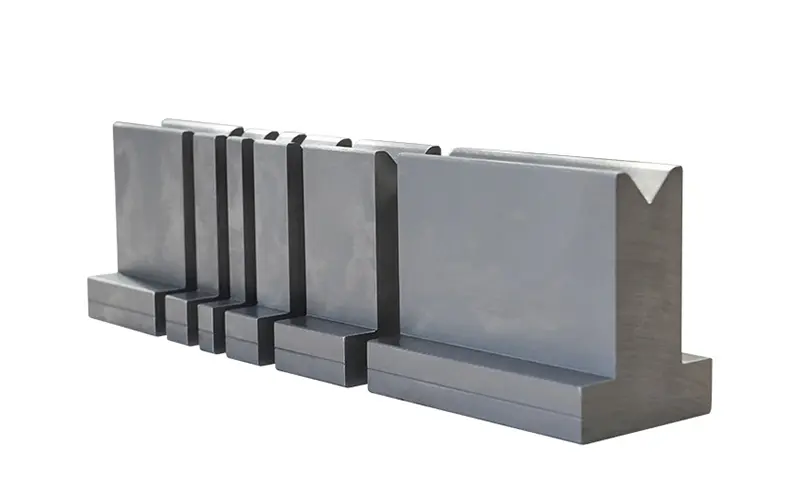
Press brakes are another essential type of machine used in almost every metal fabrication shop. Their job is to bend the metal sheet to make different shapes. These machines use two fundamental tools: a punch and a die. The metal sheet to be bent is placed in the die cavity.
The punches move downward, pressing the metal sheet against the die. This sheet fits into the die cavity and assumes the die’s shape. In this way, it creates precise bends on the metal sheets. Press brakes are available in different types. Some of these are manual, while others use CNC technology and are very precise.
3- Plasma Cutting Machines
Plasma cutters are arguably among the fastest cutting machines. They cut using hot gas called plasma, which makes them unique. The plasma cutting machine consists of nozzles that emit the hot gas (plasma) on the target spot. This hot gas strikes the target spot and blows the metal piece, creating a precise cut. These machines are generally used on a professional scale because they are costly. So, small workshops generally don’t use them. Remember, plasma cutters cut at high speed regardless of the metal thickness.
4- Shearing Machines
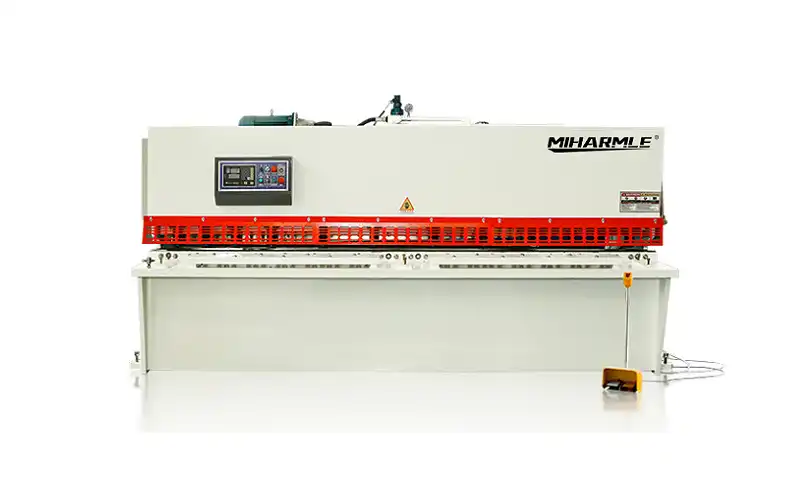
Shearing machines are an ideal option for cutting heat-sensitive metals. Why? That’s because these machines don’t involve heat or melting the metal. Instead, they use sharp blades to cut the workpiece. These machines come with two blades or cutters. One of these blades is called an upper blade; it moves to cut the workpiece.
On the other hand, the lower blade remains stationary. The workpiece is clamped on the table, and the upper blades descend onto it, cutting it. These machines cut the metal piece in one straight line with excellent precision. Additionally, you’ll see these machines at almost every metal fabrication shop. This is because shearing machines are inexpensive and can cut metal economically.
5- Band Saw & Circular Saw
Both bands and circular saws are very important cutting tools. Their size is not too large, and they are portable. They consist of a moving blade that consists of very sharp teeth. The blade on the band saw moves in a loop, cutting the metal piece. On the other hand, a circular saw consists of a rotary blade. This blade rotates at a very high speed, cutting metal quickly. These tools can cut pieces such as rods, pipes, and other materials. However, they are very strong: not ideal enough to cut heavy metal pieces.
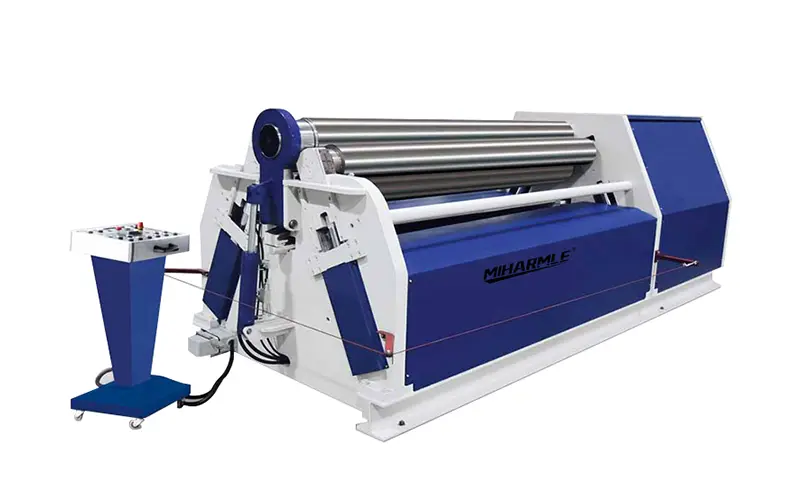
6- Plate Rolling Machines
Plate-rolling machines are beneficial for bending thicker metal sheets. They consist of moving cylindrical rollers. During their movement, they bend the flat metal sheets into curves. Plate-rolling machines are standard in metal fabrication shops that produce drums, tanks, and other products. Remember, rolling machines are not a substitute for press brakes. Why? That press brake cannot convert long, flat sheets into curved ones. These rolling machines even work on very long sheets, which causes them to curve with precision.
7- Milling Machine
Milling machines cut, shape, and produce complex parts and products from raw metal. They consist of cutting tools mounted on the machines. The workpiece is loaded on the machine, but it does not move and remains stationary. However, the cutting tools move and cut the fixed workpiece. These machines use CNC technology and a dedicated computerized system.
So the cutting tools follow the instructions from the computer. This means these tools move as per the given path and cut the stationary workpiece. As a result, you get metal pieces with precise shapes, 100% accurate. There are a wide range of milling machines available. Manufacturers generally use milling machines when high precision and tight tolerance are needed.
8- Lathe Machine
Lathe machines are generally used to produce cylindrical parts. Making these cylindrical parts is usually very difficult. Unlike milling machines, lathe machines involve the movement of a workpiece. The cutting tools remain fixed and do not rotate, while the workpiece moves as per computerized instructions. Notably, the lathe machines are not only compatible with metal materials. Instead, they also cut, shape, and produce cylindrical wood parts. This makes lathe machines very versatile.
9- Grinding Machine
Grinding machines are widespread across all the manufacturing industries that use metals. Their job is to remove the uneven surface of metal pieces. These machines use an abrasive wheel that rotates and moves across the surface of metals.
During their movement, they remove the surface unevenness. After grinding, the metal piece looks more polished and smooth with no surface roughness. Remember, no cutting tools can produce a 100% smooth surface when cutting metal. This underscores the need to use grinding machines to make metal parts smooth and fit together.
10- Drilling Machine
Drilling machines are of both small and large sizes. They consist of rotating drill bits that create holes in the metal pieces. Remember, there are different sizes of drill bits available for use in drilling machines. Manufacturers use the right-sized drill bits to create holes of the desired size and specification. The precision of drilling machines depends on the size of the drill bit. This is because the drill bits rotate and drill holes into the metal piece. These bits are generally very robust, made of hard steel or carbide. These machines are portable so that they can be used anywhere.
Conclusion
In conclusion, metalworking is impossible without various machines. In the past, workers used manual tools to make various metal products. Those products had many flaws and were not particularly precise. Above all, the use of human labour in fabrication slowed production.
However, the use of different machines has made the metalworking industries very efficient. In the past, simple metal fabrication tasks used to take hours and were completed with inaccuracies. However, the same tasks are now completed in no time, thanks to fabrication machines. In this article, I discussed the 10 most common machines used by almost every metal fabricator. All of these machines differ in their mechanics and efficiency.