
The press brake is among the most vital machines in metal fabrication. It helps bend metal sheets and create parts of different shapes. However, this machine consists of various components that ensure its smooth functionality. Understanding these press brake parts and components is key to getting the most out of your machine.
If any of these components malfunction, the press brake won’t work correctly. However, many people, especially newbies, don’t understand these components of press brakes. If you’re among them, worry not! In this article, I will discuss everything about the core components of press brakes and their functionality. So, let’s get started!
What Is a Press Brake?

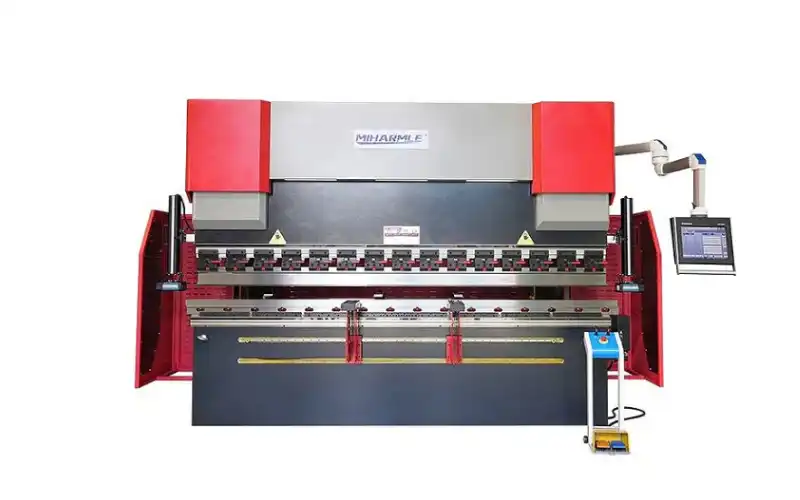
A press brake is a bending machine used in almost all metal fabrication workshops. It does not cut, but only applies force to create different shapes from raw metal sheets. Their work is based on two tools: a punch and a die. The material (metal sheet) to be bent is placed on the die and then pressed by the punch. This pressure shapes the material into a specific shape defined by the die.
Some metal sheets are V-shaped, while others are U-shaped. These shapes are primarily created using these press brake machines. This machine has multiple components that contribute to its operation. However, its working principle relies on the punch and die. A metal sheet is placed on the die, which consists of a cavity.
When the machine operates, the ram lowers the punch. As a result, the punch presses the metal sheet against the die, then punches it against the die, creating bends in it. The shape of the die determines the type of bend you’ll make in the metal sheet. This means you’ll need two different shapes to make U- and V-shaped objects.
The history of press brakes dates back almost a century. First developed in the 1920s, the press brakes have seen many advancements. From mechanical to hydraulic and CNC-based, these machines are of different types. The CNC-based press brakes are exceptionally precise and quick. The use of press brakes has become standard in modern manufacturing. Their use in the aerospace, automotive, and construction industries is prevalent.
Structural Components of a Press Brake
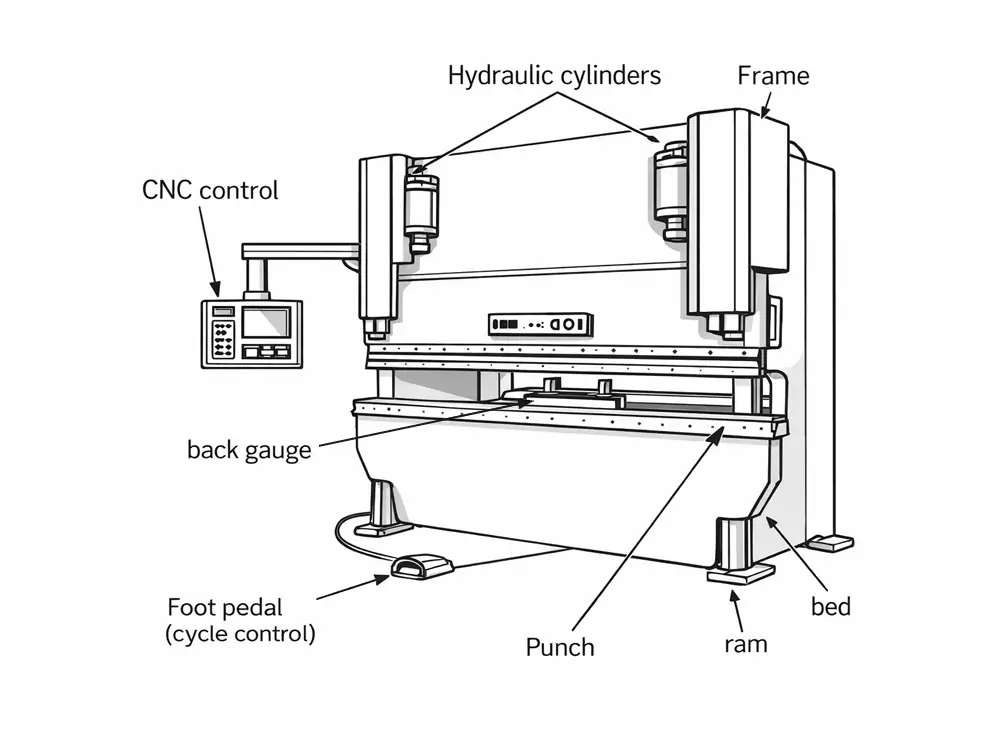
As I said earlier, press brakes consist of different parts. Some of those make external frames, while others are essential to the operation of these machines. In the section below, I will discuss structural components of the press brake.
1- Frame
The frame is the central skeleton of these machines. It provides support for all the other components, such as the RAM and the bed. Generally, manufacturers use high-quality steel plates and weld them together to form the press brake frame. This frame is so rigid and robust that it can withstand harsh vibrations with ease. When the press brake works, it produces some vibration due to the force that the punch applies to the material. The frame handles the vibration and ensures smooth operation of this machine.
2- Bed
The bed is another essential part located at the bottom side of the press brake. The die is mounted on this part, and a metal sheet to be bent is placed on it. During operation, the punch presses downward, so this bed can face a high load. Therefore, the bed is made of strong steel to withstand the harsh loads. Additionally, the bed and ram must be properly aligned for the press brake to work properly.
3- Ram
Ram is just above the bed and moves up and down. This part is directly involved with the movement of the punch. When the ram moves downwards, it pushes the punch downwards and presses against the die. After bending, the ram moves upward. This simply causes the punch to lift upward, so you can take the bent sheet from the die. If this ram is weak, it won’t be able to apply high force, and vice versa.
4- Side Housings/Columns
Side housings are another integral structural part of the press brake. There are two, located on both sides of these machines. They keep the bed and ram connected and provide support. Additionally, the ram remains perfectly aligned during movement due to the presence of these side pillars or columns. Remember, if there were no side columns, the ram’s movement would be impossible. That’s because RAM would tilt, especially when it’s under load.
5- Back Gauge System
The back gauge system is the key to properly positioning the metal piece to be bent. Remember, if the workpiece’s position is incorrect, the punch will press on the wrong point. This will result in a bad bend and imperfection.
The back gauge system is located below the bed and can move. So, it keeps the metal sheet at the correct position before bending. So, the punch applies force at the right spot, creating precise bends. In CNC-based press brakes, this back gauge system is automated. This means its position adjusts as per the computerized instruction feed in the computer system.
Operational Components & Systems
The operations components are those that make machines do their job. The components I discussed above play a key role in the press brake’s stability. However, they are not responsible for how machines bend metal sheets. Let’s explore the primary operational components of press brakes.
1- Power Source
The power source provides energy to the press brake’s various components. It is common across all types of press brakes. Generally, electric motors are the primary power source in these machines. The motor runs and powers the hydraulic pump. This pump ensures smooth operation of the entire hydraulic system.
Notably, the press brake also includes wiring for a smooth power supply to various machine components. The size of the electric motor can differ in press brakes. The bigger machines generally have bigger pumps that require more power. So, they come with larger electric motors with higher power ratings, and vice versa.
2- Hydraulic System
In the past, press brakes operated using mechanical systems. However, even modern machines, including CNC-based ones, use hydraulic systems. This system consists of a few essential parts, including pumps, cylinders, and valves. This system operates on hydraulic fluid. When the press brake starts, the pump pushes the hydraulic fluid into the cylinder.
So, the fluid fills the cylinder and exerts a force, which moves the ram. When the ram moves forward, so does the punch. When the press brake stops, the fluid from the cylinder moves back to the oil storage (reservoir). As a result, the force on the cylinder decreases. As a result, the ram lifts upward, keeping the punch rising as well. In CNC-based press brakes, you can easily control the hydraulic system through a dedicated interface.
3- Electrical & Control System
The electrical and control systems of the press brake are of utmost importance. Press brake work is not just about bending metal sheets at random. Instead, operators have to set specific bending angles and other specifications. This ensures the press brake makes a precise bend on the metal sheet.
The control system is the central part where all bending-related parameters are set. In CNC machines, you’ll get a digital screen. As mentioned above, the press brake also includes electric motors and wiring to power its components. For example, pumps used in this power are run by an electric motor.
4- Safety Devices
Every press brake consists of safety devices or features. Interestingly, you won’t see them in the old press brake. Moreover, modern machines come with light curtains, two-hand controls, emergency buttons, and so on.
These features make the press brakes very safe to use. For example, the light curtains detect hand movement. If your hand comes into a dangerous area, the machine will automatically stop. Additionally, machines also have side barriers. This ensures your hands don’t come in contact with the moving parts of the brake press.
5- Crowning System
The crowning system improves the bending consistency of the press brake. Sometimes, we need to bend a long sheet of metal. However, the press brake doesn’t produce a consistent bend along its length.
It makes a strong bend in the middle, making the side of the sheets look slightly off. The crowning system adjusts both the bed and the die to ensure consistent bending along the length of the sheet. It is noteworthy that there are various crowning systems available. These include mechanical or hydraulic and automated crowning systems.
Types of Press Brake Toolings
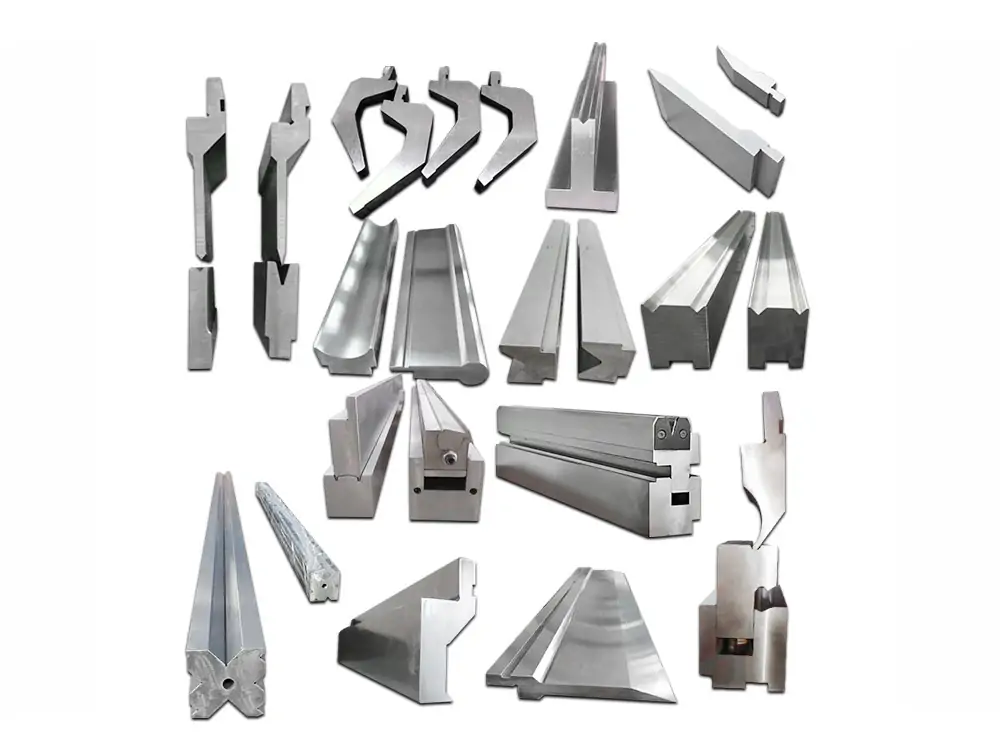
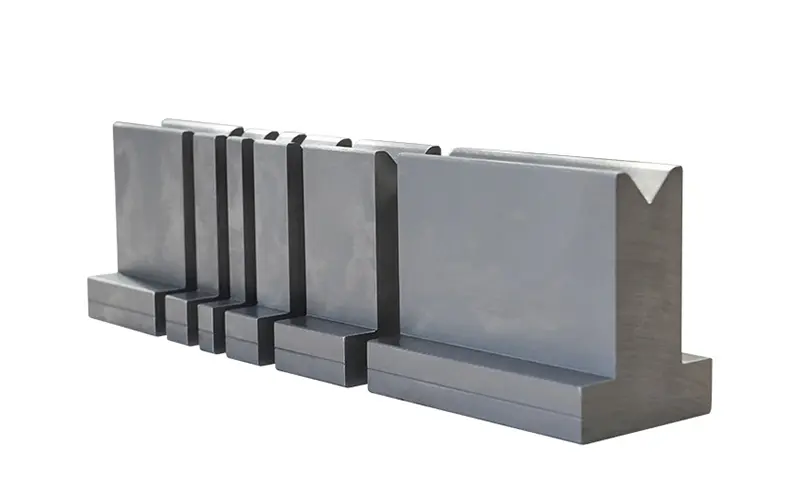
The two major press brake toolings mentioned above are punches and dies; without them, the press brake cannot work. The die, which is mounted on the bed, has a cavity. It is also called a buttom tool. On the other hand, the punch is the upper tool that descends during press brake operation.
It presses against the die and forces material into its cavity. As a result, the material assumes the shape of the die cavity. The shape of the die is key to creating different bends. Additionally, one die can create one kind of shape. Here is the list of some key tooling used in the press brake during the bending process:
- V-Die
- Radius Die
- Offset Dies
- Hemming Tool
- V-Die and V-Punch
- U-Die and U-Punch
- Acute or Sharp Punches
Each of the above-mentioned tools helps create bends of different shapes and angles. The V die is the most used among all the listed tools. That’s because it allows the metal sheet to bend at various angles and dimensions. Similarly, a gooseneck punch is used when fabricators need to bend and make box shapes from a metal sheet.
Similarly, a radius die is generally used to produce a round bend without cracking. Remember, this die can even be used when the bending of very thick metal sheets is needed. Acute punches are helpful when a sharp (turn-like) bend is required. You’ll also hear about the custom tooling for press brakes. These tools are designed to achieve a unique, custom shape.
Press Brake Maintenance Tips
Undoubtedly, modern press brakes bend even the thickest metal sheets, thanks to their hydraulic system. However, the performance of these machines can be affected, especially if they are old. Additionally, they require periodic maintenance for their smooth operations. Here are some practical tips for maintaining press brakes:
- Check Hydraulic Oil
As previously mentioned, press brakes consist of hydraulic systems. This system uses hydraulic fluid (oil) to generate pressure. You should always check and ensure it does not get either too low or too high. Maintaining the proper oil level ensures smooth operation of press brakes.
- Lubricate Moving Parts
Press brakes consist of multiple moving parts. Their movement can become smoother when you lubricate them. Additionally, this lubricant prevents rust and corrosion on the machines when they are left unused for longer periods.
- Inspect Punch and Die
Both punch and die undergo extreme force during the press brake operation. The punch pushes the material downward into the die cavity. Conversely, the die faces the force applied by the punch on the material. So, both of these tools are inspected regularly. If you notice any cracks or wear, I highly recommend taking immediate steps to repair them.
- Check Electrical Connections
The press brake uses electrical wires to power different components. These wires can become weak over time. It is highly recommended to check the wires and keep them in good condition. If they are weak, the risk of overheating and catching fire is high. This will eventually affect the press brake’s overall performance.
- Change the Hydraulic Oil Regularly
Press brake manufacturers provide details on oil changes in the machine’s user manual. You should strictly follow the guidelines and change the hydraulic oil periodically. That’s because dirty oil reduces the press brake’s overall performance. Regular oil changes improve the press brake’s performance.
Conclusion
In conclusion, press brakes are indeed beneficial machines. Without them, bending those thick metallic sheets will be very challenging.
Different types of press brakes are available, and each delivers its own level of performance. Manual press brakes are cheaper but less precise. On the other hand, CNC-based machines are expensive and are exceptionally precise. However, all these machines consist of basic components. Some of these parts are structural, while others are operational. Structural parts form the skeleton, while operational parts ensure the press brakes operate. In this article, I have discussed all the components of press brakes.