
In the metal fabrication industry, hydraulic press brakes are widely used. These machines are used to bend metal sheets to make various products. These machines have different parts that work in synchronization to perform the bending task.
Hydraulic press machines enable engineers and manufacturers to achieve high-quality steel fabrication and bending. These machines provide high accuracy, control, and consistency. They can deliver the same results across different uses.
Different industries have their uses, such as energy, construction, aerospace, and automotive. A CNC hydraulic press brake can bend and form a flat sheet of metal. It uses the pressurized fluid to generate the bending force. Mechanical press brakes use flywheels for this operation.
The use of better technology has improved the machine’s performance. It makes for smoother operation, better control, and flexibility. You can bend metal sheets of various thicknesses with the same precision.
In this article, you will get information about the hydraulic press brakes. How do they have applications in bending metal sheets? In addition, it covers the benefits of working with a hydraulic press brake and provides tips for choosing the right one for the specific task.
The Important Role of Hydraulic Press Brake in Sheet Metal Processing

With every industry advancement, metal fabrication has transformed as well. Hydraulic press brakes play a key role in the metal fabrication industry. They allow the manufacturers to get consistent results over and over again. It fulfils the requirements like:
- Exact bend angles
- Consistent dimensions
- High surface quality finish
The machine has a stable force and precise ram control in the bending cycle. Manufacturers can produce complex parts for various machinery using CNC hydraulic press brakes.
Key Capabilities
Hydraulic press brakes have the following capabilities:
- The machine can bend different types of metal sheets. It includes mild steel, aluminium, and stainless steel.
- It can bend the metal sheet of various thicknesses. For multiple materials, different thicknesses can be accommodated. The overall thickness range is 0.5-25mm.
- The machine provides uniform parts throughout the process, maintaining repeatability.
- Hydraulic press brakes can be used for small production as well as for large-scale manufacturing.
Purpose of Hydraulic Press Brakes
The primary purpose of hydraulic press brakes is to provide precise bends for metal fabrication. The machine uses concentrated force applied to various areas to produce controlled deformation. It uses the pressurized fluid to provide more precise control over bending tasks. To gain better control, CNC hydraulic press brakes are used to improve bending accuracy.
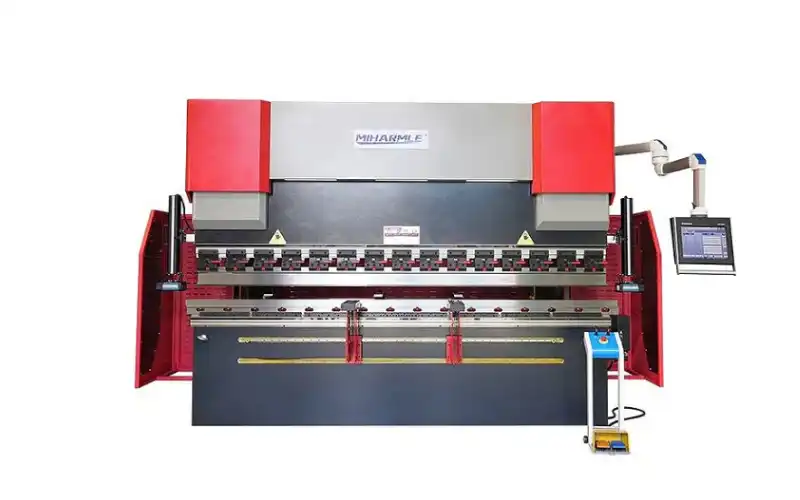
Main Components of a Hydraulic Press Brake
Just like any other machine, a hydraulic press brake has several components. These components work in synchronization and perform the task precisely. Knowing these different parts will help the manufacturer and engineer perform metal bending properly and maintain the operation.
- Ram
- Bed
- Backgauge system
- Hydraulic system
- Control system
- Tooling
Ram (Upper Beam)
It is the moving component of the hydraulic press brake system. It keeps the punch tooling in place and implies downward force during bending. The hydraulic cylinders provide the pressure for bending metal sheets.
Bed (Lower Beam)
The stationary part of the hydraulic press brake is the bed. It supports the die tooling. The machine provides consistent bending with this component.
Backgauge System
The hydraulic press brake’s system positions the metal sheet to the correct depth. With this, accurate bend placement is achieved. In the CNC hydraulic press brakes, the backgauge system is automatically adjusted and controlled.
Hydraulic System
The hydraulic system consists of the following components, which serve as the power center of the machine. The system produced the bending pressure.
- Pumps
- Valves
- Cylinder
- Fluid reservoirs
Control System
Overall system management is done under the control system. The hydraulic press brake system has a control system that manages all functions, including the ram’s movement and backgauge positioning. The modern CNC controllers simplify the operation by:
- Bend sequencing
- 3D visualization
- Intuitive interfaces
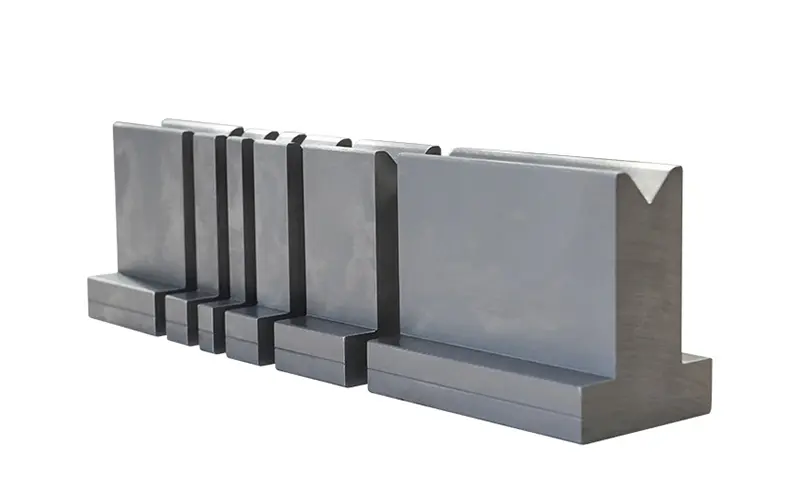
Tooling
The tooling in the hydraulic press brake consists of various punches and dies. It helps in determining the final bend profile of the metal sheet. The manufacturer can change the components to accommodate the varying thicknesses of different metal sheets and other materials.
How Does a Hydraulic Press Brake Work?
After reviewing the components of the hydraulic press brake, here is a detailed description of its working. It follows a systematic sequence for transforming the metal sheet into precisely angled components.
1. Material Positioning
In the initial step, engineers position the metal sheet on the stationary bed. They position the metal sheet so that it is opposite the backgauge. It will ensure the exact positioning of the bend on the metal sheet.
2. Ram Movement
Ram is the moving part of the hydraulic system. As the system activates, it pushes the RAM downwards with controlled force.
3. Metal Bend
The system has the die opening below, and the punch forces the metal sheet into it. More pressure is applied to get a deeper bend.
4. Angle Formation
The bending depth is set in the CNC system. When the ram reaches the programmed depth, the manufacturer gets the desired angle.
5. Springback Mechanism
The outer portion of the metal sheet gets stretched while the inner portion compresses. This creates internal stresses that influence the final shape after springback occurs when pressure is released. Modern CNC presses automatically adjust for springback, ensuring precise bending angles.
6. Metal Sheet Removal
After all the processes, the metal sheet is removed. To get the same additional bend, the same process is repeated.
Advantages of Hydraulic Press Brakes
The use of modern hydraulic press brakes in metal fabrication has many advantages. Like:
- Hydraulic press brake machines offer high precision and repeatability. They provide consistent bend angles in the production runs.
- The process of bending metal sheets is very smooth and controlled. There is minimal material damage due to precise force application.
- Advanced CNC machining reduces startup or setup time. It provides minimal engineer intervention and complex bend sequences.
- The manufacturer can fabricate a variety of materials with a hydraulic press brake.
- The CAD and CAM software provide a high degree of precision within the system.
How to Choose the Right Tooling for a Hydraulic Press Brake?
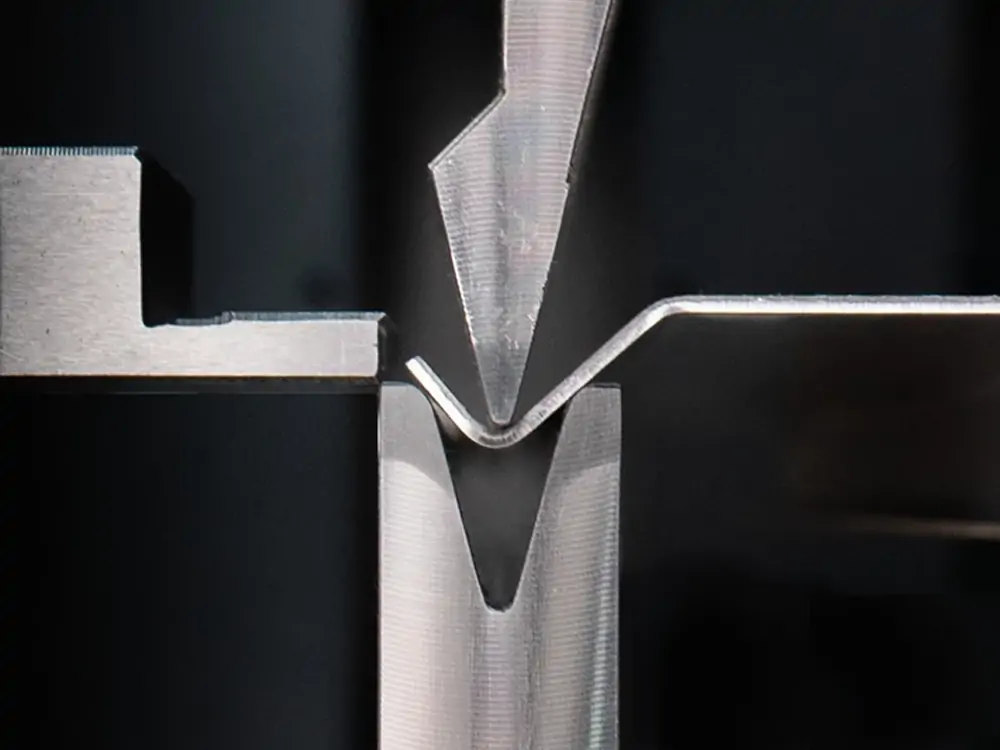
Choosing the proper hydraulic press brake tooling is a critical decision. The kind of tooling selection depends on the material and the thickness of the metal sheets. The selection of the proper tools will help in:
- Minimizing the material damage
- Accurate angle
- Extend the machine’s life
Material of the Metal Sheet
The tools differ based on the metal sheet material. For example, the manufacturer can use larger radius tooling for soft aluminum to avoid cracking. On the contrary, for harder materials, tough tooling is required.
Thickness of the Sheet
The user must select the machine tooling based on the sheet thickness. The die width must be eight times the material thickness.
Radius Requirements
The material’s punch profile depends on the required tooling radius. If the user needs a sharper bend, they must use the smaller radii.
In the end, the tolerances and the aesthetic considerations should be assessed before making any decision. Specific metal fabrication requires tooling settings for optimum results.
Conclusion
Hydraulic press brakes are vital machines in modern metal fabrication. They consist of power, precision, and control to create precise bends on most metal sheets. These machines apply uninterrupted pressure using pressurized fluid, which can be used to significant effect in the bending process. Their high-quality CNC systems enhance accuracy, minimize errors, and save on setup time. By using the right machine and tooling, manufacturers can achieve high-quality results, longer tool life, and more efficient production. This makes hydraulic press brakes a sure option for precise sheet metal forming.