
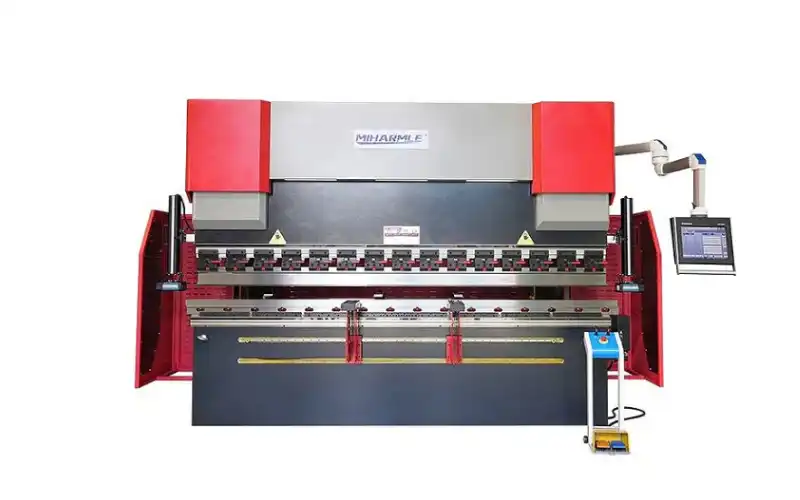
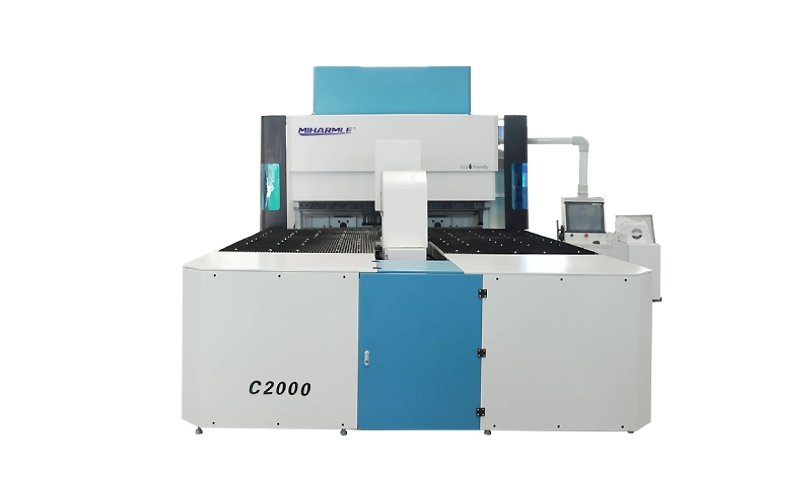
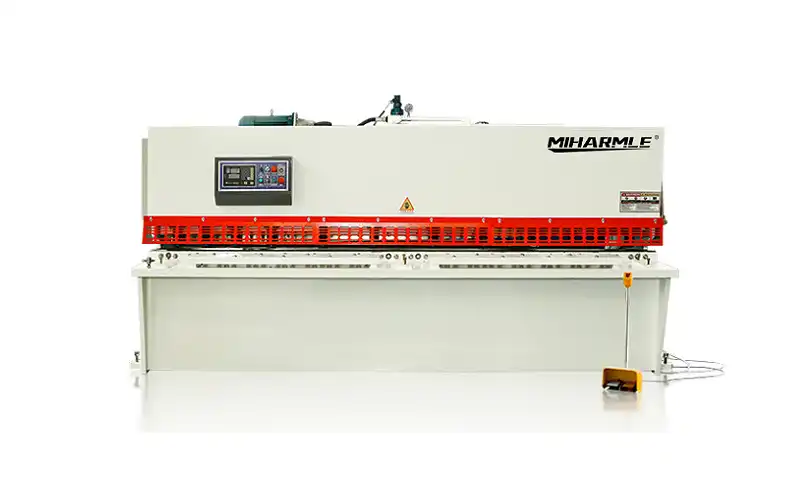
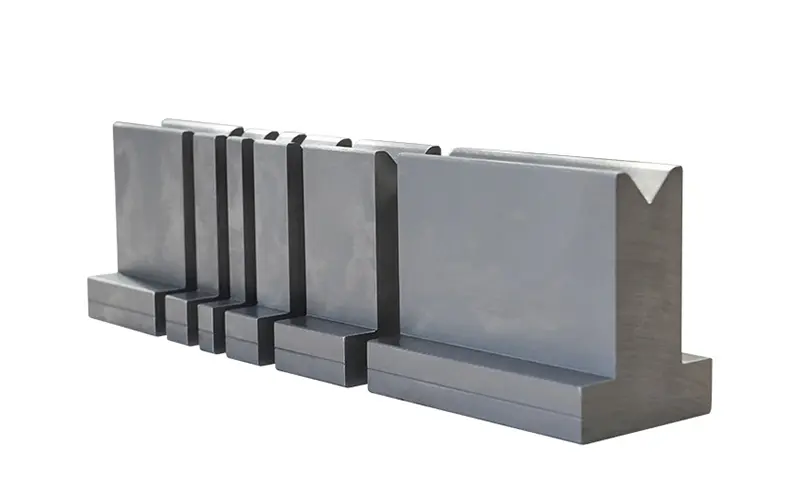
In modern precision manufacturing, punch presses serve a role beyond punching holes. Besides punching, this machine tool bends, shapes, stamps, blanks, and notches metal sheets. All these actions are performed with high-pressure-controlled force and instantaneous energy release, which is driven by an energy source. This can be a mechanical, hydraulic, or servo-electric source. Advanced machines come with CNC-controlled setups for more precise results.
In short, punch presses are versatile in nature. These powerful machines play a critical role in metal fabrication and are used in various industries. These include aerospace, automotive, and metal processing.
This guide covers various types of punch presses, their operation, components, and uses. This will ensure you have some knowledge to make an informed decision for your business.
What is Punch Press– And How Does It Work?
A punch press is an essential piece of equipment used in metalworking to shape or form metal sheet, using a punch tool that presses through a die. The machine’s core working principle revolves around the punch and die.
The punch, being a hard tool, exerts high-pressure force, whereas the die is the matching cavity/shape. When the punch tool punches the metal sheet positioned on the die, the sheet is pushed into/through the die. This results in cutting a slug (for holes) or forming the sheet (for shaping). At its core, it operates on a simple mechanism: instantaneous energy release and controlled deformation. So, its functional capabilities are vast.
With a wide range of punch presses in the market, you can find various types of punch presses. These can range from small, manually operated machines to large CNC/turret machines that can run complex, high-volume jobs. Each one is designed for varying needs and applications. So, it’s necessary to assess your needs to avail all its benefits for your business.

Types of Punch Presses
Classified by driver type
Mechanical punch press
These punch presses are widely used and preferred in the fabrication industry. Mechanical punch presses feature gears, clutch connecting rods, and other components to deliver force. They are best suited for heavy-duty punching and blanking operations. Additionally, simple forming can be done with dedicated tooling.
The mechanical punch press is driven by a motor that keeps the large flywheel rotating. When spinning at high speed, it stores kinetic energy. After the pedal engages, it connects the flywheel to the crankshaft. A connecting rod joins the crankshaft with the moving slide or ram. One end of the rod is on the crank pin (rotating), and the other end is pinned to the ram (sliding). As the crank rotates, the connecting rod forces the ram to move up and down in a straight line. Rotary motion becomes linear reciprocating motion. This energy is released during the punching moment at the bottom of this stroke, as the ram pushes the punch into the material and the die.
These machines are cost-effective and are usually used for low-volume production. They may be automated or sometimes manually operated.
Hydraulic punch press
Hydraulic punch presses operate through hydraulic transmission systems that deliver force to move the ram. Pressurised fluid, mainly oil, is pumped into the hydraulic cylinder through the hydraulic pipeline. Here, it converts the hydraulic energy into mechanical energy. This energy drives the ram.
Ram motion is controlled through valves that manage fluid flow and pressure. Because the machine derives its power from hydraulic pressure, it can deliver the full rated tonnage at various points along the stroke.
Hydraulic systems make it easier to adjust force, speed, and dwell. Operators can tune the cycle for different materials. This type of punch press is suitable for forming thicker materials and deep drawing. Additionally, they are chosen when flexibility matters more than maximum stroke rate.
Servo-electric punch press
This punch press combines the advanced electric control system with a high-torque servo motor that drives the ram. These systems shine for their power and precision. Maintenance costs associated with hydraulic systems are also reduced here. In contrast, they are fully programmable. It helps minimise marking, manage noise, and match the hit style to the operation.
Their applications involve complex forming, precise electronic parts, etc. These tasks need precision and repeatability. Servo-electric punch presses can pair well with CNC control. This is because the drive and positioning systems can be tightly coordinated.
Classification by fuselage structure
CNC turret punch press
These punch presses use a rotating disc, called a turret, that sits between the punch and a die. CNC positioning to move the sheet clamped on the worktable in X and Y, while the rotating turret holds multiple punch-and-die sets. Under CNC control, the turret indexes to position the required tool station. Then the ram drives the punch through the sheet into the die.
CNC turret punch presses can create many hole sizes, shapes, and patterns across a sheet. So within a single setup, all the work is done with fast tool changes without manual swapping. These machines stand out where the parts have many features, and consistency is critical.
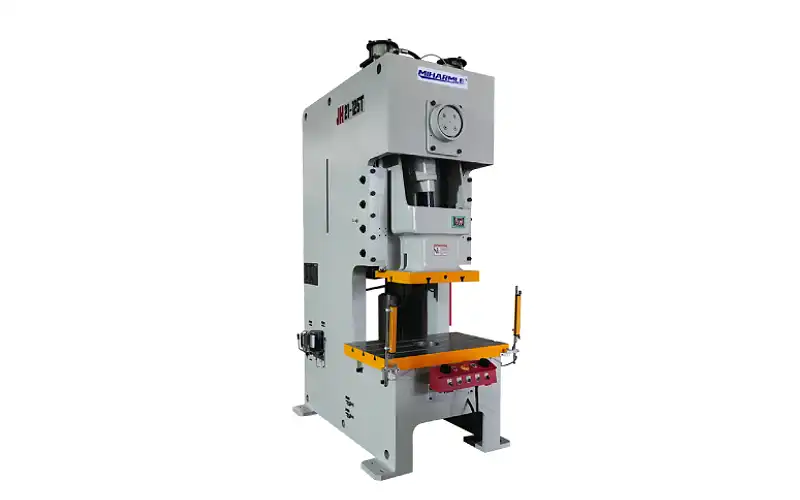
C-type punch press
C-Type punch presses have a C-shaped frame, for which their name suggests. It is specifically designed for cutting and stamping large metal sheets. It provides clear, convenient access to the tool and die area. The open frame can flex more under load than two-sided frames.
They can be an acceptable option for light-to-medium jobs. However, very precise or heavy loading can push users toward stiffer frame designs.
Gate/bridge type punch press
A gate or bridge press has a two-sided frame. Unlike the C-frame presses, this design improves stiffness and reduces deflection under punching loads. So, these are perfect for long, heavy sheet-metal processing that requires tight tolerances. It supports better alignment and stability needed for larger work.
Main Components
Frame (C-frame vs. portal/gap frame)
A strong steel frame provides the punch press’s basic structure. It supports the machine, ensuring stability in operations. The material used in these frames is usually hard-welded steel.
C-frames and portal/gap frames are designed differently to serve different purposes. C-frame showcases an open frame that provides easy access to the tooling area. Additionally, it makes loading simple. Whereas, a portal/gap or bridge frame is more like a closed rectangle. The ram sits near the centre of the frame, which helps reduce frame deflection during punching. Being supported at both sides, it can process long heavy metal sheets requiring tight tolerances.
Ram and drive system
The Ram or slide – the movable part of the press machine is a critical component that delivers force. It holds the upper punch and is driven by the main motor, moving it up and down in vertical motion. Its precision and alignment with the bottom die are important for accurate quality parts. At the same time, the drive system is responsible for the ram’s movement. It converts the motion into energy, facilitating the ram’s motion.
Clutch and brake system
The clutch controls when stored energy is sent into the stroke. It connects the spinning flywheel to the crankshaft to start a hit. But when it comes to controlling the ram’s movement, the brake system is paramount. It serves to ensure it stops when required or, in other ways, helps prevent accidents.
Die set (punch, die, stripper)
The core cutting component – the die set- works in a combination. The hard tool, punch, exerts high pressure force in the matching cavity, die, through the workpiece. It results in creating the desired shape. A stripper helps control the sheet and helps remove the material from the punch as the ram returns upward. This improves part quality and cycle reliability.
Tooling system (thick turret, thin turret, multi-tools)
On turret punch presses, tools are stored in a rotating turret. The machine indexes the turret to position the required punch-and-die set.
“Thick turret” and “thin turret” describe common turret tool formats. They mainly differ in tool size and the capacity style used by different machine families. Multi-tools place several punch tips in one station. This reduces turret indexing when many small shapes are needed.
Feed system and material handling
The feed system helps the sheet metal clamp in place and prevents it from moving during the operation. Material handling involves various tasks. It includes loading sheets, supporting large blanks, and removing finished parts and scrap. This improves speed and repeatability in production.
Advantages and Limitations of Punch Presses
Advantages
- Speed and efficiency: Punch presses are highly efficient. As with CNC turret models, their speed and efficiency excel. In a single setup, they can create different shapes without manual tool swapping, reducing processing time.
- Reduce scrap: Because they are consistent and accurate, shaping and punching operations produce less scrap.
- Versatility in shapes: They can handle a wide range of materials, from metals to composites. Also, they can create various shapes on metal sheets.
- Safety: Featuring interlocks, guards, and emergency buttons, they enhance safety. However, operators must wear proper safety clothing.
Limitations
- Noise and vibration: Some models can produce excessive noise and vibration during heavy-duty tasks.
- Limited part complexity: Intricate and complex shapes and patterns are impossible to create with these punch presses.
- High initial investment: The machinery can be quite pricey at first. However, with the right setup, they can give you a high ROI.
- Maintenance: Regular maintenance and eventual operational repairs can add to the cost. For example, hydraulic press punches are associated with heavy, costly maintenance.
Applications
A punch press, being critical equipment, can perform various tasks. These include cutting, shaping, punching, stamping, forming, notching, and many others. These tasks can be performed accurately to produce machinery parts, frames, electrical components, and others. Their applications span various industries such as:
- Automotive
- Electronics
- Metal fabrication
- Medical
- Construction
- Aerospace
Conclusion
To conclude, we have discussed all about the punch press. No doubt, these are essential piece of equipment that serves as a critical part of the metal fabrication industry. Whether mechanical or hydraulic, CNC turret or C-type models, all come with specific production requirements. So, understanding these tools and equipment is essential to choosing the best. With a reliable manufacturer, you can get the perfect equipment with technical after-sales support.