
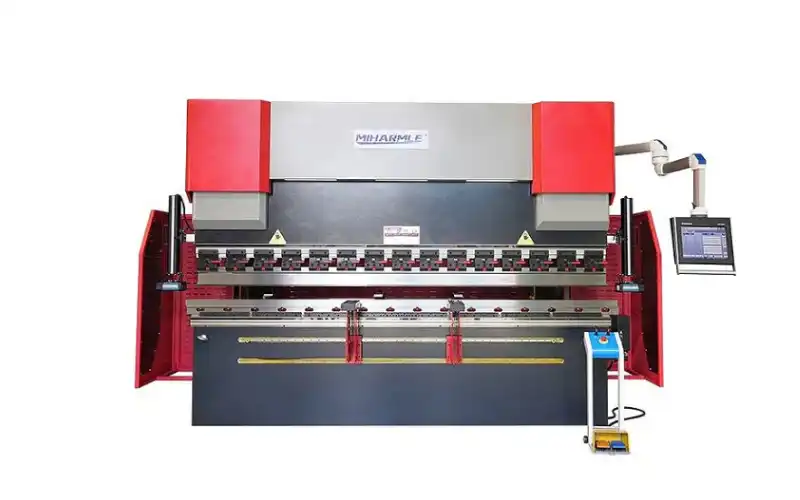
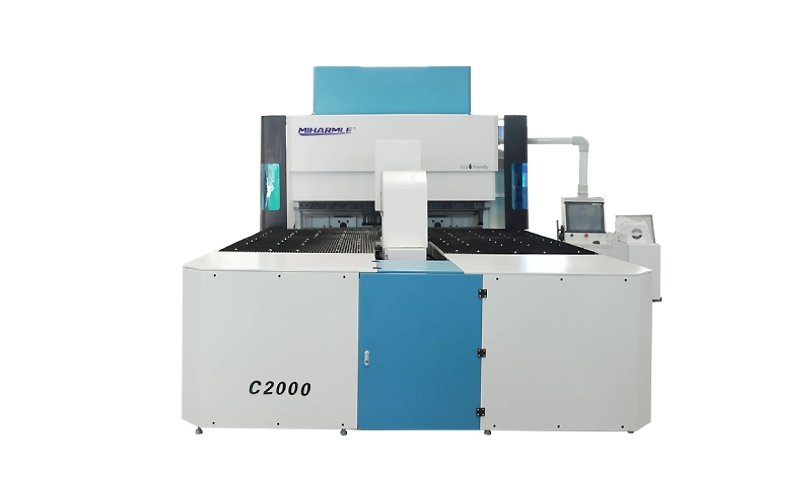
A Panel Bender is an automated sheet metal bending machine designed to produce panels, enclosures, cabinets, doors, covers, and other components with multiple bends.
Unlike a conventional press brake, which normally requires the operator to position and reposition the workpiece for different bending operations, a Panel Bender is designed to automate much of the feeding, positioning, and bending process.
This makes it particularly suitable for manufacturers looking to improve production speed, bending consistency, labor efficiency, and process automation.
For applications such as electrical cabinets, elevator panels, HVAC components, kitchen equipment, and metal enclosures, a Panel Bender can become an important part of an automated sheet metal production line.

How Does a Panel Bender Improve Production Efficiency?
The main advantage of a Panel Bender is not simply faster bending. Its efficiency comes from combining automated material handling, positioning, bending, and production control into one continuous process.
CNC Feeding: Reduce Manual Material Handling
CNC feeding allows the sheet metal to be automatically moved into the bending area according to the programmed production sequence.
Instead of relying entirely on operators to manually load, move, and reposition each workpiece, the machine can control material movement with greater consistency.
This helps reduce:
- Manual handling time
- Operator fatigue
- Positioning errors
- Unnecessary workpiece movement
- Production interruptions
For repetitive production, reducing handling time can have a significant impact on overall cycle time.
Automatic Positioning for Consistent Bending
Accurate positioning is essential when a sheet metal part requires several bends.
A Panel Bender uses CNC-controlled positioning systems to locate the workpiece according to the programmed dimensions before each bending operation.
This allows the machine to maintain consistent positioning throughout the production process.
The benefits include:
Higher repeatability — Identical parts can follow the same programmed bending sequence.
Lower operator dependence — Production relies less on manual measurement and positioning skills.
Reduced setup time — Digital programs can be prepared and recalled for repeat orders.
For manufacturers producing large quantities of similar components, automatic positioning can improve both productivity and process stability.
Multi-Side Bending Without Constant Repositioning
One of the key advantages of a Panel Bender is its ability to perform multi-side bending efficiently.
Many panels and enclosures require bends on several sides. With a traditional bending process, the operator may need to repeatedly rotate, flip, and reposition the workpiece.
A Panel Bender is designed to reduce these manual operations.
The workpiece remains controlled within the bending area while the machine performs programmed bends on different sides. This can significantly reduce non-productive handling time.
For box-shaped components, electrical enclosures, doors, and similar products, multi-side bending can make the production process more streamlined.
Robot Integration for Automated Production
A Panel Bender can also be integrated with robots or automated material-handling systems to create a more advanced bending solution.
Depending on the production requirements, robots can assist with:
- Sheet loading
- Workpiece transfer
- Part unloading
- Material positioning
- Palletizing
- Production line coordination
Robot integration becomes especially valuable when manufacturers need to operate long production runs with limited manual intervention.
Combined with CNC control, automatic feeding, and programmed bending sequences, robotic handling can transform a standalone bending machine into part of an automated sheet metal production system.
Panel Bender vs Conventional Press Brake
A Panel Bender is not designed to replace every press brake application.
A CNC press brake is generally more flexible when manufacturers need to process different materials, thicknesses, complex profiles, or customized parts using a wide range of punches and dies.
A Panel Bender is particularly advantageous when production involves:
- Repetitive panel components
- Multiple bends on the same workpiece
- High production volumes
- Thin and medium sheet metal
- Electrical cabinets and enclosures
- Elevator and HVAC panels
- Products requiring high automation
The right choice depends on the actual workpiece and production process.
Is a Panel Bender Right for Your Factory?
Before investing in a Panel Bender, consider your:
Part geometry — Are most products panel-shaped or box-type components?
Production volume — Do you produce repeated parts in medium or large quantities?
Labor requirements — Are manual loading and repositioning limiting productivity?
Automation goals — Do you plan to connect bending with feeding, robotic handling, or other production processes?
Product consistency — Do you need repeatable bending results across large production batches?
If the answer to several of these questions is yes, a Panel Bender may offer significant advantages over a conventional manual bending workflow.
Conclusion
A Panel Bender combines CNC control, automatic feeding, precise positioning, multi-side bending, and optional robot integration to create a more efficient sheet metal bending process.
Its greatest value comes from reducing unnecessary manual handling while maintaining consistent production.
For manufacturers producing electrical cabinets, enclosures, elevator panels, HVAC components, and other repetitive sheet metal products, a Panel Bender can help build a faster, more consistent, and more automated production process.
If you are evaluating a Panel Bender for your factory, send MIHARMLE your material type, sheet thickness, part drawings, bending dimensions, and production volume. These details allow our engineers to recommend a suitable flexible bending solution for your application.