
What Industries Use Panel Benders?
As sheet metal manufacturers face increasing pressure to improve productivity, consistency, and labor efficiency, automated bending technology is becoming increasingly important.
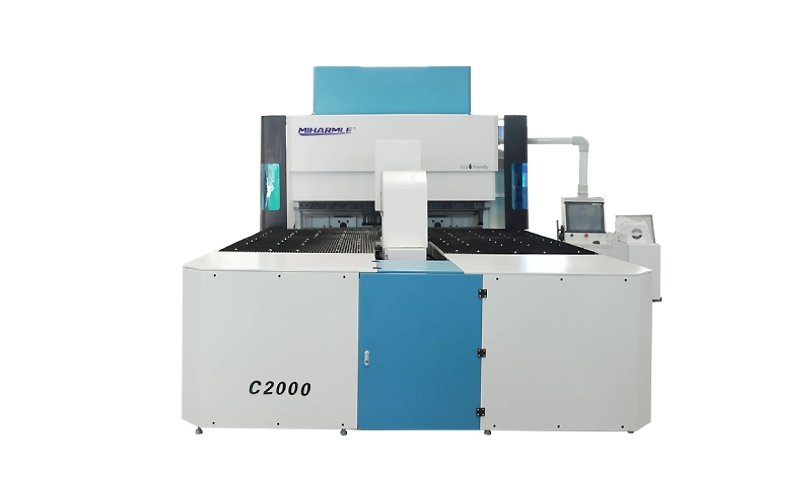
A Panel Bender is designed for efficient bending of panels, boxes, cabinets, covers, doors, and other sheet metal components. With CNC feeding, automatic positioning, multi-side bending, and optional robotic integration, it can reduce manual handling and improve production consistency.
The following eight industries are particularly well suited to Panel Bender technology.

1. Electrical Cabinets
Electrical cabinets and control enclosures often require multiple bends on four sides to create accurate box-shaped structures.
A Panel Bender can automatically position the sheet and perform multiple bending operations with less manual repositioning.
Key benefits:
- Consistent cabinet dimensions
- Reduced manual handling
- Efficient multi-side bending
- Suitable for repetitive production
For electrical cabinet manufacturers producing large quantities of standardized enclosures, automation can significantly improve production efficiency.
2. Elevator Panels
Elevator doors, wall panels, ceiling components, and other elevator sheet metal parts require accurate and consistent bending.
Because many elevator components have repeated dimensions and multiple bends, a Panel Bender can help manufacturers achieve stable production quality while reducing operator intervention.
It is particularly valuable for manufacturers producing different elevator models while maintaining standardized bending processes.
3. Stainless Steel Kitchen Equipment
Commercial kitchens use a large number of stainless steel panels, doors, covers, shelves, and cabinets.
Stainless steel requires careful handling to maintain a clean surface finish. Automated bending can reduce unnecessary manual manipulation of the workpiece.
Panel Benders are therefore suitable for manufacturers producing:
- Stainless steel cabinets
- Kitchen counters
- Equipment housings
- Doors and covers
- Shelving systems
The result is a more consistent bending process with reduced manual handling.
4. HVAC Equipment
HVAC manufacturers produce sheet metal housings, ducts, panels, covers, and equipment enclosures in large quantities.
Many of these components involve repetitive bending operations, making automation particularly valuable.
A Panel Bender can help reduce handling time and maintain consistent flange dimensions across repeated parts.
For high-volume HVAC production, improving bending efficiency can contribute directly to shorter production cycles and higher output.
5. Automotive Parts
The automotive industry requires consistent production of many sheet metal components, including brackets, covers, panels, housings, and structural components.
For suitable thin- and medium-sheet applications, automated bending can improve repeatability and reduce operator-dependent operations.
When integrated with automated feeding and material handling, a Panel Bender can become part of a highly organized production workflow.
6. Appliances
Home and commercial appliances contain numerous formed sheet metal components.
Examples include:
- Refrigerator panels
- Washing machine components
- Appliance housings
- Covers
- Internal structural panels
These products are often manufactured in large quantities, where repeatability and production efficiency are critical.
A Panel Bender can help manufacturers process repetitive parts with consistent bending sequences and reduced manual repositioning.
7. Metal Furniture
Metal furniture manufacturers produce cabinets, shelves, drawers, tables, storage systems, and other products requiring multiple bends.
A flexible bending center is especially useful when manufacturers need both productivity and reasonable flexibility across different product sizes.
Automated bending can reduce handling operations while helping maintain consistent dimensions between components.
This is important for furniture products where accurate assembly depends on repeatable bending.
8. Metal Enclosures
Metal enclosures are widely used in industrial equipment, telecommunications, electronics, energy systems, and automation equipment.
These products frequently require multiple bends to create rigid box-shaped structures.
A Panel Bender can efficiently process suitable enclosure components while reducing the need for repeated manual positioning.
For manufacturers with high volumes of similar enclosures, this can improve both production efficiency and process consistency.
Why Are Panel Benders Suitable for These Industries?
Although these industries are different, many of their sheet metal products share several characteristics:
Multiple bends — Panels and boxes often require bending on several sides.
Repetitive production — Large quantities of similar parts make automation more valuable.
Consistent dimensions — Accurate bending is important for assembly and product quality.
Labor requirements — Manual loading, positioning, turning, and unloading can consume significant production time.
Automation demand — Manufacturers increasingly want to connect cutting, bending, handling, and other processes.
A Panel Bender addresses these requirements by combining automated positioning with efficient multi-side bending.
Panel Bender for Automated Sheet Metal Production
The real value of a Panel Bender goes beyond the bending operation itself.
It can be connected with CNC feeding systems, automated loading and unloading, robotic handling, and other production equipment to create a more integrated sheet metal manufacturing process.
This makes it suitable for manufacturers moving from traditional manual bending toward automated and flexible production.
How to Know If Your Industry Needs a Panel Bender
A Panel Bender may be a good solution if your factory produces:
- High volumes of repetitive sheet metal parts
- Cabinets, panels, boxes, or enclosures
- Components requiring multiple bends
- Thin or medium-thickness sheet metal
- Products where manual handling affects productivity
- Parts that require consistent dimensions
However, not every workpiece is suitable for panel bending. Material thickness, part geometry, flange dimensions, production volume, and required bending operations should all be evaluated before selecting the machine.
Conclusion
Panel Bender technology is particularly valuable for industries where repetitive sheet metal panels and multi-side bending are common.
From electrical cabinets and elevator panels to HVAC equipment, appliances, automotive components, metal furniture, and industrial enclosures, automated bending can help manufacturers improve productivity, consistency, and labor efficiency.
The best solution depends on your actual products and production requirements.
If you are considering a Panel Bender, send MIHARMLE your part drawings, material type, sheet thickness, bending dimensions, and production volume. Our engineering team can evaluate your application and recommend a suitable automated bending solution.