
Introduction
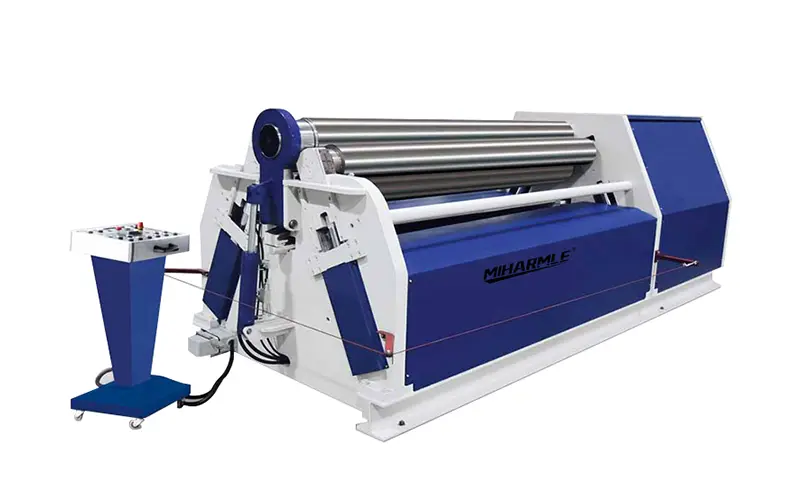
Rolling machines are industrial equipment used to bend metal sheets into the required shape. There are many applications of modern rolling machines in construction projects. Their major applications involve automotive, shipbuilding and aircraft manufacturing.
The primary goal of these machines is to reduce the metal thickness and give a surface finish. Manufacturing sectors use rolling machines to produce large quantities of metal products with precise dimensions.
The basic components of a rolling machine are the primary factors influencing its performance. These components include roll configuration, pressure control, drive systems, and material handling mechanisms.
The content below provides an overview of the functional process of rolling machines. This understanding is important for improving production efficiency and maintaining product quality. Knowledge of its working principles also helps to avoid equipment failure during metal processing operations.
Working Principle of Rolling Machine
The main function of a rolling machine is the plastic deformation of metal. They bend the multiple pieces uniformly and smoothly without any cutting or welding. These machines give different shapes through a controlled mechanical force. The final shape depends on the CNC system or operator control.
Most rolling machines function by continuously rotating. The rotation of these rolls in opposite directions moves the metal into the gap between the rolls. As the material moves between rolls, the metal deforms permanently. This is because of compressive stress (stress applied by rolls on metal)
There are basically two methods of rolling machine operation:
- Hot Rolling
- Cold Rolling
The hot rolling method is used to soften the heated metal so that it can be easily shaped. Large structural sections and thick steel plates are deformed using this process.
The cold rolling method is used to improve surface quality and dimensions. This process is widely used for thin sheets and precision industrial products.
Below are the stages involved in the rolling process of these machines.
The first stage is material feeding: the materials fed into the rolling machine include metal sheets, slabs, billets, or strips.
Feeding systems are used to ensure the correct alignment before rolling begins. To improve operational accuracy, conveyors and transfer mechanisms are used in some automated systems. Positioning devices are also used to improve operational accuracy.
Roll rotation is the second stage: rotating rolls are used to minimize metal thickness. These rolls apply pressure to change shape according to production needs.
Electric, hydraulic or mechanical mechanisms are used to rotate the rolls. As the rolls rotate, friction is generated between the metal and the rolls. Material is pulled into the rolling area by this friction. The speed of roll affects the surface quality and material deformation. To control its speed is important for dimensional accuracy. The speed of rotating rolls also affects the production rate.
The third stage of the rolling process includes compression and thickness reduction. A plastic deformation process is involved in this stage.
The compressive force reduces the material’s thickness as it passes through the rolls. But it also increases the material length. The degree of reduction relies on the roll gap and roll pressure. Material temperature and hardness are also key factors to consider. The number of rolling passes is also important to achieve the final dimensions.
Shape formation is an important stage of the rolling process. Shapes are given by using rolling machines. Different roll designs give different shapes. Steel plates, coils, and structural beams can be produced using these rolls. Special cross-section shapes are achieved by special roll profiles. Rolling machines are also used to give shapes such as channels, pipes, and rails.
Keeping heat and friction under control is the final step in the rolling process. When a roller is rolling, friction produces heat. High heat can be a problem for surface finish and equipment performance. Thus, friction and rolling wear are minimized by using lubrication systems. Lubrication also increases roll lifespan. It also improves dimensional consistency and production efficiency.
Main Components of the Rolling Machine
There are several components of the rolling machine that play key roles in metal processing.
Rolls: The main working components of the rolling machine. The force applied by these rolls shapes the material. Usually, the material used to make rolls is hardened steel. These rolls are used to resist wear and high mechanical loads.
There are different types of rolling mill configurations used in rolling machines. These rolling arrangements include two-high rolls, three-high rolls, four-high rolls, cluster rolls and tandem rolls.
Mill stand: Rolls are supported by the mill stand. It is used to keep the machine stable during operation. It handles the heavy rolling forces and maintains correct roll alignment.
For dimensional accuracy and vibration control, the mil stand plays an ideal role. They play a major role in operational safety and load distribution.
Drive system: The main working of the rolling machine relies on the drive system. It rotates the rolls by using motors, gears, and spindles. Mechanical drives, hydraulic drives and electric drives are used by rolling machines.
Bearings: The rotating rolls are supported by bearings. They reduce friction during operation. Machine stability and operational lifespan are enhanced by using premium-quality bearings.
Screwdown mechanism: Controls the gap between the rolls. The final thickness of rolled material is determined by this adjustment.
Lubrication and cooling system: This system not only lowers the roll temperature, but also helps to minimize surface damage during rolling. The equipment durability and production quality can be improved by these systems.
Control system: For process monitoring and production accuracy, the modern rolling machines are provided with automatic control systems. The control system helps operators to control the working conditions of the rolling machine. By controlling roll pressure, speed, thickness and temperature, an alignment ensures consistent production.
Conclusion
Rolling machines play an important role in modern metal manufacturing industries. Understanding the operating principles of rolling machines can help manufacturers improve production efficiency. Using the right method for rolling the material ensures a reduction in operational errors. Having knowledge of all components of the rolling machine helps select the right equipment and maintain consistent product quality. Correct use of a rolling machine improves machine performance.