
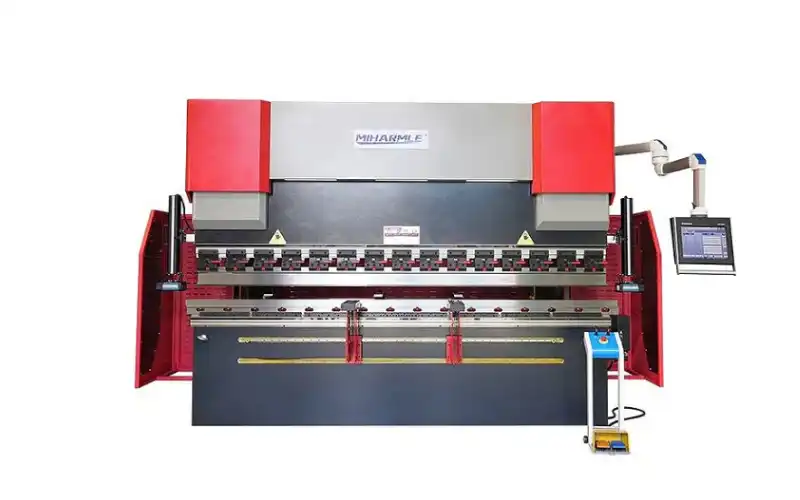
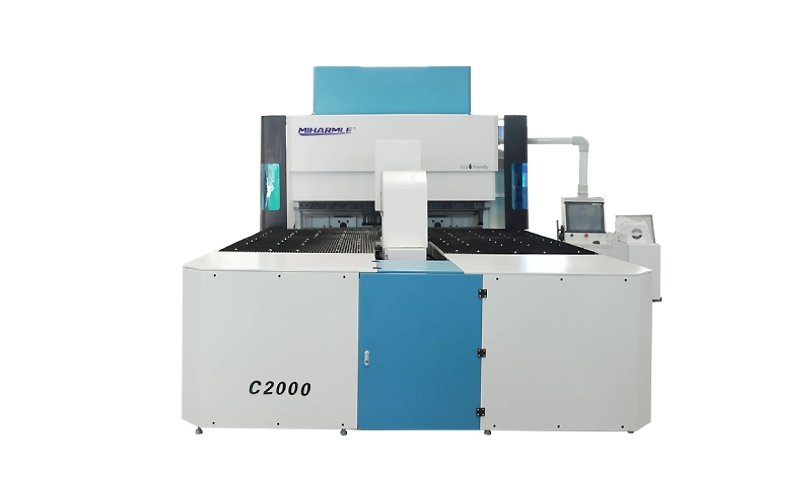
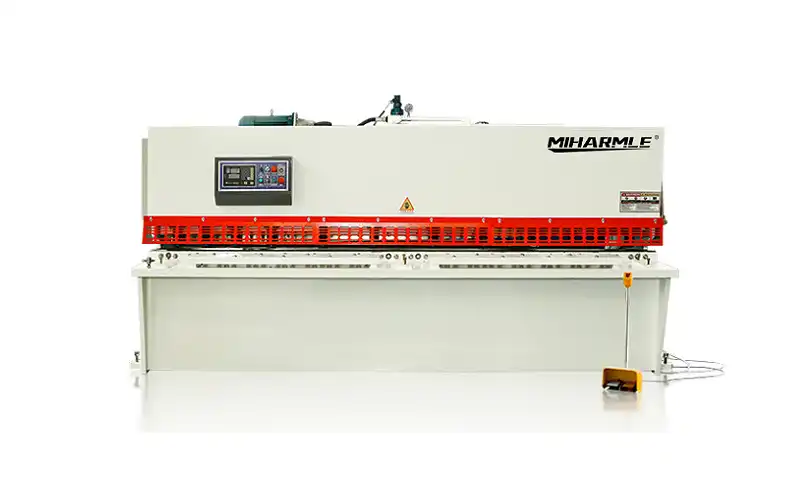
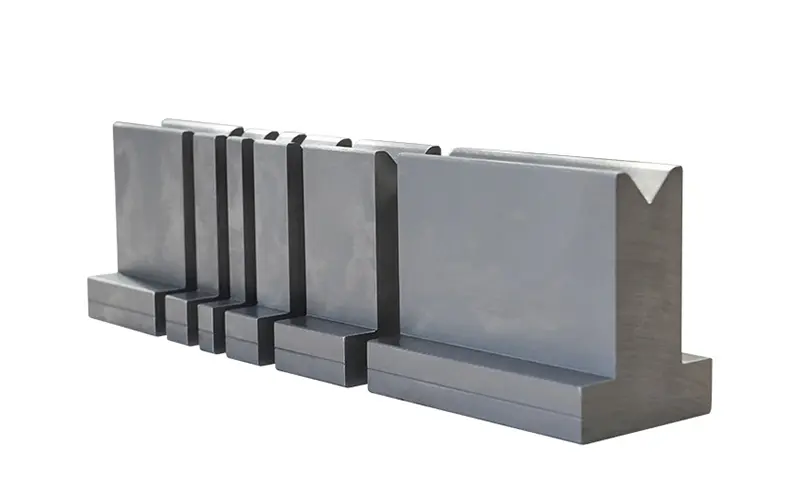
Precision lies at the heart of modern sheet metal fabrication,and it is equally critical for CNC press brakes.Gantry machining—specifically,secondary machining—is a pivotal factor influencing a press brake’s long-term accuracy.A welded frame that has undergone this machining process is far less prone to deformation;it eliminates cumulative defects,stabilizes the frame’s geometry,and ultimately delivers superior precision.Today,we will explore how gantry-machined frames optimize bending accuracy,reduce operational costs,and boost production efficiency.
1. What Happens When a Press Brake Frame Is Not Properly Machined?
A press brake frame is usually made from welded steel plates. During welding, heating, cooling, and assembly, internal stress is created inside the steel structure. Even after stress relief, small deformation may still remain in the frame.
If the frame is not processed with high-precision machining after welding and assembly, these small errors can accumulate and affect the entire machine.
Common problems include:
Inconsistent bending angles
Uneven workpiece dimensions
Poor repeatability during batch production
Premature tooling wear
Higher scrap rate
More frequent adjustment and calibration
Unstable ram movement
Reduced machine service life
At first, these issues may seem small. However, in daily production, even a slight error can lead to serious quality problems, especially when producing stainless steel parts, electrical cabinets, elevator panels, automotive components, kitchen equipment, and other precision sheet metal products.
For manufacturers who need stable mass production, an unmachined or poorly machined frame can become a hidden cost.
2. What Is Gantry Machining for a CNC Press Brake Frame?
Gantry machining is a high-precision machining process performed after the press brake frame has been welded, stress-relieved, and assembled as an integrated structure.
Instead of machining separate parts individually, the complete frame is positioned on a large gantry machining center or gantry floor boring machine. Key mounting surfaces, guide surfaces, connection points, and reference planes are machined in one coordinated setup.
This process helps ensure that the main structural surfaces are aligned with each other, reducing accumulated tolerances caused by welding, cutting, assembly, and separate processing.
In simple terms, gantry machining gives the press brake frame a more accurate foundation.
It improves:
Frame flatness
Straightness
Parallelism
Ram and table alignment
Tooling installation accuracy
Long-term structural stability
Crowning system performance
For a CNC press brake, this is especially important because the control system can only perform accurately when the mechanical structure is stable and reliable.
3. Why Gantry-Machined Frames Improve Bending Accuracy
A CNC press brake works by pressing the upper tool into the lower die to form a specific bending angle. During this process, the frame must withstand large forces without excessive deformation.
If the frame surface is uneven or the machine structure is not accurately aligned, the bending force will not be distributed evenly across the working length. This can cause different bending angles from one side of the workpiece to the other.
A gantry-machined frame helps solve this problem by providing a precise and stable machine body.
The benefits include:
More consistent bending angles across the full length
Better repeatability for batch production
Reduced need for manual correction
Improved positioning accuracy
More stable operation under heavy load
Better matching between the ram, worktable, and tooling
For customers processing long workpieces or thick plates, the advantage is even more obvious. A stable frame allows the machine to maintain better accuracy even under continuous high-pressure bending.
4. Key Advantages of Secondary Gantry Machining
Secondary gantry machining is not just an additional manufacturing step. It directly affects the quality and lifetime value of the press brake.
Eliminates Accumulated Welding and Assembly Tolerances
Every welded structure has some degree of tolerance. When multiple components are welded and assembled, small deviations can accumulate. Gantry machining corrects these errors at the final frame level, helping the entire machine achieve better geometric accuracy.
Achieves High Frame Flatness and Straightness
With advanced gantry machining equipment, the frame can achieve excellent flatness and straightness. For high-precision CNC press brakes, this can reach a very tight accuracy level, such as ±0.01mm depending on machine design and processing requirements.
Improves Long-Term Accuracy Retention
A well-machined frame is more stable during long-term use. It is less likely to deform under repeated heavy loads, which helps the machine maintain bending accuracy over years of operation.
Enhances Crowning Compensation Performance
Modern CNC press brakes often use mechanical or hydraulic crowning systems to compensate for deflection during bending. However, the crowning system can only work effectively when the machine frame itself is accurately machined.
A gantry-machined frame allows the crowning system to perform more precisely, improving angle consistency across the entire workpiece.
Reduces Scrap, Rework, and Tooling Costs
Poor bending accuracy leads to rejected parts, repeated trial bending, extra operator time, and unnecessary tooling wear. A high-precision frame reduces these problems and helps manufacturers lower production costs.
Supports Stable Mass Production
For factories producing large batches of sheet metal parts, repeatability is critical. A gantry-machined CNC press brake can deliver stable results from the first part to the last, improving productivity and customer satisfaction.
5. Gantry Machining and Lower Operating Costs
Many buyers compare press brakes by price, bending force, controller brand, or machine appearance. However, the real cost of a press brake is not only the purchase price. It also includes daily operating efficiency, scrap rate, maintenance frequency, and production stability.
A press brake with a precision gantry-machined frame can help reduce operating costs in several ways:
Less time spent adjusting bending angles
Lower scrap and rework rate
Longer tooling life
Better machine stability
Fewer service issues caused by frame deformation
Higher production efficiency
More reliable quality control
For sheet metal manufacturers, this means faster delivery, fewer quality complaints, and better profit margins.
6. Why Frame Quality Should Be Checked Before Buying a Press Brake
When choosing a CNC press brake, it is important to ask how the frame is manufactured and machined. A strong-looking frame does not always mean a precise frame.
Before purchasing, buyers should consider:
Is the frame welded from high-quality steel plate?
Has the frame been stress-relieved?
Is the complete frame machined after welding and assembly?
What machining equipment is used?
What accuracy level can the manufacturer achieve?
Can the supplier customize the machine according to production requirements?
A reliable press brake manufacturer should be able to explain the frame processing procedure clearly and provide technical support based on your bending applications.
7. Choose a High-Precision CNC Press Brake Manufacturer
Gantry machining plays a major role in the performance of a CNC press brake. It helps create a stable, accurate, and durable machine frame, which directly improves bending precision, repeatability, and production efficiency.
For manufacturers who require high-quality bending results, especially in batch production, a gantry-machined frame is not a small detail. It is one of the foundations of machine accuracy.
In summary,gantry secondary machining has a profound impact on the precision of a CNC press brake’s frame.Our company utilizes advanced gantry-type floor boring machines to ensure this level of precision.If you are looking to acquire a high-quality,high-precision press brake,click below to request a free quote.