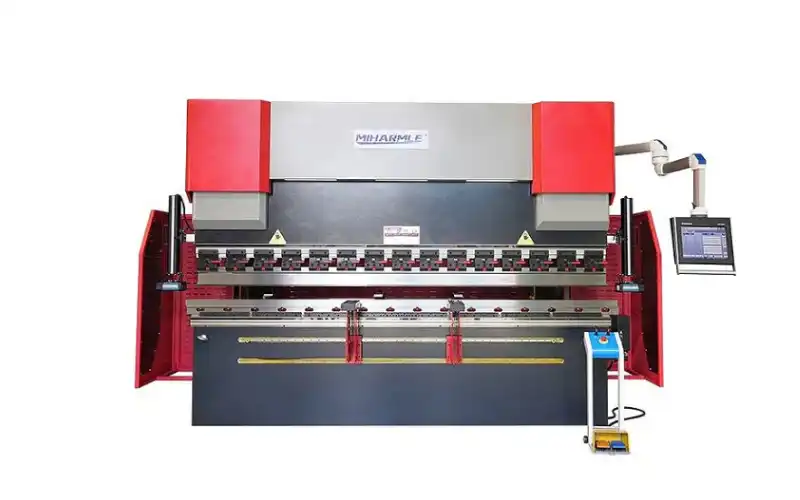
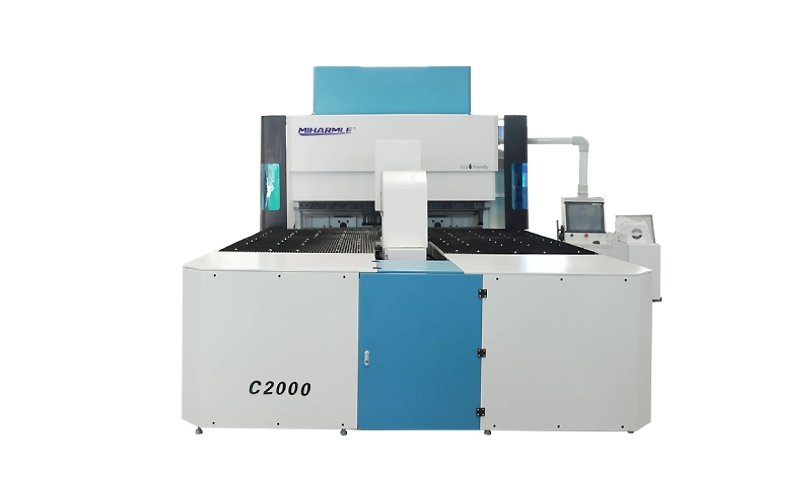
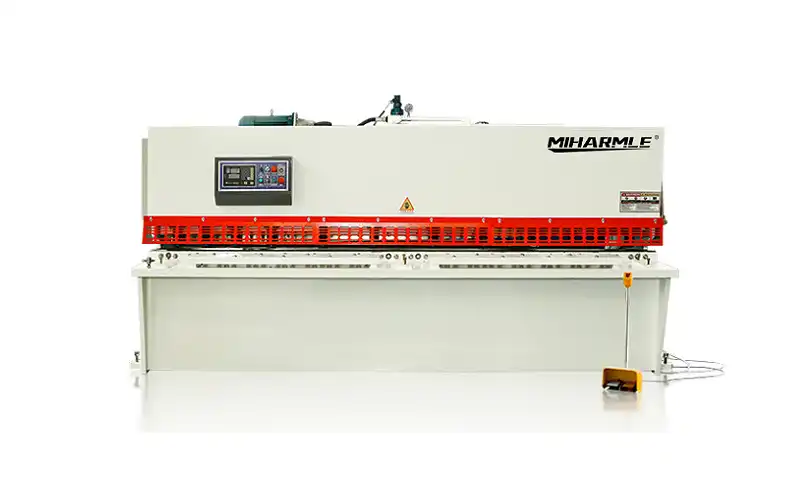
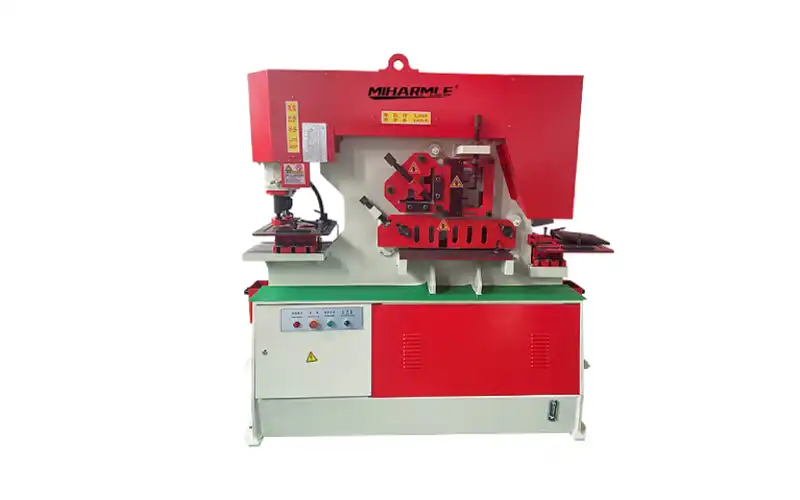
When purchasing CNC press brake, customers in North America and Europe prioritize compliance with safety standards alongside bending precision.
Our press brakes are CE certified and meet ANSI safety specifications; laser protection systems are available as an optional feature.
The DSP and Lazer Safe laser protection systems are currently the most common options. This article details the differences between the two, helping you select the safety configuration that best suits your budget and market requirements.
Why Laser Guarding Matters on a CNC Press Brake
The area where the upper and lower dies of a bending machine close is a high-risk zone. When processing small workpieces or thin sheets, operators must hold the material flush against the die; a laser protection system is essential in such instances to ensure safe and efficient operation.

For equipment intended for export, a laser protection system helps meet stricter regulatory standards. The safety configuration includes the following:
- Laser transmitter and receiver
- Safety controller or safety relay
- CNC integration
- Emergency stop circuit
- Guarding for rear and side access
- Foot pedal safety logic
- Stop-time measurement
- Risk assessment documentation
- Electrical drawings and user manual
- CE declaration or supporting technical file
In addition, factors such as the overall design of the bending machine, its installation, control circuitry, technical documentation, and customer training must be considered to ensure the machine better complies with safety standards.
CE, OSHA and ANSI: What Buyers Usually Ask
European buyers typically focus on CE compliance. The EU Machinery Regulation will come into effect on January 20, 2027, replacing the current Machinery Directive framework.
U.S. buyers, on the other hand, are more concerned with OSHA standards. The OSHA 1910.212 standard explicitly mandates the installation of guards at the point of operation if machine operation poses a risk of injury to employees.
Although ANSI standards differ from OSHA regulations, they are widely adopted in the United States. Overseas customers may also prioritize the following points:
- Which safety system is installed?
- Is the safety circuit properly integrated?
- Is there stop-time measurement?
- Does the system support CE or ANSI-related documentation?
- Can the supplier provide electrical drawings and safety manuals?
- Is the machine suitable for our local safety inspection?
Our company has professionals available to provide detailed answers to the above questions; you are welcome to consult with us online.
DSP Laser Guarding System: Cost-Effective Safety for Standard Export Machines
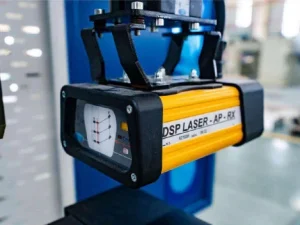
DSP offers high cost-effectiveness, making it your top choice if you have a limited budget for purchasing CNC press brake machine. Specific advantages include:
- Lower cost compared with premium international systems
- Suitable for many standard hydraulic press brake applications
- Compact structure and relatively simple installation
- Improved operator protection near the punch area
- Practical choice for customers with limited safety budget
- Good value for distributors competing in price-sensitive markets
For many manufacturing workshops, a CNC press brake equipped with a DSP system is an excellent choice; however, it is essential to carefully verify the certification scope, specific model, certificate validity, applicable standards, wiring configuration, stopping performance, and integration with the machine’s control system.
DSP systems are best suited for projects requiring a balanced configuration—offering a cost-effective yet safe solution that meets standard bending requirements.
Lazer Safe Laser Guarding System: Premium Choice for Strict Compliance Markets
Lazer Safe is widely used in markets such as Europe, North America, and Australia, and the system is designed to comply with international standards including ANSI B11.3, CSA Z142, and NR12.
The choice of Lazer Safe is typically driven by the following requirements:
- Stronger documentation for CE-focused projects
- Higher confidence for large factories and safety audits
- Advanced optical protection around the punch tip
- Better integration with CNC and machine safety control
- Options such as BendShield, IRIS, IRIS Plus or Sentinel systems
- High productivity with reduced unnecessary stops
- Premium machine positioning for developed markets
Adopting the Lazer Safe system for the EU or US markets helps alleviate customer concerns and establishes a more professional image for exports.
DSP vs Lazer Safe: Practical Comparison
| Item | DSP Laser Guarding | Lazer Safe Laser Guarding |
|---|---|---|
| Positioning | Cost-effective safety option | Premium international safety solution |
| Typical buyer | Budget-sensitive workshops and distributors | EU/US buyers, large factories, premium dealers |
| Compliance confidence | Depends heavily on integration and documentation | Stronger brand recognition and certification support |
| Cost | Lower | Higher |
| CNC integration | Basic to standard, depending on configuration | Advanced integration options available |
| Productivity features | Suitable for standard bending | More advanced optical and productivity functions |
| Best use case | Standard export hydraulic press brakes | Strict CE, OSHA, ANSI-oriented projects |
Which System Should You Choose?
If cost-effectiveness is your priority, DSP is a solid choice; it meets the requirements for many standard CNC press brake applications.
If you are operating in a market with strict safety standards, you might opt for Lazer Safe.
For many export-oriented suppliers, the best strategy is to offer both options:
- Standard configuration: DSP laser guarding
- Premium export configuration: Lazer Safe laser guarding
- Custom compliance package: safety system, documentation, electrical drawings, risk assessment support and stop-time test report
This gives buyers flexibility and helps distributors sell to different market levels.
What Compliance Documents Should Buyers Request?
If you are looking to purchase a CNC bending machine, our company provides product brochures and detailed technical documentation.
Recommended documents include:
- Machine specification sheet
- Electrical schematic
- Safety circuit diagram
- Laser guarding system manual
- CE declaration or supporting documents
- Risk assessment record
- Stop-time measurement report when required
- Operation and maintenance manual
- Warning labels in the target market language
- Spare parts list
- Installation and training guidance
These documents help importers answer local inspectors, end users and factory safety managers with confidence.

Final Recommendation
If the price of the CNC press brake is your primary concern, the DSP laser protection system offers a cost-effective safety solution.
If you prioritize market recognition, the reliability of safety certifications, and high-end export positioning, Lazer Safe is the recommended choice.
Ultimately, buyers should look beyond the brand of the laser protection system and focus on whether the entire press brake—including its design, electrical components, manufacturing and assembly processes, testing, and technical documentation—complies with safety standards.
We can configure a solution using either DSP or Lazer Safe based on your target market, budget, and compliance requirements. Please feel free to request a free online quote.