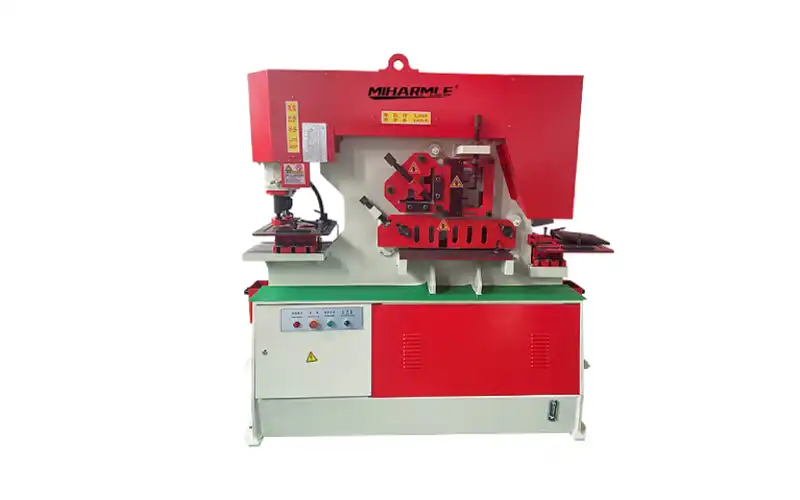
Sheet metal rolling machines play a crucial role in the custom fabrication industry. These machines are commonly used in metalworking shops and large manufacturing facilities to create conical or cylindrical parts from sheet metal. With various types of sheet metal rolling machines, selecting the right one according to your specific requirements can be challenging without a thorough understanding of them. The right machine will improve production efficiency and ultimately enhance process reliability.
This guide provides a comprehensive analysis of three main types of rolling machines. Let’s discuss them further.
What are Sheet Metal Rolling Machines?
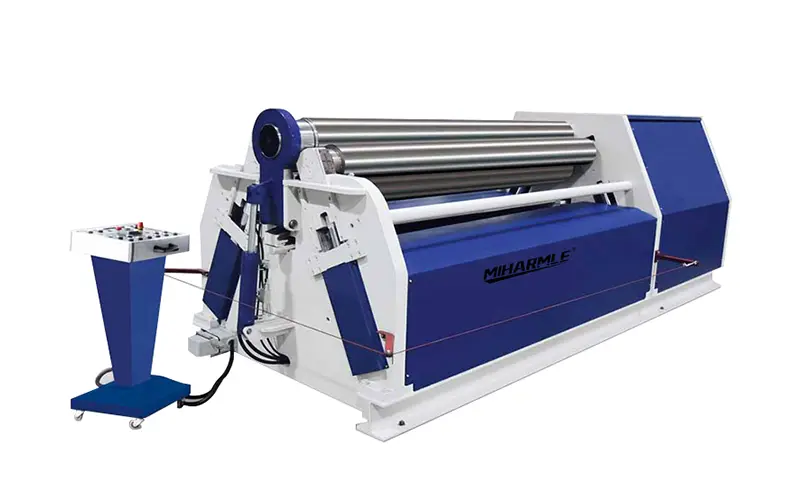
Sheet metal rolling machines or metal bending rollers, as the name suggests, make bends and shape sheet metal into curved, conical, or cylindrical components and parts. These machines process flat metal sheets or plates of varied thicknesses and metal materials. They control the curvature, diameter, and other specifications to form various custom machine parts. These include ducts, vessels, pipes, and a wide range of structural components used in several industries.
Working principle of the plate rolling machine
A sheet metal rolling machine forms a flat sheet into a curved profile by passing it through offset rolls under controlled force and friction. The fundamental mechanism is continuous three‑point bending: the sheet is pinched and driven while an adjustable roll imposes curvature until plastic deformation sets the final radius after compensating for springback.
Types of Sheet Metal Rolling Machines
Although there are various types of sheet metal rolling machines, here we will discuss the three major ones:
Two-Roll Rolling Machines
These type of plate rolling machines involves two rollers, as their name suggests. These two rollers vary in size. One being larger that uses hardened steel coated with urethane. While the other one is smaller and applies force on the sheet metal for forming tight radius, curves, and arcs. Two-roll rolling machines are common for entry-level bending operations. The advantages include:
- Best for small diameters
- Provide a high surface finish
- Easy-to-use
Three-Roll Rolling Machines

Three-roll rolling machines consist of three cylindrical rolls. They use three rolls in either pyramid (two lower driven, top adjustable) or initial‑pinch/asymmetric layouts. The third roller provides the precise control needed for tighter bends for the final shaping of the object. These machines are suitable for medium-sized projects as they accommodate material thickness over half an inch. Advantages include:
- Provides more control over bending radii
- Versatile for general fabrication, producing cylinders and cones
Four-Roll Rolling Machines

Four rollers are incorporated in these machines. Two rollers – top and bottom clamp the metal sheet, preventing the metal sheet from slipping or sliding. At the same time, the two side rollers shape the curve. The additional roller is referred to as a pinch roller. These plate rolling machine types enable full pre-bending on both ends and single-pass rolling with high accuracy and repeatability. They are very precise and may allow for fully automated control, making them best suited for thicker materials. The advantages include:
- Provide tighter tolerances
- Integrate CNC programs for productivity and consistency.
- High-volume operation
Choosing the Right Rolling Machine
The right rolling machine is the one that fulfills your specific requirement. There are several points one needs to access:
- Material requirements
- Bending radius
- Production volume
- Automation
Conclusion
Sheet metal rolling machines come in several types, with primary types being 2-roll, 3-roll, and 4-roll rolling machines. Each type serves different requirements. They enable repeatable curves and bends for the everyday fabrication of metal sheets. To choose the right type of machine, assess the material type, thickness, width, and target diameter against the machine’s capacity and roll size. Selecting the right supplier for buying a compatible machine will help you elevate your business.