
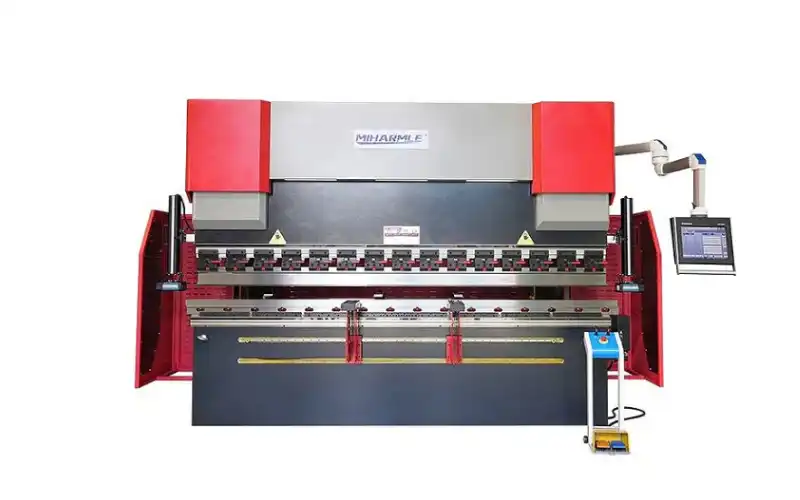
Pure electric press brake use servo motors and ball screws to control the slider movement, eliminating the need for hydraulic oil. This makes them the preferred choice for sheet metal bending manufacturers requiring fast, precise, energy-efficient, and clean bending.
Pure electricpress brake can be used for electrical cabinets, stainless steel casings, elevator components, kitchen equipment, etc., reducing maintenance and improving bending consistency.
This guide will introduce eight important things to know when purchasing a pure electric press brake.

1. Understand What a Pure Electric Press Brake Really Is
A pure electric press brake is a CNC bending machine driven by electric servo motors instead of a hydraulic system. The ram movement is controlled through an electromechanical transmission structure, commonly using servo motors, ball screws, linear guides, and a CNC control system.
The biggest difference is simple: a hydraulic press brake uses hydraulic oil pressure to create bending force, while a pure electric press brake uses servo-controlled mechanical force.
This brings several advantages:
- No hydraulic oil leakage
- Lower daily maintenance
- Lower noise during operation
- Faster response speed
- Better energy efficiency
- More stable repeat positioning
- Cleaner working environment
For many sheet metal factories, this makes the electric press brake especially attractive for high-mix, small-batch production where setup speed and accuracy matter.
2. Check Whether Your Parts Are Suitable for Electric Bending
Before comparing models, first confirm whether your workpieces match the strengths of a pure electric press brake.
Pure electric press brakes are usually ideal for:
- Thin and medium sheet metal
- Precision bending parts
- Stainless steel panels
- Electrical enclosures
- Control cabinets
- Aluminum parts
- Small and medium-sized components
- High-frequency bending jobs
- Clean manufacturing environments
If your factory mainly bends very thick plates or requires extremely high tonnage, a hydraulic or hybrid press brake may still be more suitable. But if your work focuses on precision, speed, repeatability, and lower operating cost, a CNC electric press brake is often a smart long-term investment.
A practical rule is to list your most common material type, thickness, bending length, flange height, and production volume before asking for a quotation. This helps the supplier recommend the correct machine capacity instead of simply offering the cheapest model.
3. Choose the Right Tonnage and Bending Length
Tonnage and bending length are two of the most important specifications when buying any press brake.
If the machine force is too small, it cannot bend your material safely or accurately. If the machine is too large, you may pay more than necessary and lose efficiency for smaller parts.
When choosing tonnage, consider:
- Material type, such as carbon steel, stainless steel, or aluminum
- Material thickness
- Bending length
- V-die opening
- Required bending angle
- Minimum flange size
- Production frequency
For bending length, do not only think about the largest part you may produce once or twice. Focus on your regular production needs. A compact electric press brake can be very efficient for small parts, while longer workpieces require a larger worktable and stronger frame rigidity.
MIHARMLE’s CNC electric press brake range includes compact models such as EP12/600, EP18/800, and EP30/1250S, with workbench lengths from 600 mm to 1250 mm and slider speeds up to 200 mm/s, making them suitable for fast and precise small-to-medium sheet metal bending.
4. Pay Attention to Accuracy and Repeatability
Accuracy is one of the main reasons buyers choose a pure electric press brake.
Because the servo system directly controls ram movement, an electric press brake can provide stable positioning and repeatability. This is especially important when producing parts that must fit together after bending, such as cabinet doors, box structures, brackets, and stainless steel panels.
When evaluating accuracy, ask about:
- Ram positioning accuracy
- Repeat positioning accuracy
- Backgauge accuracy
- Angle consistency
- Grating scale or closed-loop measurement system
- Frame rigidity
- Crowning or compensation system
A good electric press brake should maintain consistent bending results across repeated cycles. MIHARMLE’s CNC electric press brake uses a grating scale position closed-loop measurement system to help improve slider position accuracy and repeatability.
Do not judge accuracy only by the CNC controller brand. The full structure matters: servo motor, ball screw, guide system, frame design, backgauge, tooling, and compensation all influence the final bending result.
5. Evaluate the CNC Controller and Programming Functions
The CNC controller directly affects how easy the machine is to operate, program, and adjust. A good controller can reduce setup time, simplify multi-step bending, store common products, and help operators maintain consistent results.
Before buying, check whether the controller supports:
- Multi-axis control
- Tool library
- Material library
- Product program storage
- Bend sequence programming
- Crowning control
- Servo control
- USB import/export
- Offline programming options
- Clear touchscreen interface
For example, MIHARMLE’s electric press brake with DA53T controller supports functions such as crowning control, tool/material/product library, servo and frequency inverter control, USB memory stick interfacing, and offline software support.
If your factory produces many different parts every day, controller usability becomes even more important. A machine that is easy to program can save more time than a slightly cheaper machine with limited control functions.
6. Do Not Ignore Tooling and Crowning
Many buyers focus on the machine body but forget that tooling has a major effect on bending quality.
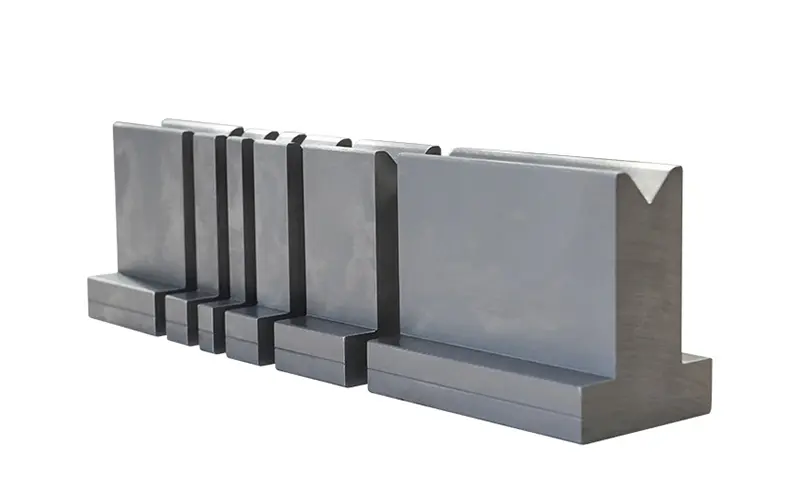
Even the best pure electric press brake cannot produce good parts with poor tooling. The upper punch, lower die, V-opening, tool hardness, tool straightness, and clamping system all influence bending accuracy and surface quality.
Before purchase, confirm:
- What standard tooling is included
- Whether custom tooling is available
- Tool material and hardness
- Tooling compatibility
- Quick clamping options
- Segmented tooling availability
- Crowning or deflection compensation method
Crowning is especially important when bending longer parts. It helps compensate for frame and table deflection so the angle remains more consistent along the full bending length.
For factories bending different materials and shapes, customized tooling can also improve efficiency and reduce part defects. MIHARMLE provides press brake tooling options including standard bending tools, specialized forming tools, precision tools, and customized tooling systems.
7. Compare Total Cost, Not Just Purchase Price
A pure electric press brake may have a different upfront price compared with a traditional hydraulic press brake, but purchase price is only one part of the real cost.
You should compare the total cost of ownership, including:
- Electricity consumption
- Hydraulic oil cost
- Oil filter replacement
- Seal and valve maintenance
- Machine downtime
- Operator setup time
- Scrap rate
- Tooling cost
- Spare parts availability
- Service response
Pure electric press brakes consume power mainly when the machine is moving and bending. They do not require a hydraulic pump running continuously, and they eliminate hydraulic oil maintenance. Over time, this can reduce operating cost and simplify daily machine management.
For buyers who run frequent bending jobs, the savings from lower energy use, less maintenance, and faster cycle time can be more important than the initial price difference.
8. Confirm Safety, Service, and Supplier Support
Safety should always be checked before buying a press brake. A pure electric press brake can be fast, so reliable safety protection is essential.
Ask the supplier about:
- Front and rear protection
- Safety light curtain or laser safety options
- Emergency stop buttons
- Electrical safety system
- Operator lighting
- Machine guarding
- CE or relevant safety standards
- Installation support
- Training
- Spare parts supply
- Remote technical assistance
MIHARMLE’s electric press brake adopts a fully protective structure, front and rear LED lighting, and a heat dissipation system. These details are important for practical daily operation, not only for machine appearance.
A reliable supplier should help you choose the right model, recommend tooling, provide technical documents, support installation, and respond quickly when service is needed.
Pure Electric Press Brake vs Hydraulic Press Brake
| Item | Pure Electric Press Brake | Hydraulic Press Brake |
|---|---|---|
| Drive system | Servo motor and mechanical transmission | Hydraulic pump, valve, cylinder, oil system |
| Hydraulic oil | No hydraulic oil required | Hydraulic oil required |
| Energy use | Lower, power used mainly during movement | Higher, pump may run continuously |
| Maintenance | Less hydraulic maintenance | Requires oil, seals, filters, valves |
| Cleanliness | Clean and oil-free | Possible oil leakage |
| Speed | Fast response and quick cycles | Good, but usually slower response |
| Accuracy | High repeatability | Good, depends on hydraulic stability |
| Best use | Precision small and medium sheet metal | Medium to heavy-duty bending |
When Should You Buy a Pure Electric Press Brake?
A pure electric press brake is a good choice if your factory wants to:
- Improve bending accuracy
- Reduce energy consumption
- Eliminate hydraulic oil maintenance
- Increase production speed
- Produce cleaner parts
- Reduce noise in the workshop
- Handle many small and medium sheet metal jobs
- Improve repeatability for batch production
It is especially suitable for manufacturers of electrical cabinets, stainless steel products, metal enclosures, elevator components, home appliance parts, automotive sheet metal parts, and precision fabricated products.
Final Buying Checklist
Before confirming your order, prepare the following information:
- Material type
- Maximum and common thickness
- Maximum and common bending length
- Required bending angle
- Drawing or sample part
- Daily production volume
- Accuracy requirement
- Tooling requirement
- Available workshop space
- Voltage and electrical standard
- Safety requirements
- Budget range
With this information, your supplier can recommend a suitable CNC electric press brake configuration more accurately.
Conclusion
In summary, all-electric press brake can improve precision, accelerate production speed, optimize operation, and reduce maintenance costs for factories.
Before purchasing, pay attention to the eight factors mentioned above: application suitability, tonnage, bending length, precision, CNC system, die, total cost, and supplier support. For a compact, energy-efficient, and high-performance all-electric press brake, Miharmle can help you choose the appropriate bending model and die solution.