


Metal fabrication involves different processes to make various parts and products. These processes differ and are performed using different machines. Among these processes, metal bending and folding are two important techniques. However, many consider metal bending and folding to be the same, which is wrong. To clear up this confusion, this article debates metal folding vs metal bending.
Metal bending involves shaping metal sheets and creating permanent bends. However, metal folding is different and can be considered a subtype of metal bending. In this form, the metal is formed using metal folding machines. These two techniques serve different purposes. In this article, I will compare metal bending and folding head-to-head. So, let’s get started!
Overview of Metal Bending & Metal Folding
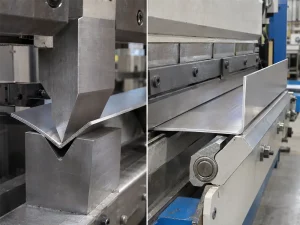
Before the head-to-head comparison, I will first guide you through the basics of both metal bending and folding.
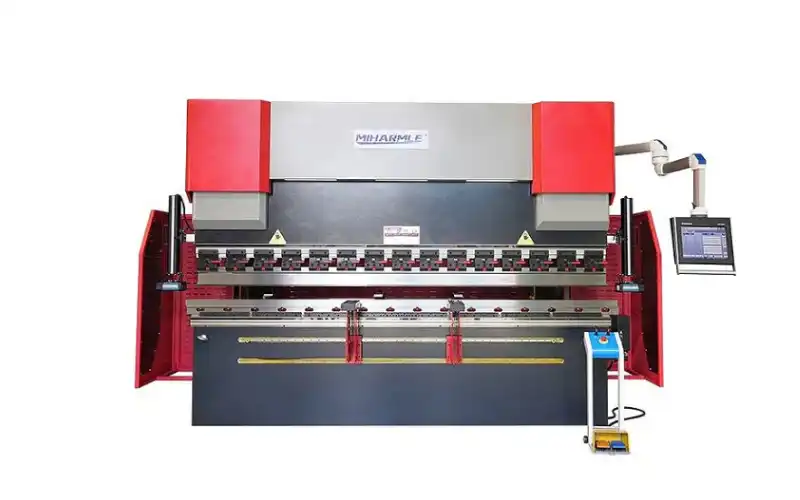
Metal bending is a process that involves permanently shaping a metal workpiece. This process is carried out using dedicated brake press machines. These machines use a die and a punch to create precise bends. The bends can be different shapes and sizes, depending on the die design. You can also create bends with unique angles, curves, and channels.
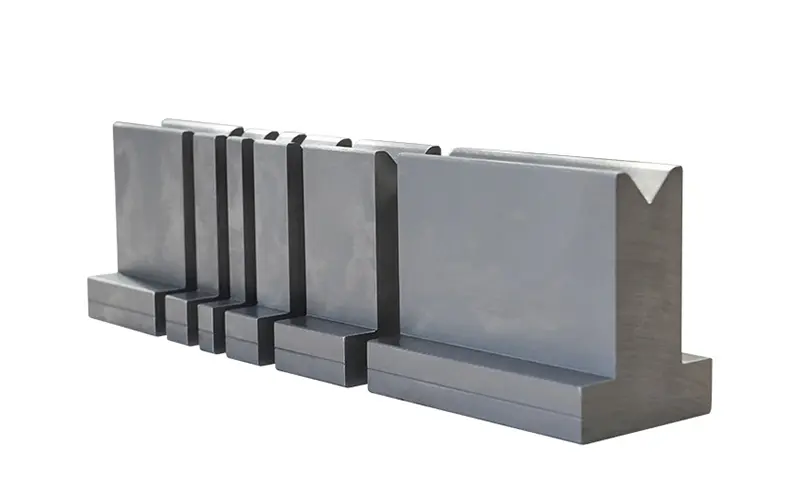
Metal bending is a relatively simple process. Different types of brake press machines are available to bend the metal workpiece. The workpiece is placed and positioned on a custom-shaped die. The die shape is chosen carefully, and it controls the bend shape. The punch then presses the material into the die’s cavity. This pressing of the workpiece into the die creates high-quality bends.
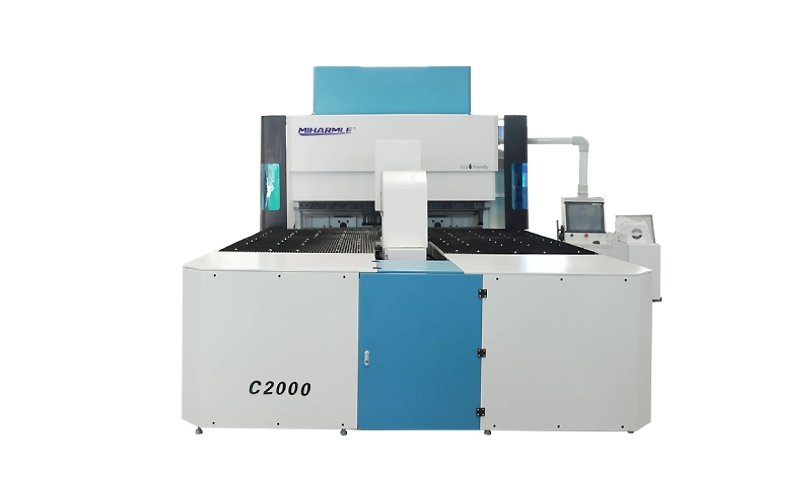
On the other hand, metal folding is unique as it uses metal folding machines. In this machine, the workpiece is clamped with a clamping beam, which holds it firmly. After that, the folding beam rotates and pushes the exposed area of the sheet, folding it. Common examples of metal folding include roofing panels, cabinets, enclosures, and more.
It is worth noting that metal folding machines also apply force to the workpiece to create deformation. This deformation is permanent even if you take the workpiece out of the machine. Additionally, this process allows you to deform the workpiece to your desired angle, which is a significant advantage. Although bending and folding may seem similar, they differ.
Differences Between Metal Folding and Metal Bending
This is the most important section as it discusses these two metal fabrication techniques. You’ll learn the differences between metal bending and metal folding. Understanding these distinctions helps you know which option is better for what.
1- Working Principle & Forming Mechanism
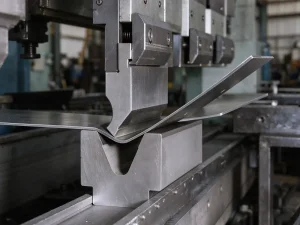
Both metal bending and folding have different working principles. Metal bending involves bending the workpiece using press brakes. In this process, the punch presses the workpiece against the die. The material is pressed by the punch into the cavity of the die. This pressing creates a bend. In contrast, metal folding is a unique process.
It uses metal folding machines. In this process, the workpiece is clamped firmly. The folding beam rotates and moves upward and downward. This movement of the folding beam makes the workpiece bend along the folding line. Remember, both metal bending and folding create permanent deformation of the workpiece.
2- Tools Requirement & Material Thickness Capacity
These metal fabrication techniques do not require additional tooling for operation. Metal bending is done using press brakes, and metal folding is done by folding machines. Press brakes use a die and punch for bending the workpiece. On the other hand, folding machines use folding beams and clamping beams to fold metal sheets effectively. These two processes differ in terms of compatibility with material thickness.
Press brakes can typically bend sheets of different thicknesses. They can even bend thick workpieces, depending on the press brake’s tonnage. In contrast, metal folding machines can also work with thin- to medium-thickness workpieces. Some modern folding machines can fold thicker workpieces, but they are very expensive. Commonly used folding machines are limited to medium-thickness workpieces.
3- Bend Angle & Geometry
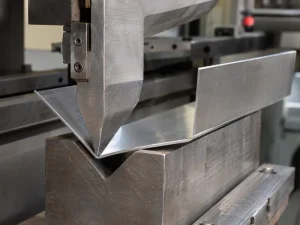
Metal bending and folding techniques are versatile when it comes to bending angle and geometry. Metal bending depends on the shape of the die used to bend the workpiece. You can use different-shaped dies to get the desired bend shape. Additionally, this process can be used for workpieces with different angles: 45°, 90°, and 135°. In contrast, the metal folding machines can also create different geometries. However, these machines mostly create angular or straight folds in the workpiece. For better control of bend angles and geometries, bending is a superior option.
4- Surface Finish & Protection
Metal folding techniques are better for surface finish and protection. As I said above, this process uses folding machines. The folding beam moves around the edge of the sheet to be folded. The workpiece (sheet) remains fixed in the clamping beam. The folding beam quickly folds the sheet along the edges and does not contact the main body.
This way, the visible part of the sheet does not get scratched. In other words, folded workpieces retain their excellent surface finish. In contrast, the bending technique uses a punch and die. The punch presses the workpiece into the die. This pressing force can cause scratches and pressure marks. As a result, the surface finish of the bent material may not be excellent. If you require better material protection, folding is a better option.
5- Material Type & Bend Complexity
Metal bending and folding differ in terms of compatibility with material types. Metal bending is more versatile as it can bend a wide range of materials. These include aluminum, stainless steel, mild steel, and more. In fact, this method can even bend very thick materials. Additionally, you can create high-quality bends even if the bend shape is very complex.
For this, you’ll have to use the right die with the correct shape. On the other hand, metal folding can work with different materials, including aluminum and stainless steel. However, it cannot fold materials that are too thick, which is a drawback. Additionally, this metal fabrication technique can make simple shapes involving straight folds. This process struggles to achieve highly complex profiles.
6- Production Speed & Efficiency
Production speed and efficiency are two important considerations. I consider metal folding machines more efficient for folding large metal sheets. Imagine you’re manufacturing large panels that need multiple folds. In that case, these machines will create precise folds without repositioning the workpiece.
On the other hand, metal bending requires repeated repositioning of the workpiece. This is more common when the bend is more complex. If one workpiece requires multiple bends, repositioning is mandatory, which consumes more time. However, for simple bends, metal bending can do the job quickly and efficiently. At large scale, metal folding techniques offer better production efficiency.
7- Automation & CNC Capabilities
Both metal bending and folding machines come with automation and CNC systems. However, these two processes still vary in their level of automation. CNC-based folding machines can easily fold without repeatedly positioning the workpiece. These machines can do this even if the workpiece requires multiple folds.
You won’t even have to worry about the handling and positioning of the workpiece. Similarly, CNC-based press brakes also automate the bending process. They control the bend radius, quality, back gauge, and more. However, you’ll have to reposition the workpiece for repeated bends on the same material. Overall, CNC-based metal folding is a better option compared to CNC-based metal bending.
8- Cost & Applications
The metal folding process is typically more expensive compared to metal bending. Why? That’s because of the cost of machines used in these processes. Interestingly, metal folding machines are very expensive. In fact, the advanced machines with CNC features are even more costly. However, workshops charge more to cover the expenses. On the other hand, metal bending machines, i.e., press brakes, are less expensive.
That’s why workshops can complete bending tasks at lower prices. Even those advanced press brakes are not as expensive as their counterparts. Additionally, some press brakes come with a hydraulic system and no CNC system. These machines are very cheap, and workshops using them offer bending services at low prices. Below is the table showing the applications comparison of metal folding and metal bending:
| Metal Folding Applications | Metal Bending Applications |
| Metal roofing panels | Automotive brackets |
| Architectural cladding | Machinery components |
| HVAC duct panels | Structural supports |
| Electrical cabinets | Metal channels |
| Sheet metal enclosures | Industrial equipment parts |
| Window and door frames | Vehicle body components |
| Metal facade panels | U-shaped and V-shaped profiles |
| Metal cabinets | Custom metal brackets |
Frequently Asked Questions
Is metal folding the same as metal bending?
No. Metal folding and bending are not the same. Metal folding uses folding machines to fold the metal sheets. In contrast, metal bending uses a punch and die to create a bend in the workpiece.
Which process, bending or folding, is better for thick metal sheets?
Metal bending is better for processing thicker metal sheets. This is because punches can press thicker metal sheets into the die and create a strong bend. Metal folding machines typically lag when it comes to processing thicker metal sheets.
Conclusion
In conclusion, both metal bending and folding are important metal fabrication techniques. However, they should not be compared to decide which is better. Why? This is because these two processes create different results. So you should choose a method that you actually need. For example, you can choose metal bending if you want to create a high-quality bend in a workpiece.
On the other hand, choosing metal folding makes sense when you need to fold a metal sheet to make a part. In this article, I have discussed the major differences between metal bending and folding. Understanding these distinctions will help you determine which technique is best suited to your task.