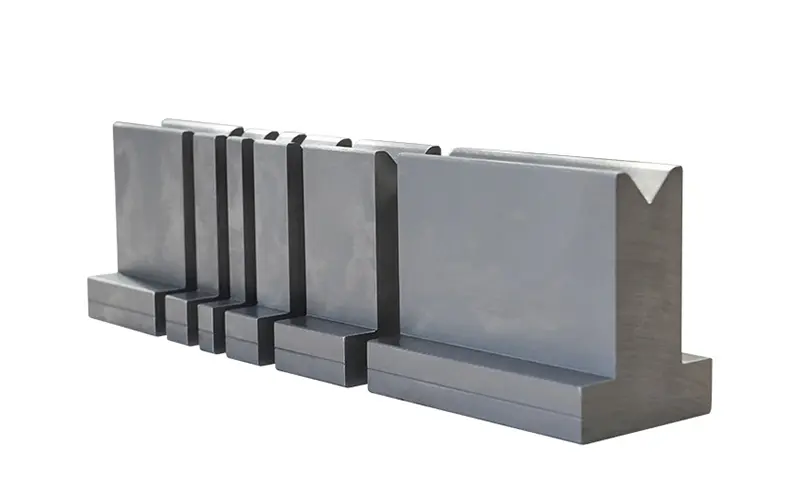
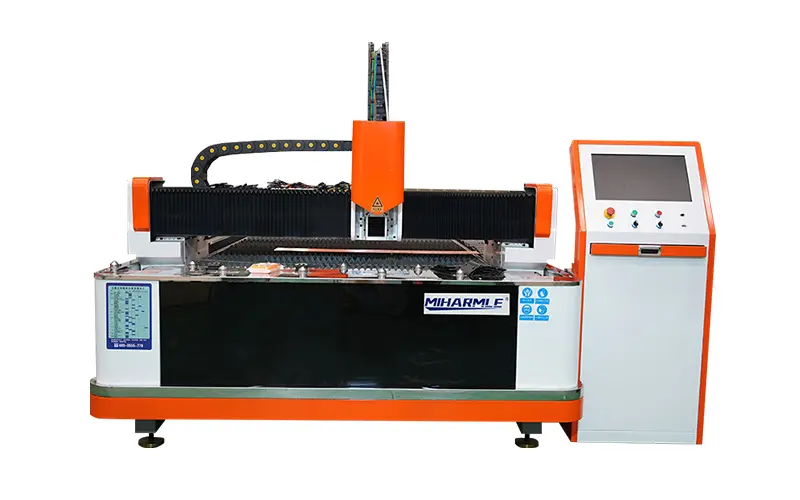
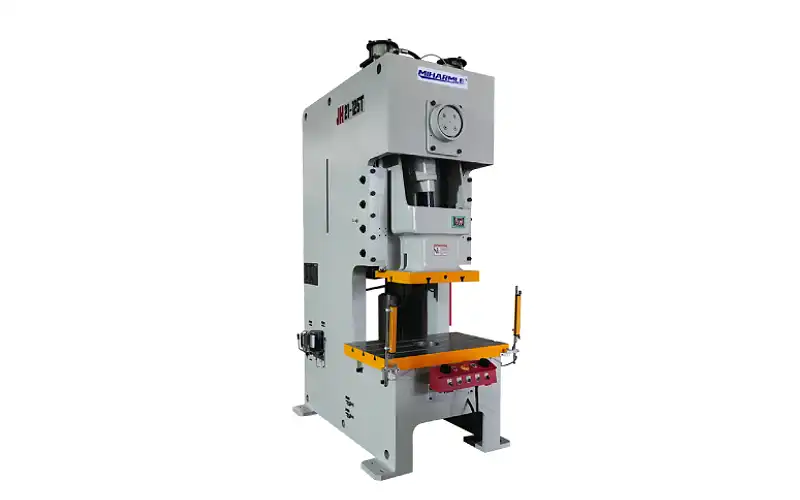
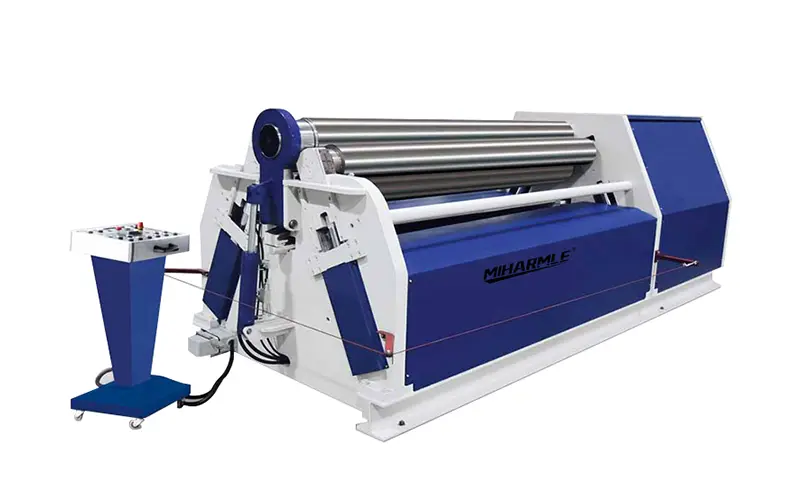
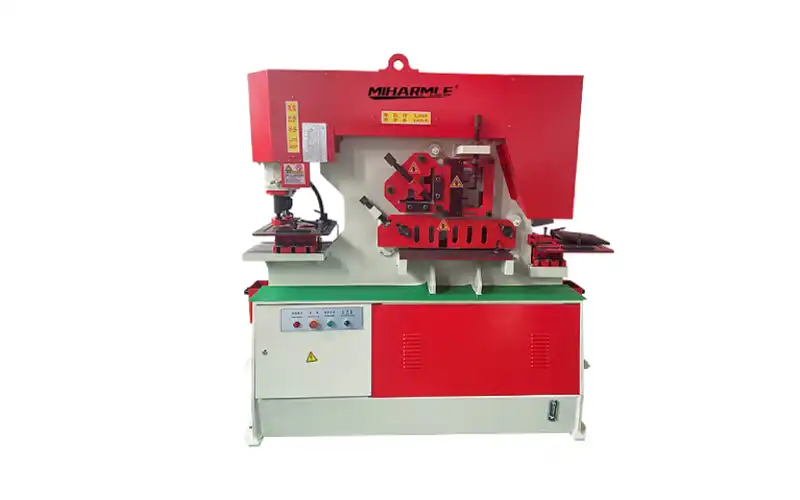
The sheet metal shearing machines play a decisive role in the metal fabrication industry. According to Transparency Market Research, the sheet metal fabrication services were valued at US $4.2 billion in 2022. It is expected to reach $6.1 billion by the end of 2031. This report shows the rapid demand for sheet metal products globally.
A sheet metal shearing machine makes precise cuts into desired sizes and shapes. Therefore, if you are a beginner and want to understand the working principles, types of shearing machines, and applications, this guide is for you.
Compared to other traditional cutting methods, sheet metal delivers some remarkable advantages, such as:
- Burr-free edges
- Minimal Material Distortion
- Best for Tight Tolerance
- Fast & Efficient
- Higher production rates
Subsequently, metal shearing machines have a range of applications in the HVAC, automotive, appliance manufacturing, and construction industries.

Sheet Metal Forming Methods
Have you ever imagined how engineers transform a flat sheet into an airplane? Sheet metal forming is the answer. It is a versatile technique crucial to making metal parts.
In this technique, the sheet metal shearing machines apply pressure to bend, stretch, or reshape the metal sheets. There is no material waste throughout the process.
The metal shearing process is almost the same as that of scissors. When we cut paper with scissors, we unconsciously cut the paper by keeping the lower blade along the paper and moving the upper blade more.
In shear cutting, the lower blade, called the die, is fixed, and the upper blade, called the punch, is moved to sandwich and cut the workpiece.
In metal fabrication, the upper blade cuts into the material at a desired angle. We call it a “shear angle.”
Metal forming is not the only available method. There are several sheet metal forming methods that we shall discuss below:
- Bending
- Drawing
- Flanging
- Embossing and Coining
- Shearing & Blanking
- Hydroforming
- Spinning
Bending
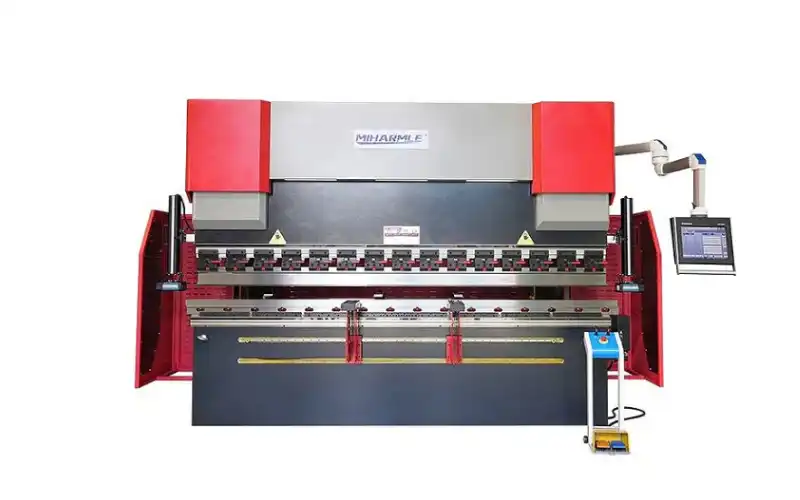
Bending is one of the most common processes in sheet metal forming. This method places a sheet between a punch and a die (molds) in a press brake machine.
The punch forces the sheet to bend. This bend can be made using simple angles, such as shapes, or complex curves. The sheet shapes depend on the die design.
Drawing
In the drawing, sheet metal shearing machines make deeper, cup-like shapes from flat sheets.
In this process, the operator places a sheet metal blank between a blankholder and a punch.
The punch pushes that blank into a die cavity. It allows the material to be drawn deeper and forms a hollow part.
Flanging
In this technique, the sheet metal shearing machine makes a raised edge on the metal sheet.
Similarly, a flange enhances its strength. Flanging is generally carried out with a punch and die to fold the edge over at a desired angle.
Embossing and Coining
Embossing and coining help in creating raised designs on the sheet metal surface. In this method, a punch and die push the metal upwards.
It forms a raised design. Similarly, coining incorporates high pressure to force the metal into the die cavity.
Shearing and Blanking
Shearing and blanking are not standard forming methods, but play a critical role in processing sheet metal for the forming process.
In shearing, a blade cuts straight lines on the sheet. Subsequently, blanking undertakes a punch and die to form specific shapes from the sheet metal.
Hydroforming
In this method, engineers apply high-pressure fluid to push the sheet metal blank against a mold.
In this process, fluid pressures transform the sheet into a mold shape. Ultimately, it creates a complex three-dimensional part.
Spinning
Spinning involves converting a sheet metal disc into a symmetrical, hollow part. It is like a vase compared to other sheet metal forming methods.
A spinning tool executes the operation with a disc-mounted rotating mandrel, resulting in the desired shape.
Types of Shears
| Feature | Manual Shearing Machine | Hydraulic Shearing Machine | Mechanical Shearing Machine |
| Power Source | Manual | Hydraulic Oil | Mechanical |
| Operation | Completely manual | hydraulic system | Operated by foot pedal |
| Cutting Force | Limited by the user’s strength | High cutting force | Moderate cutting force |
| Cutting Capacity | Thin sheet metal (up to 3 mm / 0.12 in) | Thicker sheet metal (up to 12 mm / 0.47 in) | Moderate sheet metal thickness (up to 6 mm / 0.24 in) |
| Cutting Speed | Slow | Fast | Moderate |
| Precision | Good precision for straight cuts | High precision | Moderate precision |
| Complexity of Cuts | Limited to straight cuts | Can handle some complex cuts | Limited to straight cuts |
| Cost | Most affordable option | Most expensive option | Moderately priced |
| Applications | Small workshops and DIY projects, | High-volume production shops | Fabrication shops |
Manual Shearing Machine
A manual shearing machine is also called a lever shearing machine. It is a tool that helps in cutting sheet metal. Unlike powered shearing machines, these machines use manual force to cut metals. To operate this machine, an operator uses a foot pedal to activate the blade, which cuts the metal. It is typically good for thinner sheet metal gauges.
Mechanical Shearing Machine
A mechanical shearing machine drives a ram that incorporates the rotational motion of a flywheel. It has a fast processing speed and is highly suitable for smoother cuts.
The mechanism is simple. Similarly, the maintenance is easy, but the impact during cutting is significant. Furthermore, it generates vibration and noise. Emphasize higher production capacity compared to manual shears.
Hydraulic Shearing Machine
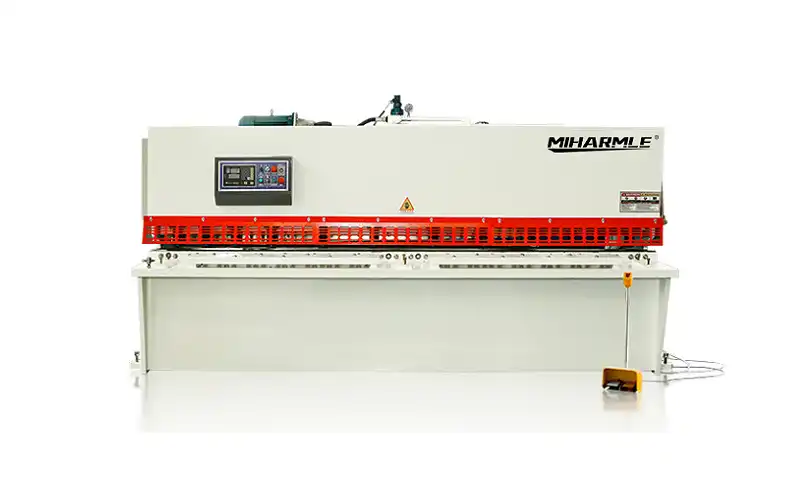
A hydraulic sheet shearing machine uses a hydraulic pump to apply force to the ram. Since the pressure is constant, the sheared surface is stable, making it suitable for cutting thick plates.
Hydraulic oil requires more frequent maintenance than mechanical oil. Since the impact during cutting is small, there is less vibration and noise, and the blade’s life is extended.
Swing Shearing Machine
Swing shearing machines are powered shears designed for cutting sheet metal. There are differences between traditional guillotine shears and traditional shears in movement. These machines have features like swinging action, reduced distortion, and improved shearing angle.
Gate Shearing Machine
The gate shearing machine is also known as the guillotine shearing machine. It provides enhanced efficiency and production rate due to the powered motor. Subsequently, these machines are capable of making more precise cuts. Its major features include rapid operations, high-quality manufacturing, and precise control.
Pneumatic Shearing Machine
A pneumatic shearing machine operates on compressed air to cut sheet metal. This feature gives pneumatic shearing machines a distinctive advantage over manual and hydraulic shearing machines. Some of its dominant advantages are:
- Compressed air energy
- Better movement
- Fast cutting speed
- And precise control.
Main Components of the Shearing Machine
A shearing machine has a quite simple structure. It includes the hydraulic sheet cutting machine, including the following parts:
Machine frame:
The machine body is a monolithic cast. It has welded steel plates, tempered at 600 degrees Celsius, providing high rigidity, and capable of minimizing vibration, making it more robust for machining. The machining achieves higher precision and better cylinder loading.
Hydraulic system:
A hydraulic pump assembly is used to pump oil or gas into the cylinder system, helping it operate smoothly and creating cutting force to cut metal plates.
Cylinder system:
It acts as a supplying force to the oscillating jig. The system of 2 cylinders simultaneously moving down helps the jig system cut the workpiece.
Rear stop:
A rear stop is used to set the workpiece’s width and length. This gauge will be adjusted by a servo motor that controls the ball screw with extreme accuracy, helping the cutting size reach an accuracy of 0.1 – 0.5mm.
Controller:
The controller is the most important part of the hydraulic iron-cutting machine. It helps to control the hydraulic system, workpiece clamping system, and rear stop.
Electrical system:
It is scientifically designed, highly stable, and easy to check for problems and repair.
Knife mounting system:
The knife mounting system helps assemble standard knife pieces onto the machine. Similarly, it helps the transmission linkage system to bring the cutting knife into the workpiece.
Workpiece holder:
After the workpiece is processed, it will fall out the back of the machine. The workpiece will slide on the rack to move to the assembly position of the finished product.
Cutting blade:
Cutting blades are mostly made from alloy material. This component provides better hardness and abrasion resistance. The top cutting blade can use 2 cutting edges.
Working Principle of the Shearing Machine
The principle of shearing is the same as cutting paper with scissors. In this mechanism, the material is placed against a back gauge that is positioned to the cutting dimension. Similarly, the upper blade descends to cut the material.
Checking the Clearance in the Shearing Process
In the shearing sheet metal process, in addition to cutting surfaces with minor sagging or burrs, it is also required to cut straight and parallel with few scratches or deformations. To do this, you must understand clearance, which significantly impacts cutting quality, and cut with the appropriate clearance.
Clearance refers to the gap between the upper and lower blades. If the clearance is too small, it will strain the blade. Subsequently, if it is too large, sagging and burrs will increase. The appropriate value for clearance is proportional to plate thickness and shear resistance. Also, check whether it is suitable by looking at the cut surface.
Shear Angle and Metal Sheet Deformation
The shear angle is the opening angle between the upper and lower blades and is called the rake angle. Similarly, setting a sizeable shear angle when cutting requires less force and reduces shock, which is essential. However, deformations are likely to occur if the shear angle is increased unnecessarily.
Tips To Keep in Mind During the Shearing Machine Process
- Observe the maximum plate thickness
- Do not put your hands close to the plate holder and blade
- Be careful not to fall the cut material.
- Working behind the metal shearing machine while the power is on is dangerous.
- Do not cut two pieces of material together.
Characteristics of the Shearing Machine
What are the key features of sheet metal shearing machines? We will discuss some prominent strengths of shearing machines that make them a valuable power tool for sheet metal fabrication.
High Precision and Accuracy
Metal shearing machines are extremely capable of executing straight and clean cuts. These machines offer great dimensional accuracy. It reduces rework and makes the assembly process convenient.
Versatile in Sheet Metal Properties
Metal shearing machines can effectively work on a range of sheet metal thickness materials, such as aluminum and stainless steel. This unique feature helps companies work on multiple fabrication projects. Similarly, there is no need for specialized equipment, and it is cost-effective too.
Higher Production Rate
Metal shearing machines offer swift cutting speed and reduced setup times. This feature allows you to process large-volume sheet metal orders. Subsequently, it has the potential to reduce per-unit costs.
Main Applications of Shears
Metal shearing machines have a diverse range of applications. They have amazing features such as precise cutting and better dimensional accuracy, which play a decisive role in completing projects with satisfactory results.
1. HVAC
- Cutting sheet metal for ductwork and custom parts.
- Trimming of extra material.
- Fine cutouts in sheet metal panels.
2. Automotive Industry
- Cutting sheet metal for car body panels.
- Trimming metal parts after laser cutting.
- Precise cuts in sheet metal components for lights, and grilles.
3. Appliance Manufacturing
- Cutting sheet metal for appliances like washing machines, and refrigerators.
- Trimming sheet metal for control panels.
- Cutouts in sheet metal for ventilation.
4. Construction
- Cutting of complex sheet metal for roofing panels, and siding materials.
Trimming sheet metal for gutters, and downspouts. - Custom sheet metal parts for an extensive range of architecture applications.
5. Metalworking Shops
- Cutting sheet metal for fabrication projects.
- Prototyping sheet metal components.
- Creating custom sheet metal parts for repairs, and maintenance.
Conclusion
Summing up, metal shearing machines are developing innovative techniques to cut metal sheets with greater precision.
For instance, engineers are working on incorporating an automatic material feeding system. It would be a significant step in this direction.
Due to the faster turnaround time, their efficiency is remarkable as well. Simultaneously, the application of shearing machines is broad, helping companies generate more business.